Brightest Moon in Almost 69 Years Lights Up Sky Around Globe
On the eve of the supermoon, visitors enjoy an unobstructed view of the spectacle as the moon ascends over the Lake Michigan shoreline in Milwaukee, Wis., on Nov. 13. (John Hart/Wisconsin State Journal via AP)MOREHIDE
BEIJING—The brightest moon in almost 69 years is lighting up the sky in a treat for star watchers around the globe.
The phenomenon known as the supermoon reached its peak luminescence in North America before dawn on Monday. Its zenith in Asia and the South Pacific was Monday night. Across the international dateline in New Zealand, it was to reach its brightest after midnight Tuesday local time.
The moon orbits the Earth in an oval shape. The moon will be at its brightest this week because it is coming closer to the Earth along its elliptical orbit than at any time since January 1948. The supermoon will also bring stronger than usual high tides, followed by plunging low tides the next morning.
Viewers can expect to see a moon about 14 percent larger in diameter and about 30 percent brighter than when it’s at its furthest distance from the earth. It won’t be as big and bright again for another 18 years.
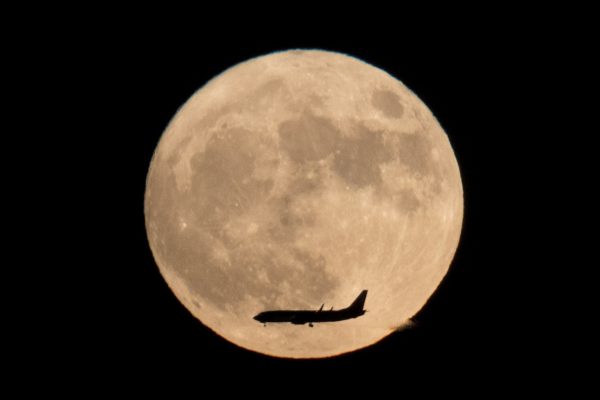
A jet plane flies across the moon seen from Beijing, China, on Nov. 14, 2016. (AP Photo/Ng Han Guan)
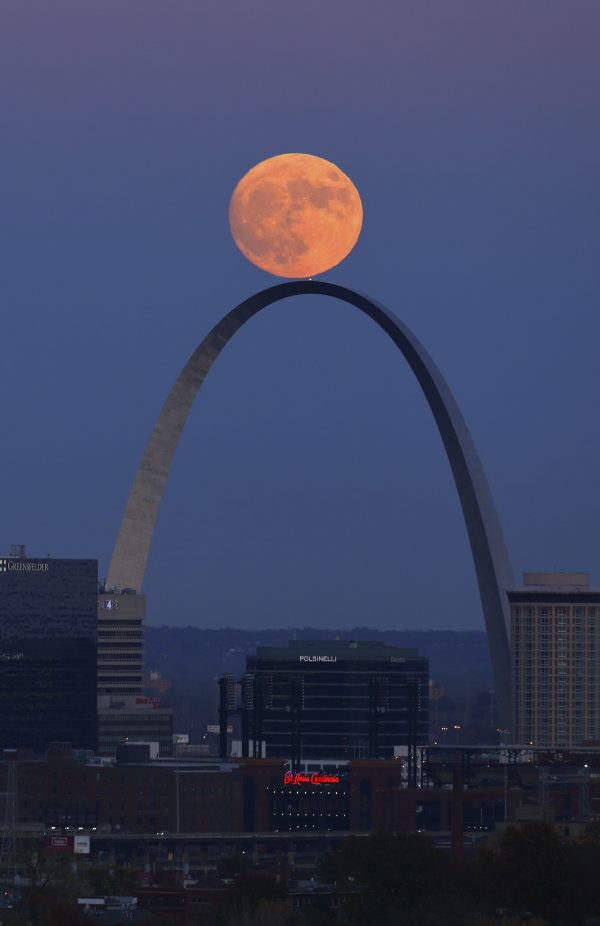
The moon rises over the Arch in St. Louis, as seen from the Compton Hill Water Tower on Sunday, Nov. 13, 2016. (David Carson/St. Louis Post-Dispatch via AP)
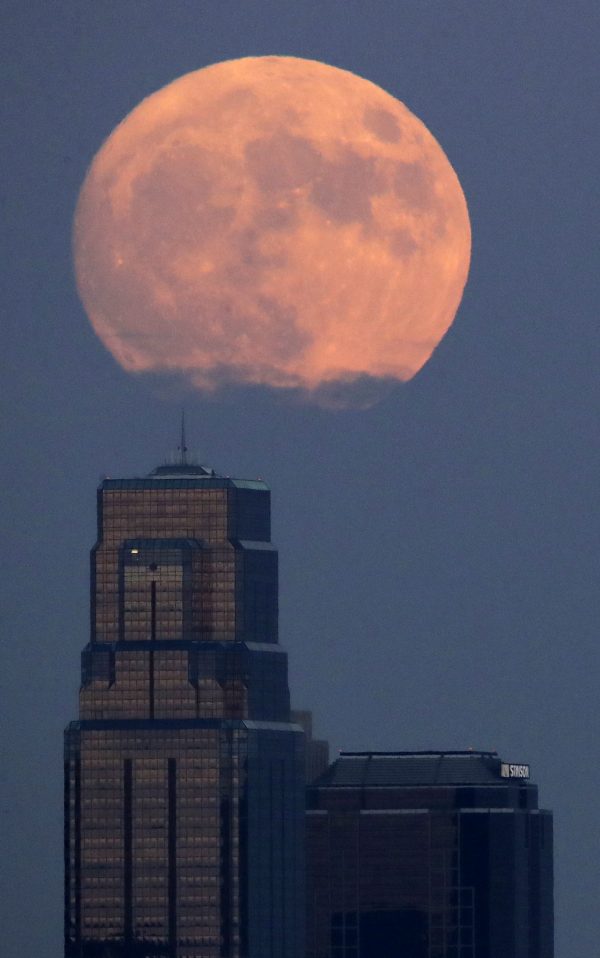
The moon rises beyond downtown buildings Sunday, Nov. 13, 2016, in Kansas City, Mo. (AP Photo/Charlie Riedel)
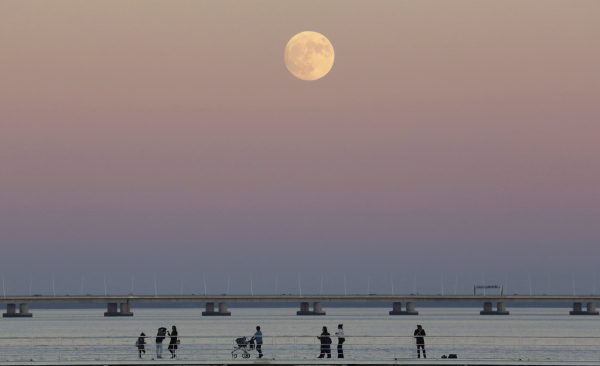
People stroll along the Tagus riverside in Lisbon as the moon rises Sunday, Nov. 13 2016. (AP Photo/Armando Franca)
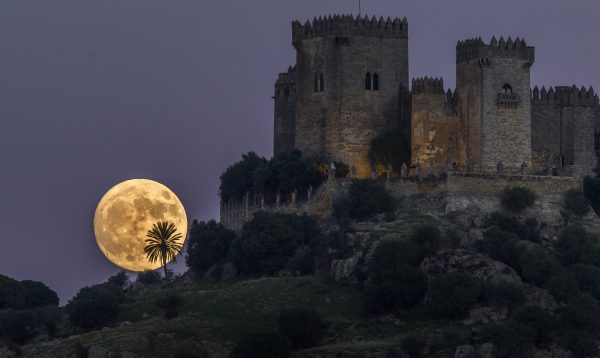
The moon rises behind the castle of Almodovar in Cordoba, southern Spain, on Sunday, Nov. 13, 2016. (AP Photo/Miguel Morenatti)
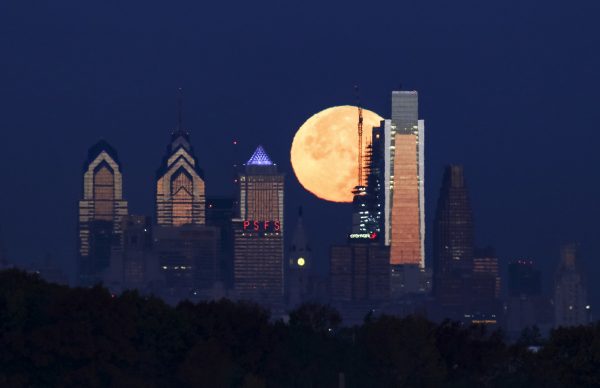
The supermoon sets behind the Philadelphia skyline on Monday, Nov. 14, 2016. (AP Photo/Joseph Kaczmarek)
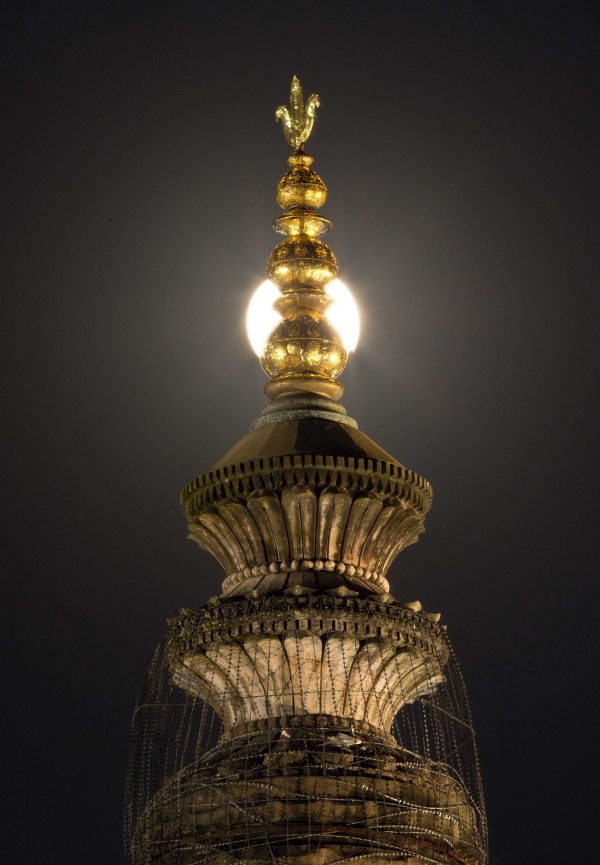
The moon rises behind the dome of the Kamakhya Hindu temple in Gauhati, India, Monday, Nov. 14, 2016. (AP Photo/ Anupam Nath)
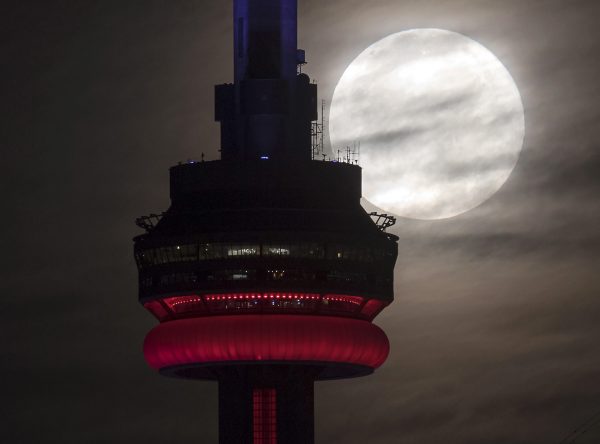
The supermoon sets behind the CN tower in Toronto on Monday, Nov. 14, 2016. (Frank Gunn/The Canadian Press via AP)
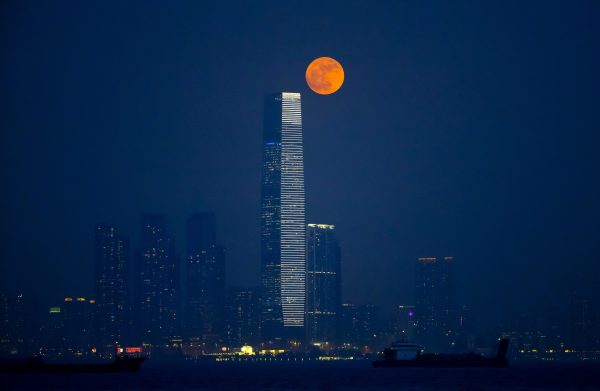
The moon rises over Victoria Harbour in Hong Kong, Monday, Nov. 14, 2016. (AP Photo/Kin Cheung)
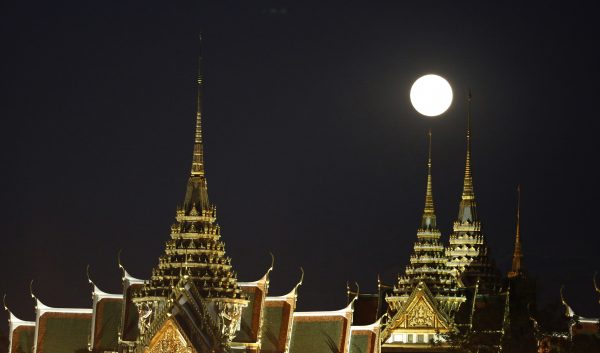
The moon rises over the Grand Palace in Bangkok, Thailand Monday, Nov. 14, 2016. (AP Photo/Sakchai Lalit)
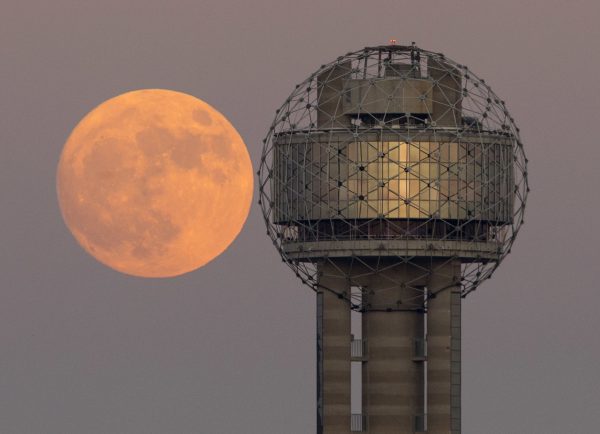
The moon rises behind Reunion Tower in downtown Dallas on the evening of Nov. 13, 2016. (Tom Fox/The Dallas Morning News via AP)
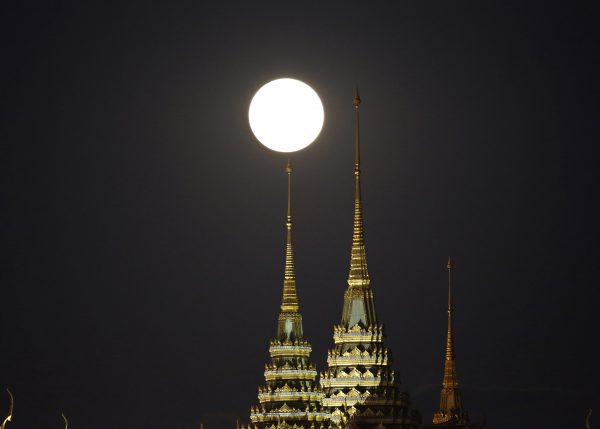
The moon rises over the Grand Palace in Bangkok, Thailand Monday, Nov. 14, 2016. (AP Photo/Sakchai Lalit)
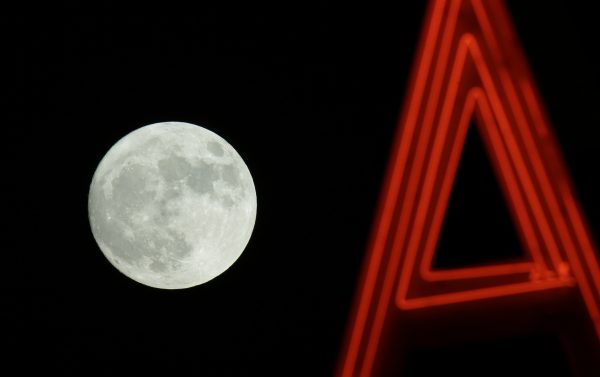
The moon rises behind a neon sign in Sacramento, Calif., Sunday, Nov. 13, 2016. (AP Photo/Rich Pedroncelli)
NASA says its closest approach will occur at 6:21 a.m. EST (1121 GMT) Monday when the moon comes within 221,523 miles (356,508 kilometers). That’s from the center of the Earth to the center of the moon. Full moon will occur at 8:52 a.m. EST (1352 GMT).
According to the astronomy website earthsky.org, the term supermoon entered usage five years ago when the closest full moon fell on March 19, 2011. The scientific term is perigee full moon.
In 2034, the moon will come even closer, within 221,485 miles (356,456 kilometers). That, too, will be a supermoon.