

The recent concern stems from Queensland State Premier, Anna Bligh's recent endorsement of plans for more than $6 billion to mine 1.4 billion tonnes of coal for export.
Australia is already responsible for a third of the world's traded coal and is the world’s fourth top consumer of coal.
While there are currently 49 coal mines operating in Central Queensland, 14 new mining projects are at an advanced stage and 13 are being expanded or extended.
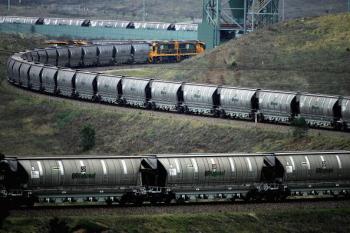
Under a project dubbed "China First", coal will be railed out of the Waratah and Alpha coal mines in the newly opened Galilee Basin, southwest of Mackay in central Queensland.
Plans include $2.1 billion for a 490km railway line between Alpha and Bowen, $3.18 billion for mine equipment and infrastructure construction and $1.27 billion in port expansion at Abbot Point, the Townsville Bulletin News reported.
Coal Soon Outdated
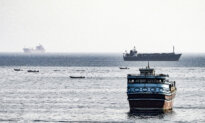
Greenpeace activists visited the Queensland ports at Bowen and Mackay last week to demonstrate against the massive amounts of coal being exported, mainly to China, India and Japan.
Mackay Conservation Group co-ordinator Patricia Julien fears that state and Federal Government investment in coal, might see Australia “left with a stranded dinosaur industry”.
She said attitudes towards coal were changing around the world, particularly for polluters as climate change and carbon emissions become cause for major concern.
Mining giants, BHP and Rio Tinto, are both, for example, looking at alternative sources of energy, investing in the development of solar thermal plants in remote areas where they have mining interests. And while the Australian Government is spending hundreds of millions of dollars researching Carbon Capture Storage (CCS), major carbon polluters are reducing their commitment to CCS, Ms Julien said.
Coal magnate, James Rogers, chief executive of Duke Energy, also hints at a change in attitude within the industry in James Lovelock's latest book, The Vanishing Face of Gaia: A Final Warning.
“There is neither the time nor the resources to bury the carbon dioxide effluent of coal-fired power stations on a global scale,” he said.
Fears for Great Barrier Reef
Ms Julien's concerns are also for the billion-dollar revenue that's added annually to government coffers garnered from the world-renowned Great Barrier Reef Marine Park.
The world’s largest continuous coral reef spanning 2000km of the Queensland coast, the World Heritage Site is currently threatened by climate change, water quality run-off, mass coral bleaching and outbreaks of crowns-of-thorns starfish, yet a recent study has put a $51.4 billion value for the whole coral reef.
Ms Julien fears that revenue from this natural resource and others in the region, will be forfeited for a mining industry she sees as having no future.
Australia’s large commitment to coal should come with a moral obligation and a responsibility for carbon emissions worldwide, said Ms Julien, particularly as the country presently invests more in expanding coal exports than in cleaning up their use.
“It contributes about 4 per cent of gross domestic product (GDP) each year and its exports generate about 700 million tonnes of carbon dioxide yearly,” she said. “That's 15 per cent more than Australia’s entire greenhouse gas emissions.”
Queensland plans call for future expansions to handle 440 million tonnes of coal exports which would see 1100 million tonnes of greenhouse gases added annually, an 80 per cent increase in this region alone, Ms Julien said.
“This clearly shows little regard by the Queensland Government for planning to live in a carbon-constrained world as Australia is nowhere near being able to handle capture and storage of those greenhouse gases and neither are China, Japan or India, the major buyers of Australia’s exported coal,” she said.