
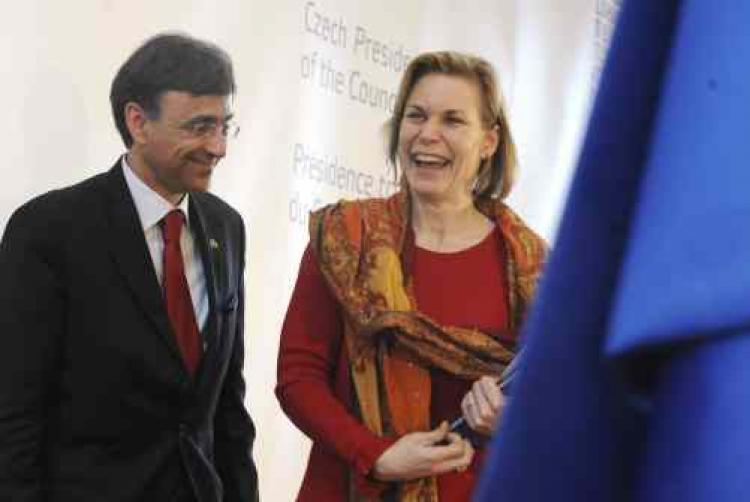
Sweden is one of the biggest providers of foreign aid, and Carlsson wants to make sure that her country’s donations truly make a contribution to fighting poverty, and promoting freedom and progress in developing countries.
Recently, the Zambian National Audit Office discovered a corruption scandal in the Ministry of Health where some 50 million Swedish crowns (about US$7.5 million) were embezzled. The money came from the Netherlands, Canada, Sweden, the Zambian state, and the Global Fund, an NGO dedicated to fighting AIDS, Tuberculosis and Malaria.
"I don't want to leave any of the tax money up to chance. I want to be able to look Swedish taxpayers as well as the poor people in the third world countries in the eye," Carlsson wrote on the Swedish debate site Newsmill.se on August 24.
According to Transparency International's Corruption Perceptions Index (CPI) Sweden, together with Denmark and New Zealand, are the least corrupt countries in the world. On the other hand, it becomes evident from the index that many of the countries receiving aid are where corruption is most rampant.
While corruption in these countries does not necessarily reflect the way foreign aid is handled, an environment with corruption is believed to affect efficient spending of foreign aid, and obstruct the fight against poverty.
According to the CPI, continued corruption is a recipe for humanitarian disasters.
Zambian economist Dambisa Moyo said that foreign aid itself might actually be part of the corruption problem.
Minister Gunilla Carlsson, however, said that she does not think that simply cutting deals with countries with corruption will be a solution, as that might only make the problem of poverty worse. “It’s time to confront and discuss these issues openly,” she says.