
The negotiations with the government led to a rescue in which AIG creditors received 100 cents on the dollar for troubled assets.
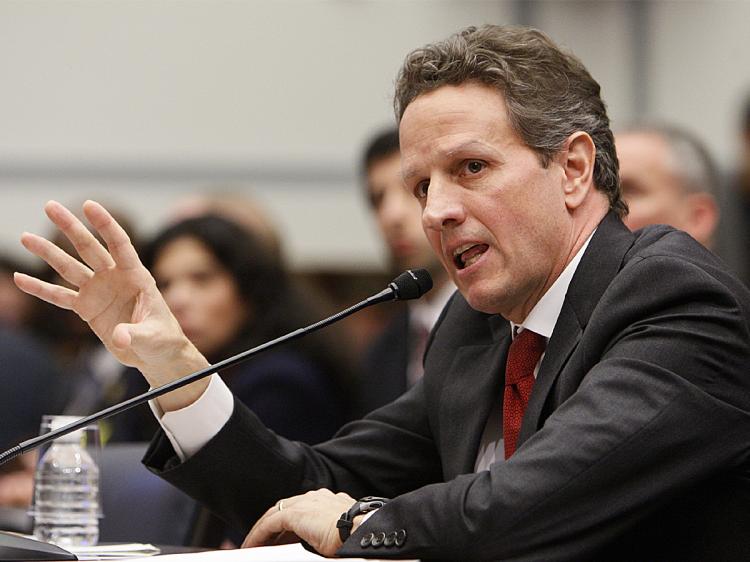
Members of the committee appeared to suspect Geithner of allowing an overly favorable bailout deal both for AIG and for Goldman Sachs, deemed as one of the primarily beneficiaries of the bailout as the investment bank was a counterparty to billions in credit default swaps underwritten by AIG. Geithner and many of his staff have ties to Goldman Sachs.
Geithner repeated the claim that AIG was too big to fail, and that the national and global economy would have been devastated by its failure. He justified the deal to pay creditors 100 percent on the dollar by saying that if a party cannot threaten to walk away, the party has no leverage. The government could not have threatened to walk away from AIG.
"AIG's downfall would have affected the global economy much more than Lehman's fall," Geithner said. "AIG directly and indirectly supports 100 million people."
Anything less than a total bailout, with no devaluation of debts, would have forced the company to fail, he added. "If the counterparties did not receive 100 cents on the dollar, AIG would have collapsed because the counterparties could have sued and taken collateral—bringing down AIG."
The sharpest questions had to do with Geithner keeping the favorable terms of the deal hidden. Geithner said he had no knowledge of a coverup. The Fed decided to not disclose the terms of the bailout right away, he said, and he had no part in that. "I have trust and confidence in the people who made the decision. I was not involved."
With reporting by Antonio Perez