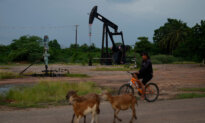

The Pulitzer Center on Crisis Reporting showed a selection of some such short documentaries in Washington, D.C. on Feb. 1 including reports from Carmen Russell and Dane Liu reporting on Haiti’s restaveks, child indentured servants.
Also shown at the two hour festival were “Jerusalem: War in My Land,” by Arturo Perez Jr., the winner of the Project Report contest, a partnership between the Pulitzer Center and YouTube.
“Afghanistan Disabled” by Don Duncan and Jessica Deahl, covers the cultural impact of widespread disability in Afghanistan. It’s the story of a trip that Dost Mohammed Khairy, a disabled Afghan given refugee status in the United States, made to Afghanistan in 2008 to examine the state of the disabled there.
In reporting on regions in crisis reporters are active in not only telling the stories of the people affected by crisis, but directly and indirectly becoming agents to educate and bring about change.
“Our goal isn’t just to go in and show people suffering, it’s to show that there is a place that people are suffering that we are not talking about; let’s talk about it and find a way to more directly address it,” said Kira Kay, executive director of the Bureau for International Reporting (BIR) on her work in the Congo on UN. peacekeeping.
“To me when I come out of some difficult places, I try to come out a positive attitude that we are actually bringing some interest and some discussion about this place and trying to figure out as Americans how to address it,” said Ms. Kay.
Jason Maloney, co-founder, producer, videographer, and editor with BIR says they are not trying to advocate any particular position with their work—but rather start a conversation about the problem.
“If there is any one common notion behind our reporting, it’s that there are issues out there that if they were given just a little more focused attention solutions could be found,” said Mr. Maloney. “So we trying to show that, get some attention on some issues."
Gaining coverage of human crisis stories in the mainstream media is not without challenges for journalists.
“Working with executive producers of TV shows, if you are pitching a story about someplace that’s not in the headlines, you will find yourself in the conversation [answering the question] ‘why do Americans care?’” said Mr. Maloney.
The Pulitzer Center on Crisis Reporting is a nonprofit journalism organization that sponsors the independent international journalism that U.S. media organizations are increasingly less able to undertake on their own. The Center has a broad definition of the word crisis. It includes systemic level crisis from environmental issues and struggles for resources or human rights abuses, supporting stories that most typically would need support to make headlines.
“Mainstream media hasn’t been reporting on these things, and it is very nice that we have the Pulitzer Center to bridge that gap,” said Carmen Russell a multimedia journalist whose work has been featured on ABC News’ "20/20," PBS and MSNBC.