

In Ukraine they call it the “Day of Laughs,” in France “April Fish,” in Hong Kong “Fools’ Festival,” while in English speaking countries it is mostly “April Fool’s Day” or “All Fools Day.” No matter where, it basically boils down to playing tricks on, or being tricked by, friends, family, and the occasional enemy. But how did this peculiar custom start? And what are some of the classic hoaxes?
Origin
The origin of April Fool’s Day is disputed, but one of the most common explanations is that it came into being after Pope Gregory XIII introduced a new calendar to replace the old Julian Calendar in 1582, shifting New Year’s day from April 1 to Jan. 1. From then on, people that continued to celebrate New Year’s day on April 1, either because they didn't accept the new date or out of ignorance, were considered “fools” and consequently ridiculed. It remains obscure how the practice spread throughout the world.
A questionable interpretation goes back to the old days, telling of how Noah had sent his dove off before the waters had receded on April 1.
Another explanation is that during the reign of Constantine, the Roman emperor allowed a jester to be in charge of the empire for one day, after a group of jesters had boasted they could surpass the emperor in ruling.
On that day, which happens to be the April 1, the jester issued a decree calling for nationwide absurdity. The decree turned into a custom and became an annual event. This explanation, given by a professor of history at Boston University, was widely reported on by the media, including Associated Press, but turned out to be an April Fools’ joke itself.
A more down-to-earth explanation would be that April is the start of the spring season, a time when people naturally feel light-hearted and are in the mood for making jokes. But this doesn’t explain why it has turned into a custom. So all in all, we don’t really know, and as the Ukrainian saying goes “I don't believe anybody on April 1.”
Classical April Fool’s Day Hoaxes
Arguably one of the most successful hoaxes in history was when the BBC aired a news report about a bumper spaghetti harvest in Switzerland in 1957. The commentator explained how it was an exceptional harvest year due to the elimination of the infamous “spaghetti weevil.” In the footage cheerful Swiss peasants could be seen picking spaghetti from trees. Many viewers of the show were surprised that spaghetti grows from trees and called the BBC to ask if they could also grow it at home. They were told “place a sprig of spaghetti in a tin of tomato sauce and hope for the best.”
In 1998 Burger King published an advertisement in USA Today in which a new kind of burger, the “left-hand burger” was introduced. The burger had the same ingredients as usual, with the only difference that the condiments were rotated 180 degrees, which for unspecified reasons would greatly benefit left-handed customers. Burger King received many customers’ requests for the “left-hand burger,” while some more conservative right-handed customers would request the regular “right-handed burger.”
During the Cold War in 1984, members of Usenet, a forerunner to the Internet, were surprised to receive an e-mail from domain @kremvax.UUCP, by a Russian named Konstantin Chernenko, who announced on behalf of the Soviet Union that they wanted to join the Usenet. Chernenko said that the Soviet Union aspired to join the network to have “an open discussion forum with the American and European people.” The news caused a stir until it was revealed to be a hoax. Russians, however, adopted the domain name “kremvax” when they actually linked up to the Internet years later.
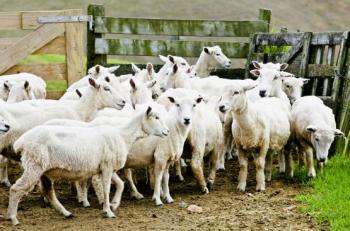
Dr. Ewe Noh-Watt of the New Zealand Institute of Veterinary Climatology came to the public with breaking news in 2007, when he announced that global warming was not caused by “an increase of greenhouse gases,” or “changes in solar luminosity, volcanic eruptions”, nor by “variations in Earth's orbit around the sun,” but rather by the decline of New Zealand's sheep population. The reason given was simple: white sheep reflect the sunlight back into space, while without them the sunlight would be absorbed by the ground, which would warm the planet.”It can be seen that the recent warming can be explained entirely by the decline in the New Zealand sheep population, without any need to bring in any mysterious so-called 'radiative forcing' from carbon dioxide, which doesn't affect the sunlight (hardly) anyway—unlike sheep albedo [reflectiveness],” Dr. Ewe Noh-Watt was reported as saying by RealClimate.