QUEENSLAND—As global warming becomes a reality, pressure is mounting on governments to find low carbon solutions to electricity generation. Yet with close to seven billion people in the world, many scientists are questioning the capacity of renewable energies to meet the growing demands of most countries. New developments in nuclear technology and ongoing research into reducing its associated hazards are leading various key players to take a fresh look at nuclear power.
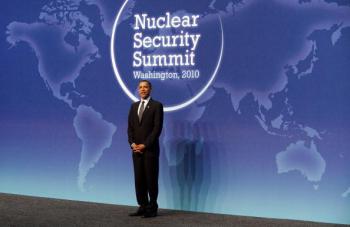
In February, Microsoft’s Bill Gates went public about investing tens of millions of dollars into innovative reactor designs as part of his philanthropic quest for energy miracles. Then, a week later, US President Barack Obama announced that the US Government would back over $US8 billion ($A8.64 billion) in loans for nuclear power plants, the first new ones to be built since the 1979 Three Mile Island disaster, as part of a planned $US54.5 billion ($A58.9 billion) nuclear kick-start programme. Now, following the 2010 Nuclear Security Summit, Mr Obama is addressing nuclear disarmament and the containment of nuclear material through ongoing international negotiations concerning the Nuclear Non-Proliferation Treaty (NPT).
Ethics and Opinions
Despite vast improvements in safety, nuclear power’s supposedly zero carbon image remains marred by two major issues; storing long-lived radioactive waste and preventing weaponisation. In addition, “peak uranium” is predicted and fossil fuels are required during its life cycle, for instance during mining and enrichment, along with plant construction. Therefore, uranium is presently neither a guilt-free answer nor a long-term solution.
Last month at Sydney University, NASA scientist and climate change guru Professor James Hansen pointed out that even a progressive country like Germany can currently only generate 7 per cent, on average, of its power through renewables, and industries are leaving Germany because of the associated increase in electricity prices. Prof Hansen said that seven nations, including France and China, have nuclear expertise or research and development projects into “fourth generation plants”, without the current drawbacks.
However, Dr Mark Diesendorf, author of Greenhouse Solutions with Sustainable Energy, is unconvinced. “On top of the perennial challenges of global poverty and injustice, the two biggest threats facing human civilisation in the 21st century are climate change and nuclear war. It would be absurd to respond to one by increasing the risks of the other.”
Facts and Figures
In his popular book Sustainable Energy–Without the Hot Air, Professor David MacKay comprehensively discusses the facts and figures of the various energy sources, with many pragmatic conclusions based on careful calculations. Prof MacKay, who is based at Cambridge University’s Department of Physics, is also the chief scientific advisor to the UK’s Department of Energy and Climate Change.
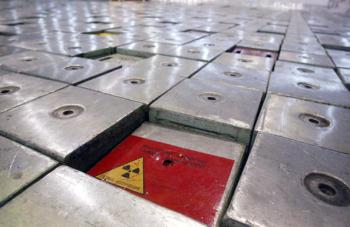
While Prof Mackay’s research focuses more on meeting demand and less on economics, other experts confirm Prof Hansen’s concern about the relatively high capital cost of renewables. In a recent co-review of nuclear issues with Energy in a Changing Climate’s author Martin Nicholson, Professor Barry Brook, Director of Climate Science at the University of Adelaide’s Environment Institute, stated: “Renewable energy sources [such as wind and solar] use significantly more raw materials per unit of energy generated than even present-generation nuclear power stations and the full life-cycle emissions, including nuclear fuel production, are similar from both sources. When energy storage and fossil-fuel back-up are included, wind and solar emissions are much higher.”
Thorium
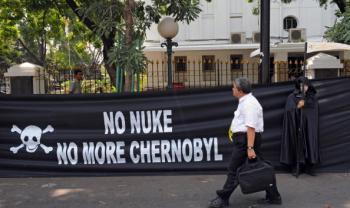
Even though the thorium cycle is far cleaner, safer, more efficient and sustainable than uranium, Mr Sorensen believes its most compelling advantage is the lower cost of the much smaller reactors required. His visionary passion has certainly helped put thorium back in the spotlight. “A world powered by thorium safely for many tens of thousands of years is the goal of those working to realise the potential of thorium.”
Combined Solutions
Nevertheless, critics remain skeptical. Nuclear watchdog Professor Richard Broinowski, author of Fact or Fission? The Truth About Australia’s Nuclear Ambitions, reiterates the fact that the thorium cycle produces “bomb-grade” uranium. He says there is a lot of propaganda about nuclear power and that fourth generation reactors are still highly theoretical, and have not been realised yet.
“There’s still exactly the same nuclear physics involved.”
Professor Mackay’s suggested global energy plans to tackle climate change do include other solutions, such as a pollution tax, carbon capture and storage, and reducing consumption, but about decarbonising electricity he says to “stop the Punch and Judy show and get building”. As different countries trial various remedies based on demand and resource availability, it seems existing and new generation nuclear power may become at least part of the answer to the tough challenge of halting global warming, whether we agree with it or not.