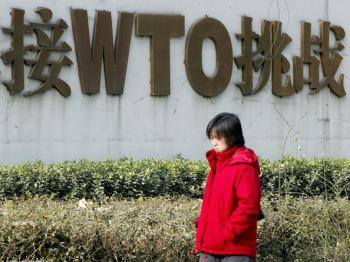


WASHINGTON—China joined the World Trade Organization (WTO) in 2001 after 15 years of negotiations, heated discussions, and disagreements.
The country agreed to nondiscriminatory dealings with WTO members, to refrain from using price controls in favor of Chinese companies, to revise and implement fair trade laws, and much more.
“With China’s membership, the WTO will take a major step towards becoming a truly world organization. The near-universal acceptance of its rules-based system will serve a pivotal role in underpinning global economic cooperation,” said Mike Moore, WTO Director-General at the time.
U.S. businesses spent millions of dollars lobbying on behalf of Chinese accession into the WTO, claiming that it would open that market to U.S. products.
In reality, U.S. companies intended “to bind the Chinese government to WTO disciplines with respect to investment rules—thus making their China-based production more secure and profitable,” said Thea Mei Lee, deputy chief of staff at the AFL-CIO, during her June testimony before the U.S.-China Economic and Security Review Commission.
She continued, “Yet no self-respecting American company would publicly admit to Congress or the American public that it wanted to facilitate the outward shift of more American jobs and production. This would be unlikely to garner many votes in Congress.”
One day after the U.S. House of Representatives voted in favor of China accession into the WTO, the Wall Street Journal’s survey results disclosed that not one U.S. firm intended to sell more products to China, but all were ready to outsource production to China.