
[ Video Courtesy of NTDTV ]
BANGALORE, India—A nationwide 12-hour strike called by Indian opposition parties over rising fuel prices and inflation brought the country to a grinding halt on Monday.
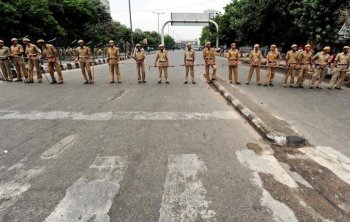
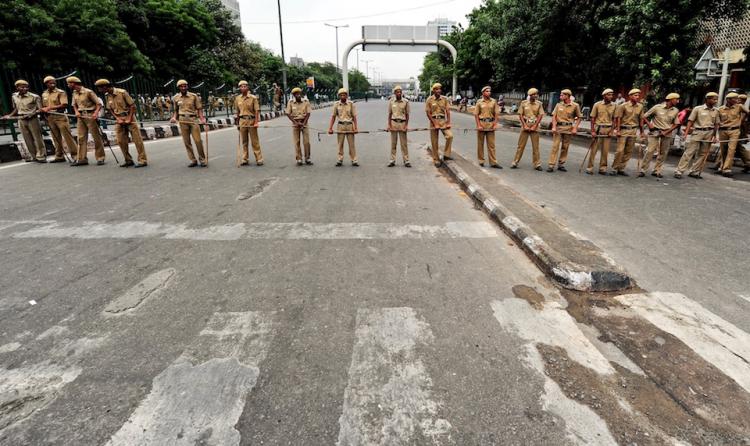
Schools, colleges, and offices remained closed in all major cities due to support of the strike. City streets were deserted and entire market areas shuttered closed. Wholesale commoditiy markets also shut down for the day across the nation. Only a few people roamed the streets to ensure that the strike was enforced. The strike was orchestrated by the main opposition Bharatiya Janata Party (BJP) and other leftist parties.
Police and security arrangements were beefed up in all metros to ensure law and order was maintained. While public transport did remain operational, service was greatly reduced.
Air passengers were left stranded as many flights were either postponed or cancelled in and out of major cities like Mumbai, Kolkata and Bangalore. Mumbai’s usually bustling Chhatrapati Shivaji International Airport, one of the busiest airports in the world, was virtually deserted.
In Bangalore, the IT capital of India, most tech companies decided to keep their doors closed.
Though electronic trading remained open, the trade volume at the Bombay Stock Exchange was down 52 percent on the day.
“The strike is estimated to have cost the nation close to Rs 13,000 crore (US$2.77 billion) in terms of GDP loss,” Federation of Indian Chambers of Commerce & Industry said in a statement. Another industry body Assocham put the losses at $2.13 billion, while the Confederation of Indian Industry pegged it at $640 million.
There is a general consensus that the strike will serve as a wake-up call for the ruling United Progressive Alliance (UPA). The UPA has not been able to control prices for essential commodities, which the opposition National Democratic Alliance, lead by the BJP, has pressed the government on many times.
The UPA committed to bringing prices under control within 100 days, but failed to fulfill their promise, instead fuel prices have risen twice in recent months. Before the recent hikes, one liter of gas in Bangalore cost $1.07 (approximately $4.28 a gallon), two months ago, it rose to $1.17 and the most recent hike brought it up to $1.25 per liter.
The Epoch Times publishes in 35 countries and in 19 languages. Subscribe to our e-newsletter.