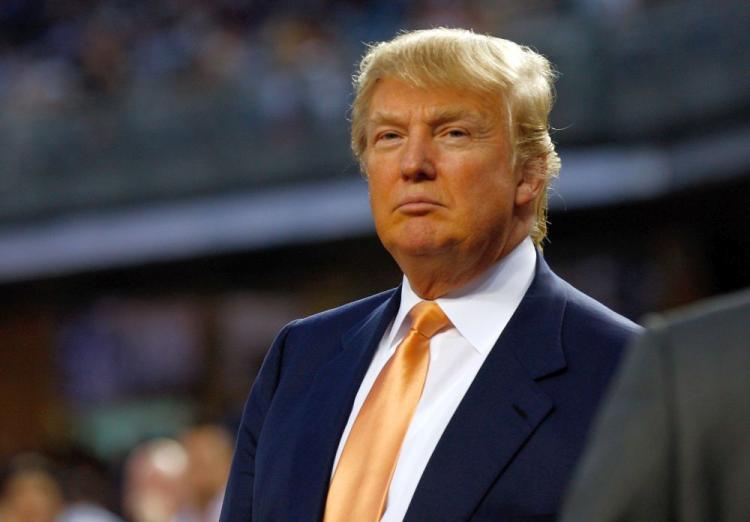
“If you're going to be thinking anything, you might as well think big,” Trump once said. He has recently hinted at a run for the White House in 2012.
Imagine this: in two years, the real estate mogul, reality television star, and astute businessman could occupy the Oval Office. And win, lose, or draw, his legend is poised to scale new heights of stature and grandeur.
Today, the word “Trump” doesn’t portray just a businessman, but a personification of whom Trump has come to symbolize to the world—wealth, power, vigor, and glamour.
Trump’s wealth isn’t astounding compared to some of the hedge fund titans hiding behind thick, mahogany veneers. Yet it is his name that most often delineates wealth. Trump’s public persona of ubiquity, authority, and extravagance did not spring from his reputation as a real estate developer—most people in America may not even associate Trump with commercial real estate. It comes from his appearances on television, his character in “The Apprentice,” his association with beauty pageants, and his name etched on some of the world’s most famous casinos.
For Trump, amassing money is a process, not a goal.
“Money serves as a scorecard,” Trump said in a recent e-mail interview with the Epoch Times. “I love making deals, it’s my art form.”
“My perspective hasn’t changed much on that. I can deal with the complexities and enjoy the process. We all know that financing is necessary for projects to get going but there are many layers to any deal or project. Negotiating is one of my strengths and is a skill that is crucial for making deals.”
A Focused Revival
Early in his career, Donald Trump followed the footsteps of his father, developer Fred Trump, into the New York real estate business upon graduating from the University of Pennsylvania in 1968.
Trump saw the potential of real estate and moved to New York City in 1971. With him at the helm, his company worked out an arrangement to develop the new Grand Hyatt hotel adjacent to Grand Central Terminal—one of his first major triumphs.
In the 1980s, Trump became a prominent figure on the East Coast, known for his negotiating prowess from bringing two major casinos to Atlantic City in Southern New Jersey, the Trump Taj Mahal Casino Resort and the Trump Plaza Hotel and Casino, as well as from developing the Trump Tower skyscraper on Fifth Avenue in New York.
But in the early 1990s, Trump’s business ventures ran into financial problems. The recession of the late '80s left some of his projects reeling and unable to meet their high-interest loan payments. Trump’s business needed a massive infusion of capital and he was forced to cede some control of business ventures such as the Taj Mahal and Trump Plaza to debt-holders.
With nearly $900 million in personal debt, and faced with an emotional blow from a much-publicized divorce from wife Ivana, most people would find their spirits withered.
But for Trump, those times were precisely the opportunity to restore his business and personal reputation.
“When I had a financial struggle in the early 1990s I learned how important focus is,” said Trump. “The key thing I learned from that episode is that keeping your focus is of paramount importance. I worked on that and my focus definitely improved.”