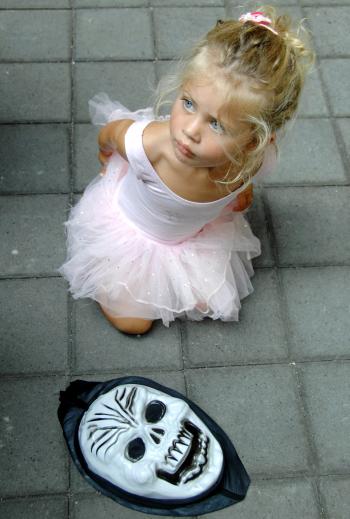

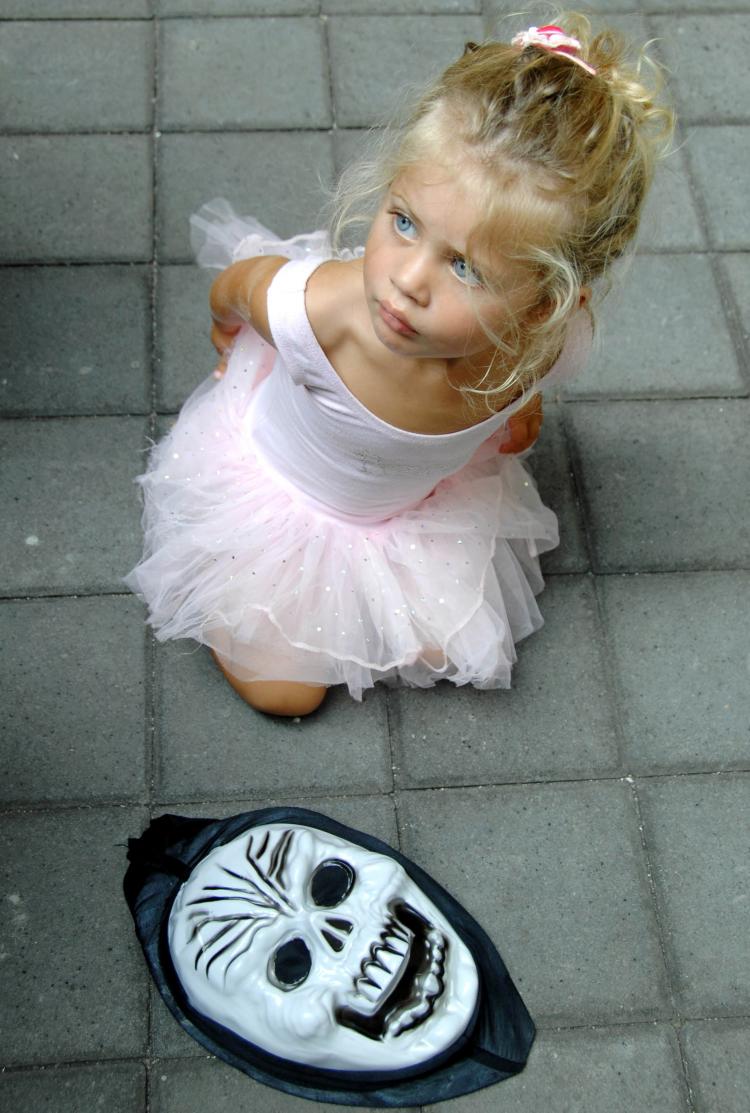
In the car with me were my two children, ages 1 and 3. Their pure minds seemed like bleach white sheets flapping over a pool of pop culture mud.
I don’t mind educating my children about death: deaths in Iraq and Afghanistan, deaths of those who are standing up for positive beliefs, and deaths of loved ones. There is genuine meaning behind death in these contexts that has to be confronted sooner or later.
But what was the meaning behind my neighbor’s display? Having fun and eating candy on Halloween, of course. Then, the question becomes: do having fun and eating candy supply a sufficient basis for a public display of death and the macabre?
I have become doubly aware of this since my wife comes from New Zealand, where Halloween is barely celebrated at all. She finds the whole thing strange. For me, there are great childhood memories of fun and candy, but now I am beginning to wonder.
In its time on this earth, Halloween evolved from the Celtic holiday of Samhain and the Roman holiday of Pomona, both of which carried seasonal connotations. The end of the harvest season meant it was time to celebrate with apples, pumpkins, corn, and general merriment.
Samhain also carries with it the belief that harmful spirits wander about on that night. Thus, came the tradition of disguising yourself as one of the evil spirits so that they would not harm you. The day further evolved with the Christianization of Europe, and took on the name All Hallows’ Eve, which is basically the day before the Catholic holiday of All Saints’ Day on Nov. 1. All Hallows’ Eve later shortened to simply Halloween.
Back in the days of Old England, where many of our Halloween traditions come from, good and evil was relatively clear. Whoever your country was fighting against was the bad guy and whoever broke the relatively simple moral code put in place by the king was an evildoer—not like the world we have today, where all things good or bad seem to have nuance that needs time for consideration.
In the context of Old England, you dressed up as an evil spirit, but you were obviously good. Now, on Halloween, however, the only thing that is clear is that you have dressed up as an evil spirit. There is something wrong with that.
It’s time for Halloween to again evolve along with the human intellect.
In the interest of preserving that magical evening for American children, maybe Americans should remake the holiday into a positive one, and root out the negative characteristics. The really great thing about Halloween is the communal aspect, the moving from door to door of neighbors you would probably never otherwise talk to or visit. That doesn’t have to change and neither does the candy.
But, why not change the signature Halloween costumes from Frankenstein, a witch, a vampire, a werewolf, and a mummy into a knight, a queen, a jester, a wizard, and a minstrel. Instead of emulating evil and inhuman creatures, our children can emulate the good characters of Old England. Halloween should be about capturing the beautiful simplicity with which people in Old England approached life.
Instead of gravestones and skulls, my neighbor (who is a great guy) could put up a fancy, old-fashioned sign that reads: “Welcome to Mine Kingdom, Where the Stouthearted Rule!”
Evan Mantyk can be reached at evan.mantyk@epochtimes.com







