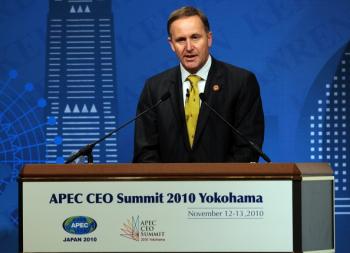

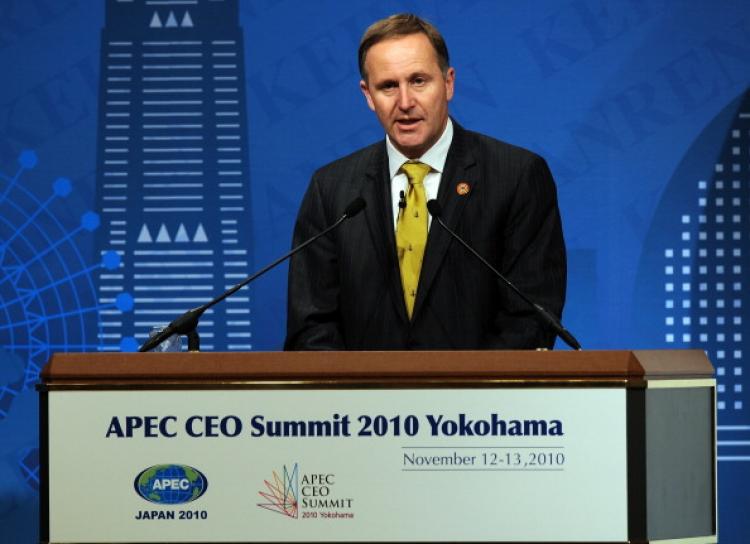
One News reported Keys saying that New Zealand's economy was the third most open worldwide and behind Singapore and Hongkong are leading the world in terms of opening up their economies to free trade.
Despite a pledge made at the 1994 APEC conference in Indonesia to open up markets for cross border investment and trade in the Asia-Pacific by 2010, Key didn't see it an an easy task to persuade other APEC nations to do the same.
One of the major factors holding countries back from fully implementing free trade policies has been the effect that lower tariffs and removal of subsides will have on businesses.
Opening Japan's economy and in particular the agricultural sector could see as many as three million job losses.
"Yes, (free trade) has caused restructuring in our economy in parts and there are certain industries that we are not involved in that we were involved in 20 years ago but we've also opened up the market to thousands and millions of consumers around the world for New Zealand goods and services," Key was reported as saying by ONE News.
New Zealand had already experienced major restructuring in its economy and Key did not anticipate job losses when the free trade agreement was achieved.
There would be greater opportunities for local kiwi businesses to trade with even larger economies but much of this was dependent on whether or not the United States followed up in good faith on previous declarations, reported ONE News.
Key had earlier expressed concern that "escalating tensions" over exchange rates could interfere with economic growth in the region.
“So it is at least my view that when it comes to the adjustments in the exchange rates that we are seeing at the moment, there needs to be both a degree of patience and fairness, Key said at Yokohama.
“If we don't get this right it's my view we will see currency wars, we will see retaliatory action taken that would be bad for economic growth.”