
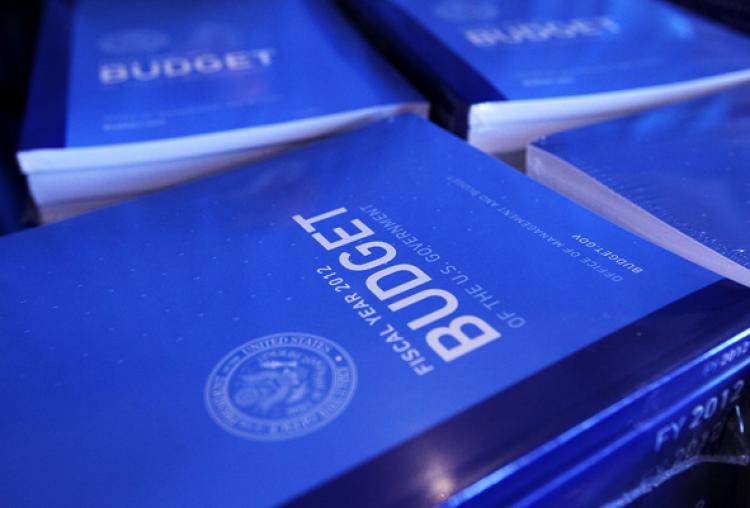
America’s 2012 budget has made headlines since the White House released it in February. But very little was said about the fact that America’s 2011 budget is still lingering on in its unapproved state without any sign of a resolution.
The U.S. fiscal year (FY) began October 1, 2010, but the U.S. government is still working under continuing resolutions, passed on December 21, 2010, which will finance government operations until March 4, 2011.
“On December 21st, Congress passed a fourth Continuing Resolution to fund the Federal government for FY 2011 through March 4, 2011. Under the Continuing Resolution, programs are not to start new projects,” as announced by the Office of Budget, Planning, and Integration on the United States Geological Survey (USGS) website.
Putting a Spin on the 2011 Budget
The Republican-majority House has put its own spin on the 2011 budget with U.S. Rep. Harold Rogers, R-Ky., chairman of the House Appropriations Committee, submitting a bill that would cut about $100 billion from the 2011 budget.
“This legislation includes the largest reduction in discretionary spending in the history of our nation—over five times larger than any other discretionary cut package ever considered by the House,” said Rogers in a February press release.
The FY 2011 budget calls for $3.7 trillion in spending, of which $1.6 trillion is earmarked for Social Security, Medicare, and Medicaid; $536 billion is for income security programs, interest on debt, and other mandatory spending; $224 billion is for various government retirement accounts; $810 billion is for national defense and other defense initiatives; and lastly, $565 billion is to keep the rest of the U.S. government going, according to a recent statement by Sen. Daniel K. Inouye, D-Hawaii.
Inouye chastised the House Republicans for ineffective finagling over a budget that should have been set in stone a few months ago and could result in a government shutdown.
The budget cuts as proposed by the House Republicans “would knock the legs out from under our nascent economic recovery, kill jobs, and do virtually nothing to address the long-term fiscal crisis facing our country,” said Inouye in a statement.
Not that the Democratic-majority Senate isn’t without blame in the 2011 budget mess. While still in control of both the Senate and the House, the Democrats failed to pass a single appropriations bill.
However, a government shutdown would be a political disaster, which would reverberate throughout the world, disrupt the U.S. economy, and have a dire effect on job creation.
“I am disturbed that some Republicans have indicated a willingness to allow a government shutdown. No responsible elected official should even consider such an option,” said Inouye in his statement.
With the 2011 U.S. budget running its course and a government shutdown a possibility, the White House put the 2012 budget on the table, making job creation a priority.
Competitive Workforce a High Priority
By earmarking $10 billion in the 2012 U.S. government budget toward the Workforce Investment Act programs, the sitting administration envisions the formation of a skilled workforce able to take on any challenge the future will throw at them, turning American’s into a formidable competitive workforce.
“In an increasingly competitive world in which jobs and businesses are mobile, we also have a responsibility to invest in those things that are absolutely critical to preparing our people and our Nation for the economic competition of our time,” according to the introduction to the U.S. Fiscal Year 2012 Budget.
An entire section of the budget is earmarked to bring the American workforce up to par with the rest of the world.
Next: Retaining Competitive Position