
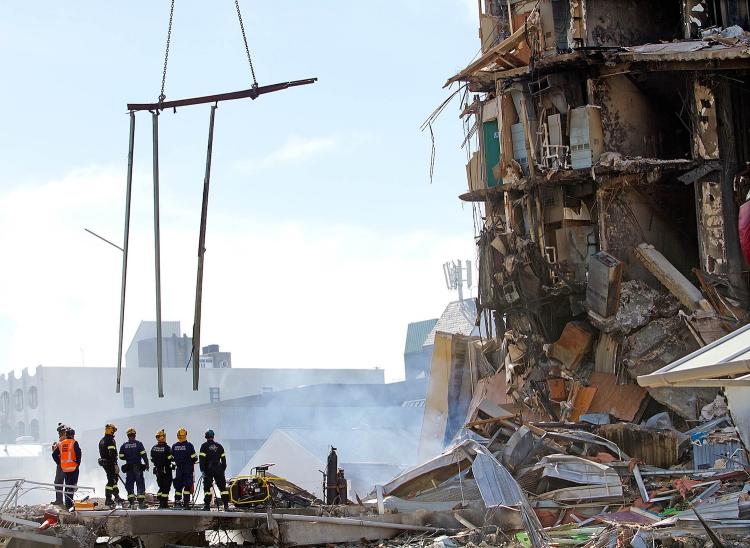
George Walker, a specialist in earthquake engineering, building codes, and disaster risk management, says the loss of life, which is likely to reach over 200, was largely due to pre-1970 buildings collapsing which, for the most part, were unable to survive the earthquake.
Walker did his doctoral thesis on earthquake engineering in New Zealand and is now an adjunct professor of Building and Construction at Australia’s James Cook University in Queensland.
New Zealand is unique in the fact that it requires that old buildings be assessed and strengthened in order to make them more resilient to earthquakes, but the measures required to do this may now be outdated and will have to be reviewed.
Although, according to Walker, New Zealand has one of the most advanced earthquake building codes in the world that “virtually incorporates everything we know about earthquake engineering,” new building code legislation, as it pertains to pre-1970 buildings, may have been too relaxed.
“I think it will turn out that nearly all the people who have been killed have been killed as a result of failure of what we might call ‘pre-modern code buildings,’” he said.
The Christchurch earthquake has brought to light those areas in the current building code legislation that may need to be changed or strengthened.
Another area that is being carefully reviewed by experts is the “foundational design” of buildings.
Liquefaction
Walker said one surprising effect of the two earthquakes that hit Christchurch in the past six months was the amount of liquefaction that occurred.
Liquefaction is where waterlogged sediment seeps up from the ground, usually indicating a lot of air and instability in the ground.
This liquefaction made the ground throughout the Christchurch region “alluvial,” meaning, not compacted or not stable.
Walker said he believed that the Hotel Grand Chancellor, which was relatively new and one of the tallest buildings affected in the quake, was damaged to the point that it will have to be demolished due to the liquefaction occurring at its foundation.
Alluvial soils, however, were not the problem, he said, as there are many cities around the world built on river flats.
“Engineers have tests for determining this sort of thing,” he said. “The issue is being able to recognize that the ground is susceptible.
“Maybe the tests need revisions. That would seem to be more the likely thing.”
While it is difficult to predict exactly where the next quake will hit in New Zealand, there are areas that are more vulnerable to earthquakes than others.
However, one of the biggest dangers that New Zealanders will have to face after this last quake is their own complacency.
Walker said awareness on both individual and community levels is critical to survival, saying people should know about what needs to be done and what procedures are in place.
In the more earthquake vulnerable areas of Japan, there are emergency packs at every front door, he said, replete with a hard hat.