Darwin may become the next Christmas Island, with Immigration Minister, Chris Bowen, announcing a new detention centre to be built outside the northern city. Advocates however, continue to call for community-based detention and improved conditions for children and families.
Mr Bowen recently announced plans for a $9.2million centre that would house 1,500 single men near Darwin at Wickham Point, 35 kilometres south-east of the city. The centre would bring the number of beds available in Darwin up to 2,900, more than Christmas Island’s capacity of 2,600.
The new Darwin centre will be staffed by doctors and mental health professionals. Mr Bowen says his department is preparing for contingencies, though he declined to mention how many asylum seekers are expected to arrive in the next year.
“This is a prudent contingency measure to make sure that our detention network is well managed,” Mr Bowen told ABC AM, “I don't want overcrowded detention centres.
“It's just appropriate that we have the contingencies in place and make sure that our detention centres are not overcrowded. I think people would rightly criticise me if I didn't take those sorts of measures.
“We have had an elevated number of boat arrivals. That's a historical fact. It's appropriate that we plan to make sure that if we do have more boat arrivals that our detention network is not overcrowded,” Mr Bowen said.
Refugee advocates say the Darwin centre is preferable to offshore processing but the Gillard government has missed an opportunity.
"The government needs to be looking for alternatives, not beds," Sophie Peer , spokesperson for The Refugee Council of Australia, told AAP.
Commonwealth Ombudsman Allan Asher, who reviewed the Christmas Island facilities, said that building a new centre in Darwin would help improve the situation for asylum seekers living in the overcrowded island facilities. But Mr Asher says more needs to be done to create mainland and community-based detention facilities, particularly for children and families.
"I remain concerned about timeliness in processing refugee applications, delays in security agency clearances and various health issues – particularly those related to mental health," Mr Asher said in a statement, reported AAP.
Dr Louise Newman, a professor of Psychiatry at Monash University, who chairs an advisory group of independent health experts to advise the Immigration Department, says the mental health of detainees is a concern.
“We need to have a serious discussion about the necessity of keeping people with histories of torture and trauma, children and people with mental health problems actually in remote facilities. And it has been our advice that these individuals and family groups need to be on the mainland in community-based accommodation. Sadly, I'm, and many other clinicians, are still treating some of the children and their parents that we saw during those days, the darkest days of Woomera and Baxter,” Ms Newman told ABC Lateline late last year.
Overcrowding in the centres and the length of detention stays are two often-cited factors that affect mental health in detainees. Immigration Department figures show that the average length of detention has grown from 25 days in 2008 to 183 days last year.
Asylum seekers not queue jumpers
Asylum seekers make up a very small percentage of migrants coming to Australia each year. Compared with the US and Europe, Australia receives a very small portion of the worldwide movement of asylum seekers across borders. In 2008, the US received 49,000 asylum seekers, while Italy, which is now taking in thousands of Libyan refugees, received 36,000. Eight boats have arrived in Australia so far this year.
Asylum seekers are quick to point out that they are not queue jumpers, and many seek asylum in Australia to escape death in their home countries. Once released into the community, asylum seekers tend to be one of the lowest-risk groups.
Dr Sev Ozdowski, who served as Australian Human Rights Commissioner from 2000-2005, says the Gillard government must address child detention and the welfare of families. In May, he is holding a conference on the psychological health of asylum seekers with Ms Newman.
“The first priority should be to get children and their parents out of immigration detention system as we are breeching the International Convention on the Rights of the Child,” says Mr Ozdowski.
“The present system is overly bureaucratic, inefficient and in breach of a range of international human rights standards. Considering that the vast majority of asylum seekers are successful in their claims for refugee status, detention should be used only in very limited cases where identity cannot be established or there are serious concerns about national security issues or fraud.”
Mr Ozdowski believes that applicants for refugee status should be allowed to live in the community while waiting for a decision. “There is no reliable evidence that if allowed to wait in the community for decision, they would abscond.”
While most media attention has been focused on asylum seekers from Iraq and Afghanistan, China is the top country of origin for asylum seekers, as well as Burma and other Asian countries. A recent study released in the Australian and New Zealand Journal of Psychiatry revealed that the impact of long term detention on Burmese refugees was more traumatic than the violence and loss experienced in their home country.
Dai Le is a Liberal candidate in NSW state election in the predominantly Vietnamese electorate of Cabramatta. She came to Australia in 1979 after escaping Vietnam at the end of the war and stayed in a refugee camp in HK for four years before she was admitted into Australia. She said during that time Vietnamese communists were pretending to be refugees in order to migrate to Australia.
“That is why I firmly believe that we do need a first port of asylum or in the case today, offshore processing, to assess the genuineness of whether you are a refugee. And it is the right of the country to assess who will come into their society, because I believe you need to consider the wellbeing of the people living in the country as well as the social wellbeing of new arrivals in terms of integration,” she told The Epoch Times.
“It is not a black and white issue but definitely we have to play a role as a nation to assist genuine refugees here who are escaping conflict zones, who are escaping oppressive regimes and to that extent, we need to accept the rights of the Australian government to assess and process them,” she said.
Like Mr Ozdowski, Ms Le thinks community engagement will be the best solution. Ms Le said she would like to see a register of names of people who were willing to act as a guarantor for families seeking asylum in Australia.
“More community involvement so the community would be willing to foot the bill in terms of support. You don’t want them to be isolated and just living in groups and then not having access to services,” Ms Le said.
While European countries have declared immigration a failure, saying it leads only to “enclavism”, Dr Ozdowski says Australia has shown that is can be successful.
“Australia is certainly one of the most successful immigrant countries in the world. Despite that we have one of the highest immigration rates in the world, Australia is a cohesive society – just look at our intermarriage statistics – and a society where productivity and economic wealth go hand in hand with immigration,” Mr Ozdowski says.
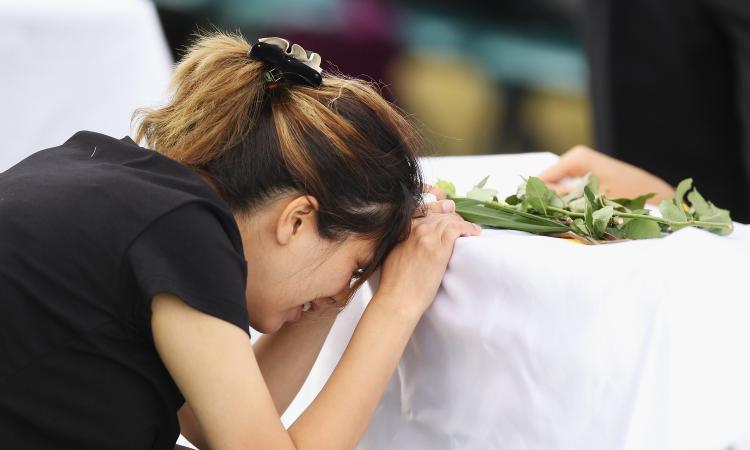
The survivors of the Christmas Island boat tragedy have been moved to community-based and other forms of detention facilities as of Mar 6, according to the Department of Immigration. The group of 100 people, including children and families, have not yet been granted visas.