

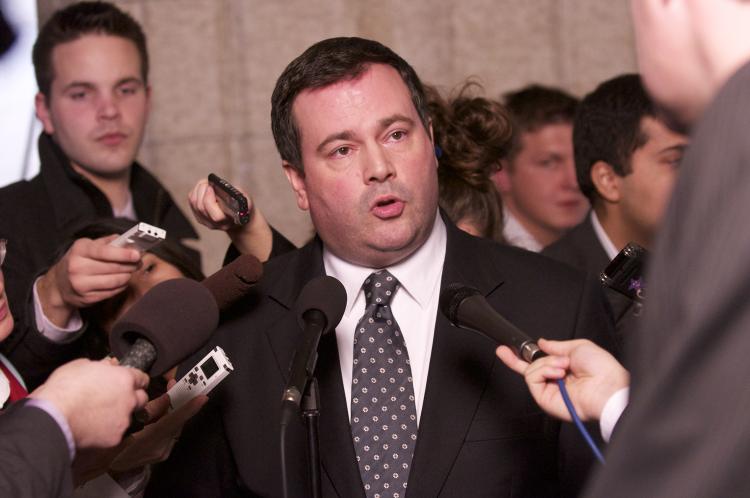
Immigration Minister Jason Kenney is accused of mixing his political and partisan roles, an allegation future immigration ministers will also likely face thanks to the fractured landscape of Canadian politics and the highest per capita immigration rates in the world.
Unlike embattled International Cooperation Minister Bev Oda, who kept silent following her infamous “not” note, Kenney faced the flash bulbs, so to speak, and talked to reporters after the story broke. He stood accused of using his ministerial resources for fundraising, a charge he denied.
“I can tell you that as a minister I’ve been very careful to ensure that the exercise of my official authority is not used in a partisan way,” he said.
Kenney’s trouble started when his director of multicultural affairs mistakenly sent NDP MP Linda Duncan the “Conservative Ethnic Paid Media Strategy,” a document likely intended for Conservative John Duncan. The email said the party needs $200,000 from riding associations for a successful ethnic media campaign.
The letter, written on ministerial letterhead raised questions over whether Kenney had used ministerial resources to create the plan.
Kenney told reporters he did not, and while that could easily be true, the challenge remains: how does any immigration minister avoid mixing partisan and political roles inappropriately when all MPs are expected to campaign almost constantly?
Unlike every other cabinet post, the minister of immigration has a direct and immediate impact on a voting block that parties see as key to scoring a majority parliament.
Importance of the Immigrant Vote
Frank Graves, founder of the EKOS Research Associates polling firm, told The Epoch Times in an earlier interview that immigrant Canadians historically voted Liberal, but now lean more towards the Conservatives.
Kenney, known by some as “the minister of curry in a hurry” for his prodigious visits to ethnic community events, can take much of the credit for that.
Those voters are increasingly politically active and growing faster than other electorates, noted Graves.
Meanwhile, four national parties, and one regional, duke it out in each election, making it hard for anyone to score a majority of seats. With the Bloc Quebecois not looking to leave anytime soon, and the Greens making headway each election, there is little change in sight.
That means the fight for a majority drives the Conservatives and Liberals to all ends in pursuit of votes.
The controversy surrounding Bill C-49 shows one way it plays out.
Anti-Smuggling Act
Bill C-49, the Preventing Human Smugglers from Abusing Canada’s Immigration System Act, aims to deter would-be refugees who arrive in Canada en masse by boat.
The government was met with unified opposition to the bill, virtually guaranteeing its defeat. Justin Trudeau, the Liberal’s immigration critic, said the bill would do little to deter desperate refugees.
“The greatest deterrent is if people know they pay all that money to cross in a dangerous situation and end up getting sent home—that is the deterrent we need.”
Refugee advocates, including Amnesty International, denounced the bill’s provision to mandatorily detention any “irregular arrival” for a year without review and put them on a five-year probation.







