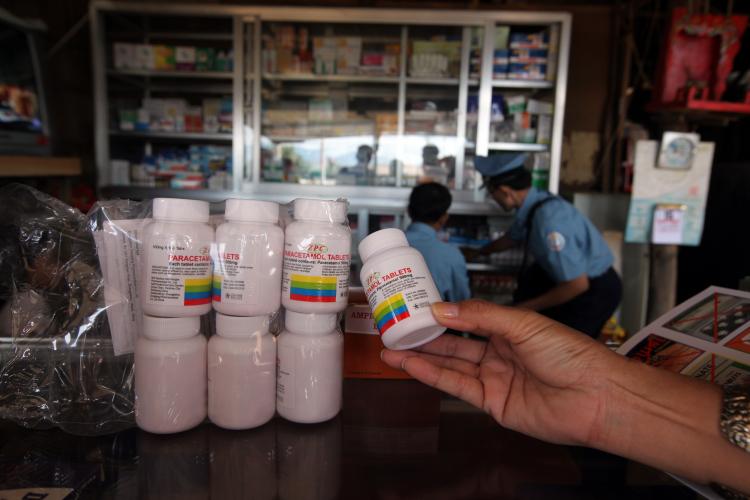
As many as three out of every 10 pharmaceutical products in the African, Asian, and Latin-American pharmaceutical supply chain are fake, making the illegal industry worth billions, says the WHO.
The “low risks and high returns” attract criminal groups, said Yury Fedotov, executive director of the United Nations Office on Drugs and Crime, in a statement. “These counterfeit goods indiscriminately kill, depriving the poorest of lifesaving medicines and leading to countless deaths,” he added.
According to the WHO, counterfeit drugs refer to a range of illicit products, including items with the wrong ingredients, without active ingredients, or without enough or with too much active ingredient.
It is not only the developing world that is affected by potentially dangerous doses. In April, Briton Peter Gillespie, 64, was sentenced to jail for eight years for his involvement in bringing millions of counterfeit drugs into Europe. Gillespie was part of a global network of fake drug trafficking and money laundering.
Extensive border controls have proven not adequate in controlling the supply chains of fake medicines. Every year, European customs officials find millions of fake drugs. The sale of fake drugs over the Internet has made the problem even more difficult to curb.
Industrialized countries with effective pharmaceutical regulation, such as Australia, Canada, Japan, New Zealand, most of the European Union, and the United States, estimate that counterfeit drugs constitute a very small percentage of available medicines in these regions’ pharmaceutical supply chain.







