
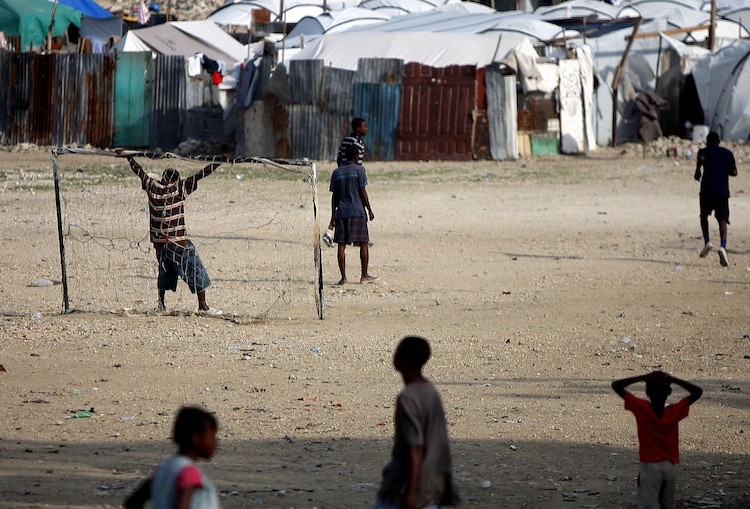
Evictions began last week around Stade Sylvio Cator stadium in preparation for a sports event, according to Amnesty International.
In return for a quick departure, city officials are allegedly paying the families US$250.
After the earthquake, some 7,000 people began living in the sports stadium but were evicted from it in April 2010. Families then set up camp nearby.
The camp was scheduled for closure by Haitian President Michel Martelly because of its visibility to the public.
The families first received notice of the eviction on July 12 when the mayor of Port-au-Prince paid them a visit, telling families they had to leave within three days or be forcibly evicted. The mayor returned with police forces to start the forced evictions on July 15.
Authorities have designated a plot of marshland about a mile away as accommodations for 100 families, one-fifth of the evicted. It is currently rain and hurricane season in Haiti, which makes it harder to erect new camps.
Some 634,000 people across Haiti still live in displacement camps, according a report last month from the International Organization for Migration. The IOM says 187 camps, or 18.6 per cent of the total number, are under threat of forced eviction.
In addition to the enduring problem of homelessness, life for camp dwellers is fraught with hardship from hurricane season, violent crime, the reduction of services provided by aid organizations, and cholera among other health risks from contaminated water and squalid conditions.
U.N. Secretary-General Ban Ki-moon said back in April, “While important progress has indeed been achieved, Haiti continues to face daunting challenges.”






