
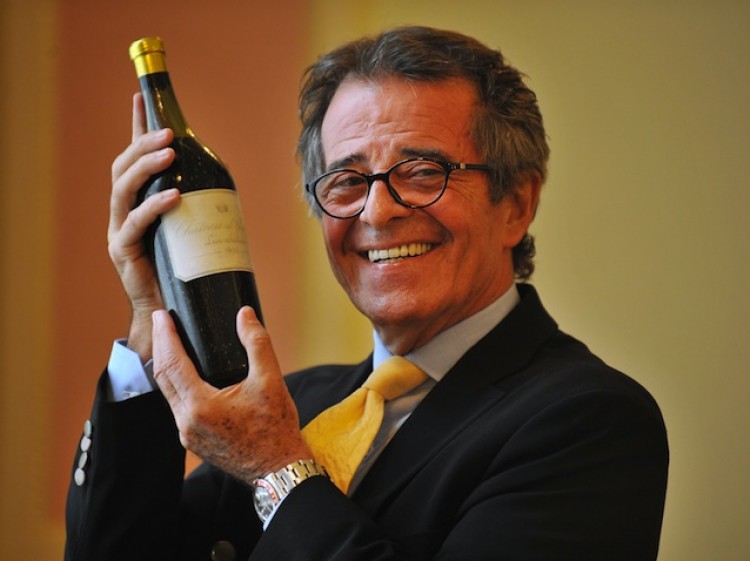
Christian Vanneque, who was a former sommelier and restaurateur at the Paris restaurant La Tour d’Argent, is the owner of an 1811 vintage from Chateau d’Yquem in Bordeaux, France, which comes with its own metal box and a combination lock.
“If the wine has a flaw, then tough luck," he said, according to the Australian. "You just have to smell it and enjoy the sight of it. I hope not, my God. If it does, then I would call Guinness because it would be another record—the most expensive bottle of ruined wine in the world."
Investment in fine wines has been skyrocketing since 2010; Hong Kong has toppled the Americans as the world’s most important market for wine auctions. For instance, an Asian buyer bought six bottles of Château Latour 1961 for $231,300 at a Christie’s auction in Hong Kong on May 27, which exceeded the presale high estimate by 100 percent.
According a report from Hong Kong-based independent brokerage and investment company, CLSA, “Success, wealth, and fame/social standing are highly regarded in Chinese culture and displaying this through watches, jewelry, apparel, cars, and wine garners respect.” The report forecasts that China will account for 44 percent of luxury goods sales globally by 2020, up from 15 percent today.
Several factors are driving the force behind the world’s booming liquid gold. The deregulation of wine import tax in Hong Kong in 2008 has made its mark and shifting global investment of wine. Also London-based Liv-ex Fine Wine 100 Index set up in 2005, which benchmarks the price movements of the top 100 most sought-after fine wines, has increased by a 14 percent compounded annual rate over the past 10 years.
However, critics of wine investment have also been skeptical of the recent Asian demand. "Prices may be up as a whole, but we would consider few of the wines that have shot up in price to be investment-grade," said The Wine Investment Fund (TWIF) Director Andrew della Casa, based on an interview with the Investor’s Chronicle.
"The Chinese market is also brand-driven rather than taste-driven, so we can avoid bubble areas. Demand for fine wine from North America and Europe, meanwhile, has been fairly consistent as wealthy buyers are less hurt by recessions and can still buy wine," added della Casa.







