
A new model of volcanic super-eruptions has revealed that these massive catastrophes that happen approximately every 100,000 years could be due to a combination of magma chamber geometry and temperature.
Over tens of thousands of years, a ductile rock halo around the chamber leads to a pressure build-up, uplifting the chamber roof, until finally fault lines cause the caldera to collapse and explode.
"You can compare it to cracks forming on the top of baking bread as it expands," said lead author Patricia Gregg at Oregon State University (OSU) in a press release. "As the magma chamber pressurizes at depth, cracks form at the surface to accommodate the doming and expansion.”
"Eventually, the cracks grow in size and propagate downward toward the magma chamber," she continued. "In the case of very large volcanoes, when the cracks penetrate deep enough, they can rupture the magma chamber wall and trigger roof collapse and eruption."
When supervolcanoes erupt, the global climate can be affected, for example leading to ice ages.
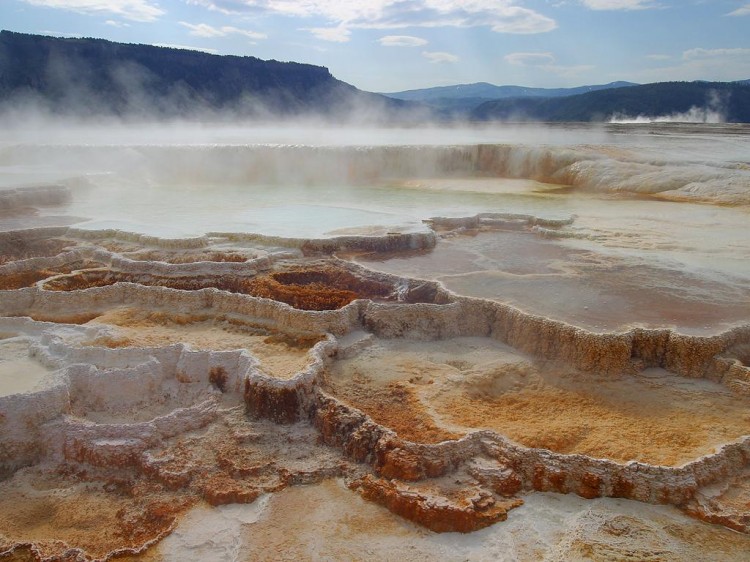
One of the largest supervolcanic events ever was the Huckleberry Ridge eruption at Yellowstone Park about 2 million years ago, which was over 2,000 times bigger than the Mount St. Helens eruption in 1980. There are other sites in Japan, New Zealand, the Andes, and Lake Toba in Sumatra.
"Short of a meteor impact, these super-eruptions are the worst environmental hazards our planet can face," Gregg said. "Huge amounts of material are expelled, devastating the environment and creating a gas cloud that covers the globe for years."
Previously, models were based on an internal chamber trigger, which would be expected to leave a precursor eruption deposit. However, there is a lack of visible evidence to support this theory, suggesting the trigger is above the chamber.
"Instead of taking the evidence in these eruptions at face value, most models have simply taken small historic eruptions and tried to scale the process up to super-volcanic proportions," said co-author Shanaka de Silva at OSU in the release.
"Those of us who actually study these phenomena have known for a long time that these eruptions are not simply scaled-up Mt. Mazamas or Krakataus—the scaling is non-linear. The evidence is clear."
Specific conditions are needed to create such a large eruptible magma chamber, explaining in part why such natural disasters happen so rarely.
The eruptions could be fed by gigantic lava reservoirs of 10,000- to 15,000-square cubic kilometers in volume, with repeated magma intrusions from below softening surrounding rock and allowing the chamber to expand.
In contrast, smaller chambers may eject lava more frequently before maximum pressure is reached.
At Yellowstone, volcanic uplift is happening daily, but a super-eruption is not expected in the near future.
"The uplift of the surface at Yellowstone right now is on the order of millimeters," Gregg said. "When the Huckleberry Ridge eruption took place, the uplift of the whole Yellowstone region would have been hundreds of meters high, and perhaps as much as a kilometer."






