
The U.S. State Department set off a firestorm when it decided to delay approving the Keystone XL pipeline, with the NDP and Greenpeace viewing the move as a victory while the Canadian government muses about shipping crude to China.
But in the U.S., some environmentalists believe President Obama is just delaying the decision in hopes the project will not divide key Democrat supporters—unions and environmentalists.
In Canada, the delay has prompted accusations of unpatriotic behaviour, with the Conservatives slamming the NDP over plans to lobby against the pipeline in the U.S.
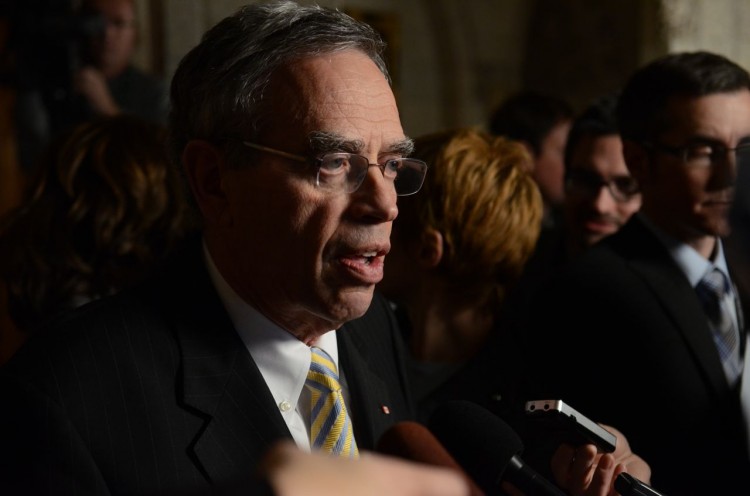
Natural Resources Minister Joe Oliver described any such attempt by the NDP as a “disgrace.”
“I was appalled when I heard the NDP intends to go down to the United States to talk negatively about the Keystone XL project,” he said Tuesday.
“This is a project which will generate hundreds of thousands of jobs for Canadians, billions of dollars of economic activity, and it will fund important social services like education for our children, health care for the elderly.”
The government has suggested Asia as an alternate destination for the oil, prompting discussion about the impacts of an alternate pipeline that would pump oil sands crude to Kitimat, B.C., for transport to China, Japan, and elsewhere.
“When I visited Japan and China quite recently, let me tell you, there’s a thirst for our natural resources there,” Oliver said.
NDP interim leader Nycole Turmel said the delay shows there are unanswered environmental questions about the project.
“The United States is deciding to postpone because they want more inquiry on the environment. So that just answers our question, what we have said for so many months, that they should have more question, more studies on environment and impact on environment,” she told reporters on Monday.
State Department Delay Tactic
The State Department, with direction from the White House, will push approval for the project into the first quarter of 2013, just after the 2012 elections. The department said it needed time to examine alternative pipeline routes.

The decision to delay the project was hailed as a major victory for environmental groups, as thousands of demonstrators turned out en masse at the White House on Nov. 6—two days before the State Department’s announcement.
Greenpeace Canada climate campaigner Mike Hudema pledged the group would work to turn the delay into the “beginning of the end for the tar sands.”
Critics have accused the U.S. administration of playing politics with the pipeline, delaying the responsibility of approving the project until after the presidential election. Whether true or false, the pipeline has brought about a division between cornerstones of the Democratic Party base: unions and environmentalists.
“Environmentalists formed a circle around the White House and within days the Obama administration chose to inflict a potentially fatal delay to a project that is not just a pipeline, but is a lifeline for thousands of desperate working men and women,” said Terry O’Sullivan, general president of the Laborers’ International Union of North America (LIUNA).
He went on to describe the decision as “job-killers win, American workers lose.”
The United Association of Journeymen and Apprentices of the Plumbing and Pipe Fitting Industry (UA) says current pipelines need replacement, regardless of the Keystone XL project, a point environmentalists agree with. UA general president William Hite considers current 40 to 50-plus-year-old pipelines thousands of miles in length dangerous, and in need of replacement.
“We’ve already seen recent explosions in old gas lines that have taken lives and evidence of dangerous toxins leaching into our water systems due to worn out pipes,” said Hite in a press statement.
“These are virtual time bombs waiting to happen and should be addressed by government and those who truly care about the environment.”
Keystone Jobs in Canada or U.S.
The project is promoted as a way to gain energy and oil independence from foreign sources, and strengthen security while creating much-needed jobs.
The approximately 2,700 km pipeline is the latest leg of a multiphase, $13 billion project by oil pipeline and energy company TransCanada to pump tar sands crude oil from Alberta to the Texas Gulf Coast for refinement.
TransCanada says the pipeline will create 20,000 construction and manufacturing jobs in the U.S., along with 118,000 spin-off jobs and inject $20 billion into the American economy and pay out over $5 billion in taxes to local counties over the project’s lifetime.
But those jobs in the U.S. are one of the reasons the project is criticized in Canada. Oliver defended the loss of value-added jobs to the U.S. as a private-sector decision based on economic realities.
“The issue here is that we don’t have the excess refining capacity. The United States does. To create it will cost billions of dollars. It’s a private sector decision. So, you know, if there was an economic reason to do it, the private sector would build the refineries. But the important thing is that this project would generate hundreds of thousands of jobs because of the work generated in the oil sands.”
Oliver said the oil sands represent the vast majority of Canada’s oil resources and will create almost half a million jobs and trillions of dollars in economic activity.
“And that will generate enormous revenue for governments and fund social programs.”
Future Opposition
Environmentalists working against the pipeline have promised renewed opposition if it moves ahead in the future.
“Some in our movement will say that this decision is just politics as usual: that the president wants us off the streets—and off his front lawn—until after the election, at which point the administration can approve the pipeline, alienating its supporters without electoral consequence,” Bill McKibben of pipeline activist group Tars Sand Action said.
“The president should know that if this pipeline proposal somehow re-emerges from the review process we will use every tool at our disposal to keep it from ever being built.”
The present plan for the pipeline proposes a route crossing Nebraska’s Sandhills region and the Ogallala Aquifer area, much to the dismay of environmentalists, conservationists, and local activists opposing the project.
Some local citizens along the pipeline trail have refused to sign easement agreements for the project. Many who refused reside in the Sandhills region, and are uncertain as to whether the delay in approval is a permanent or temporary victory.
For local landowners the fear is that an oil spill from the pipeline sometime in the future would severely threaten life in the Sandhills and Ogallala regions. Tar sands crude often contains dangerous amounts of benzene, which could spread into the aquifer system and create risk of exposure to residents.
Extra Costs
TransCanada could be looking at an additional $1 billion in expenditures over delay of the project. According to First Energy’s energy infrastructure analyst Steven Paget, pushing the project into 2013 would force TransCanada to pay out interest to investors as well as the costs involved in assessing environmental impact on proposed new routes.
Paget believes the project will go ahead. He predicts this will cost TransCanada $8 billion or more in the end. TransCanada has already spent $1.9 billion on the project.
“We remain confident Keystone XL will ultimately be approved,” said Russ Girling, TransCanada’s president and chief executive officer, in a press release. “This project is too important to the U.S. economy, the Canadian economy, and the national interest of the United States for it not to proceed.”






