

Apple Inc. has just scored a win against HTC, and technically, the entire Android ecosystem, in one major round of its bruising international patent battle, this time with the International Trade Commission (ITC).
But with legal and patent experts stating that the win is a much smaller one than what Apple was hoping for, it remains to be seen how much this will actually affect HTC and other Android smartphone manufacturers.
On Monday, the ITC, a U.S. government agency, ruled that some HTC smartphones being sold in the United States had features violating a single Apple patent, and that they would be subject to an import ban that begins in April 2012, about four months from the date the ruling was made.
Shortly after the ITC ruling, HTC made a public announcement saying “[T]he ‘647 patent is a small UI experience” and that HTC was confident it would be able to remove the feature before the looming deadline.
The win might be Apple’s most significant legal victory so far against HTC and possibly Google’s Android operating system, since the patent in question relates to a core feature of smartphones today, including Android smartphones. While the patent itself is worded vaguely and relates to the smart processing of “objects” embedded in other documents, the specific and most obvious implementation in relationship to the lawsuit is the automatic linking of phone numbers on a Web page to a phone call to the phone number itself; a feature core to smartphones nowadays.
At the same time, the ITC handed Apple a victory on only one patent. Apple had earlier brought a full 10 patents against HTC in its filing with the ITC. The ITC’s ruling basically turned down three other patents related to signal processing and other fields, some of which patent experts have said were far more central to smartphone operations and would have been harder to work around. The ITC ruling was also weaker than its own preliminary ruling, which indicated that HTC infringed on two patents. HTC had appealed that intermediate ruling.
Scorched Earth Smartphone Wars
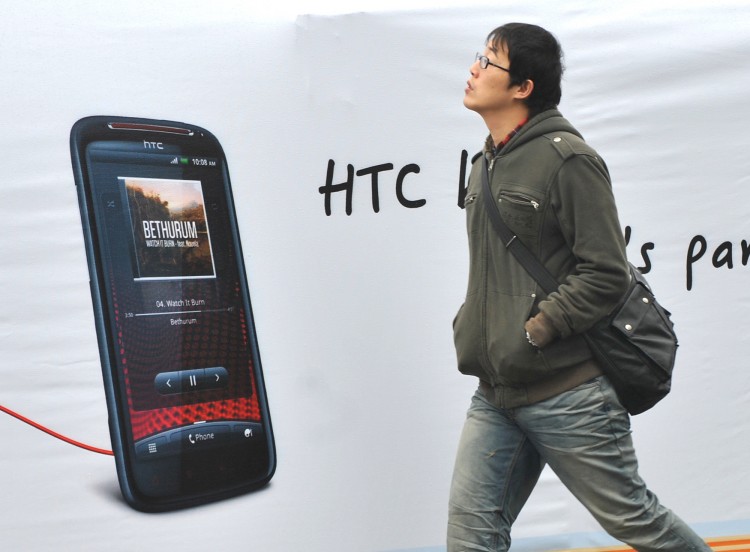
This would likely mean that HTC would work with Google Inc., which makes the Android operating system that powers HTC and other smartphones, to work around the patent.
This is not new. Samsung lost an initial court ruling in Germany on another Apple patent and is believed to be working with Google on modifying its smartphones and tablets to work around those rulings as well. In Samsung’s case, simply upgrading some of its offerings to a new version of Android, specifically Android 2.3, would have been enough to work around the Germany rulings.
But in HTC’s case, the click-to-call feature would have to be removed with Google’s help. In addition, given the absolute thoroughness with which Apple seems to be going after Android makers, industry watchers have predicted that Apple will take the ITC ruling, even though weaker than its original filing, to federal and international courts where it has locked horns with three other major Android smartphone makers in scorched earth patent wars.
Earlier this month, Motorola Mobility won a major patent case in Germany against Apple’s iPhone and iPad. The ruling covered core wireless technologies found in the iPhone and iPad.
Meanwhile, an Australian high court had originally ruled that certain Samsung smartphones and tablets would be banned in Australia due to design patents, but Samsung was able to get that overturned through an appeal and was able to continue selling its smartphones and tablets in Australia.
Google and Oracle are also facing off in a California court over Google’s use of Java in the Android operating system, while Microsoft is also claiming royalties over some of its patents being used in Android.
Google’s Android operating systems runs on a variety of smartphones made by manufacturers such as Motorola, Samsung, and HTC. Android smartphones dominate the smartphone market with a 52.5 percent market share of all smartphones sold, according to a Gartner study in November. The same month, Google announced version 4.0 of its Android operating system, with its biggest improvements being in its design and user interface. Google also just launched its Nexus Prime smartphone in the United States along with Verizon, and Google’s ex-CEO Eric Schmidt announced that the search giant may be launching an Android tablet next year.
While this is an exciting time for gadget lovers who have a plethora of devices to choose from, the patent wars look like they are not stopping anytime soon.






