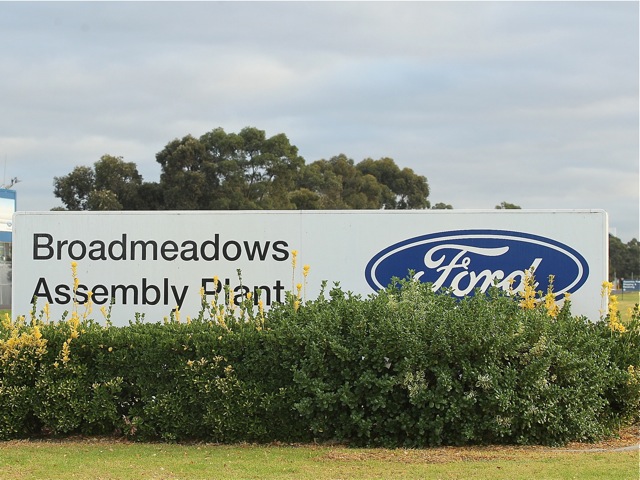
The Australian Council of Trade Unions (ACTU) has called for a strategy to keep Australia’s car industry afloat, as more factory closings and layoffs in Victoria hit the industry.
On July 25, car parts supplier CMI Industrial announced it was closing two factories in Melbourne, leaving 119 workers without jobs. The announcement came just one week after Ford Australia announced it was cutting 440 jobs from its Geelong and Broadmeadows plants.
ACTU president Ged Kearney called on unions, governments and the industry to discuss a long-term strategy for manufacturing in Australia.
“We need to sit down with employers, unions and government, and say what is the future of manufacturing cars and how can we actually invest in that,” she told reporters in Melbourne on July 26.
The automotive sector is facing the challenges of a high Australian dollar, a struggling retail market and increased competition from overseas.
With reluctant consumers, some automotive giants are looking to government subsidies to bolster their businesses. In January, Ford announced a $103 million investment for its 2014 local upgrade project, with contributions from the Federal Government and Victorian State Government.
Opposition treasury spokesman Joe Hockey criticised the Federal Government for providing a $34 million subsidy to Ford, saying last week that Australians are “voting with their feet in not buying Australian-made vehicles”, Network Seven reported.
In May this year, Ford announced a loss of $290 million, with a 24 per cent drop in sales of its Ford Falcon model alone.
But Ford Australia CEO Bob Graziano says the domestic automotive industry is vital to the Australian economy and should continue to receive support, despite recent sales figures.
Mr Graziano says that manufacturing—more than any other sector—creates secondary jobs.
“For each person directly employed in the automotive industry, it’s estimated another six people are employed in supporting industries,” Mr Graziano told a recent Rotary Business Breakfast meeting.
Australia is one of only 13 countries worldwide that can develop and produce vehicles from “a concept on paper through to the production line”, Mr Graziano said.
“If we allow manufacturing in this country to be lost, it will never come back,” he added.
Mr Graziano cites the highly competitive Australian market as one of the factors in slowing sales, with emerging competitors from China and India having a big impact.
“It is a very competitive market, second only to China. And I suspect as more Chinese brands and Indian brands come here, it will become even more competitive,” he told The Epoch Times.
Australian innovation is important for the global market, Mr Graziano says, as the automotive industry develops new technologies to reduce emissions and work towards sustainability.
Ford has invested $232 million in improving the environmental performance of the Falcon and Territory models, and has 125 patents pending on new technologies, he said.
“We have been reaching out a bit more with our engineering community here in Australia,” said Mr Graziano.
“We are bringing in a lot of technology that you typically don’t find on vehicles in this price range; they are usually in a much higher price range.
“And our ability to bring that global technology to this market place, consistent with what customers are looking for, will help us to grow over time.”
The Epoch Times publishes in 35 countries and in 19 languages. Subscribe to our e-newsletter.