
An independent non-profit research organisation based on the Gold Coast of Queensland, Australia will be conducting a long-term study into the health of the whale population, following a recent increase in whale strandings along Australia’s east coast.
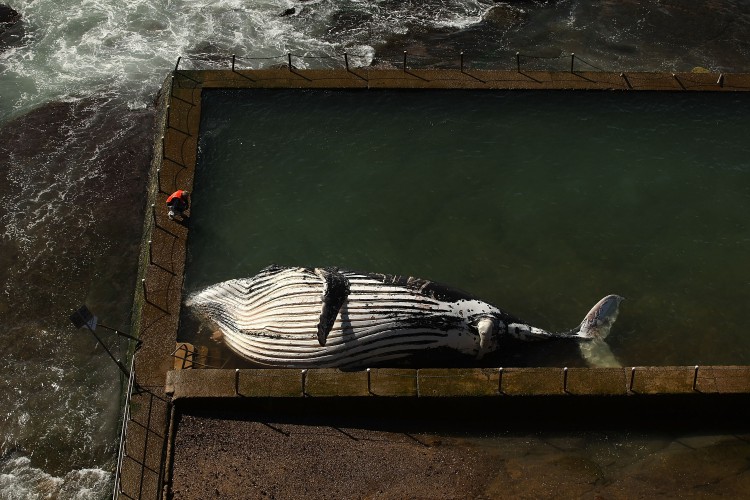
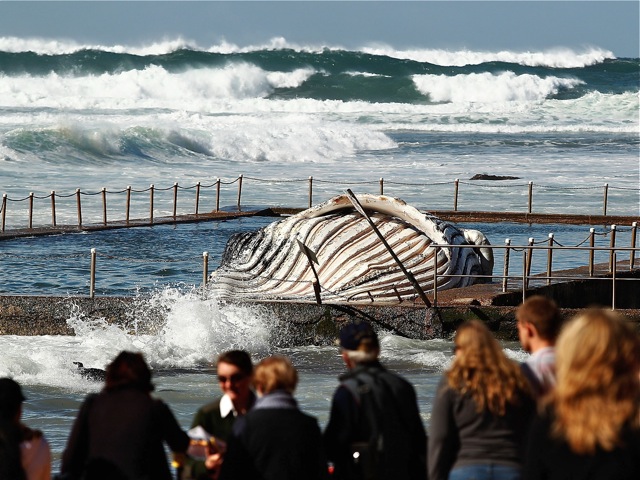
A humpback whale was found washed up at Sydney’s Newport Beach ocean pool on Aug 1, adding another to the dramatically increased number of strandings in recent years. While over the past 20 years only about 5 strandings have been recorded per year, there were 25 strandings recorded last year alone.
Humpbacks and High-Rises (HHR) is a community-based research group dedicated to researching and protecting humpback whales and other marine mammals along the broader Gold Coast region.
Increased Whale Strandings Prompt Innovative Research
Researchers will be using various methods to collect samples of whale blubber, blood and skin tissue for comprehensive analyses. The study will examine various indicators of health in whales, such as energy supply, immune system strength and nutritional levels.
Chief scientist and president of HHR Dr Olaf Meynecke says it is difficult to obtain large samples. “We don’t want to injure any animals so ideally we just use the animals that are getting washed up to the shore and that pass away,” he said.
Researchers also plan to collect samples of mucus expelled from the whale’s blowhole when the animal exhales.
“We’re planning to use drones that carry small petri dishes and fly right over the whale to collect those blow samples. Then we can analyse it for hormones and hopefully bacteria and viruses,” Dr Meynecke said.
The collected whale samples will be initially compared to data found in humans to infer the health of the whales. This is due to insufficient data available on humpbacks to establish results that would define a “healthy” whale. The health screenings may enable researchers to find the causes behind the recent increased whale stranding and mortality rates.
“There may be some nutritional depletion. The population of the humpback whales is increasing but we doubt that the amount of food available for them is increasing at the same rate, so they might actually struggle,” Dr Meynecke said.
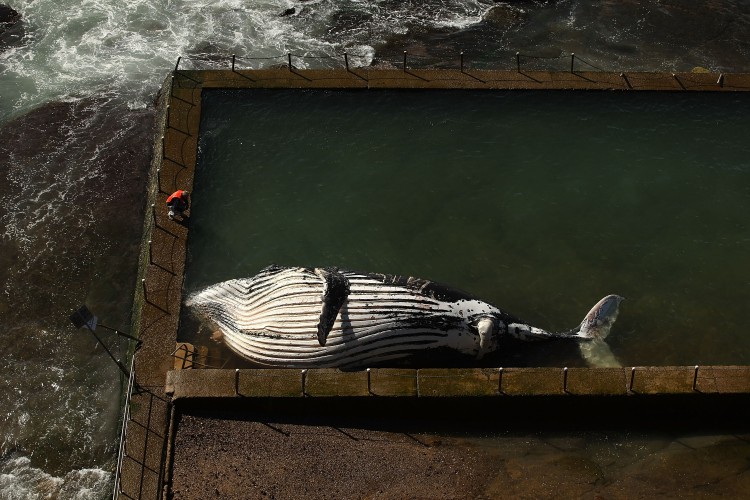
“We find a lot of juveniles washed up on the beaches. This could be an indication that these animals are just starving or have some diseases.”
He adds that the effects of La Niña on ocean currents have been “very strong” this year and in 2011. Whales depend on the current for migration and the changes may mean that weaker whales that would normally have died offshore are being washed up instead.
An estimated 15,000 whales are migrating along the east coast from chilly Antarctica to the warmer waters of northern Australia to breed and calve. The 10,000km migration normally occurs annually between May and November.
A recent study by HHR and Griffith Centre for Coastal Management on cetacean incidents suggests that humpback whales tend to be washed up on shore around August every year, with south-east Queensland being a hotspot for such incidents. Stranding is also the second most common incident reported for humpback whales, after net entanglements.
Students at Griffith University, in collaboration with HHR, have recently developed a whale tracking Android app that researchers hope will engage the Gold Coast community in supporting whale research and protection.
The app enables users to report firsthand sightings of the location and behaviour of whales, which will help researchers to develop better predictive models of whale movements throughout the day and the year, especially near the shore.
Dr Meynecke hopes the app data will help HHR provide advice to the community to steer clear of potential whale resting spots to reduce incidents such as collisions, whale entanglements in shark nets and noise pollution.
“Whale watching is a multimillion-dollar industry and I think it’s very important to make people aware of the fact that we share this place with other animals and that we have to take care of them as well,” he said.
With reporting by NTD Television.
The Epoch Times publishes in 35 countries and in 19 languages. Subscribe to our e-newsletter.