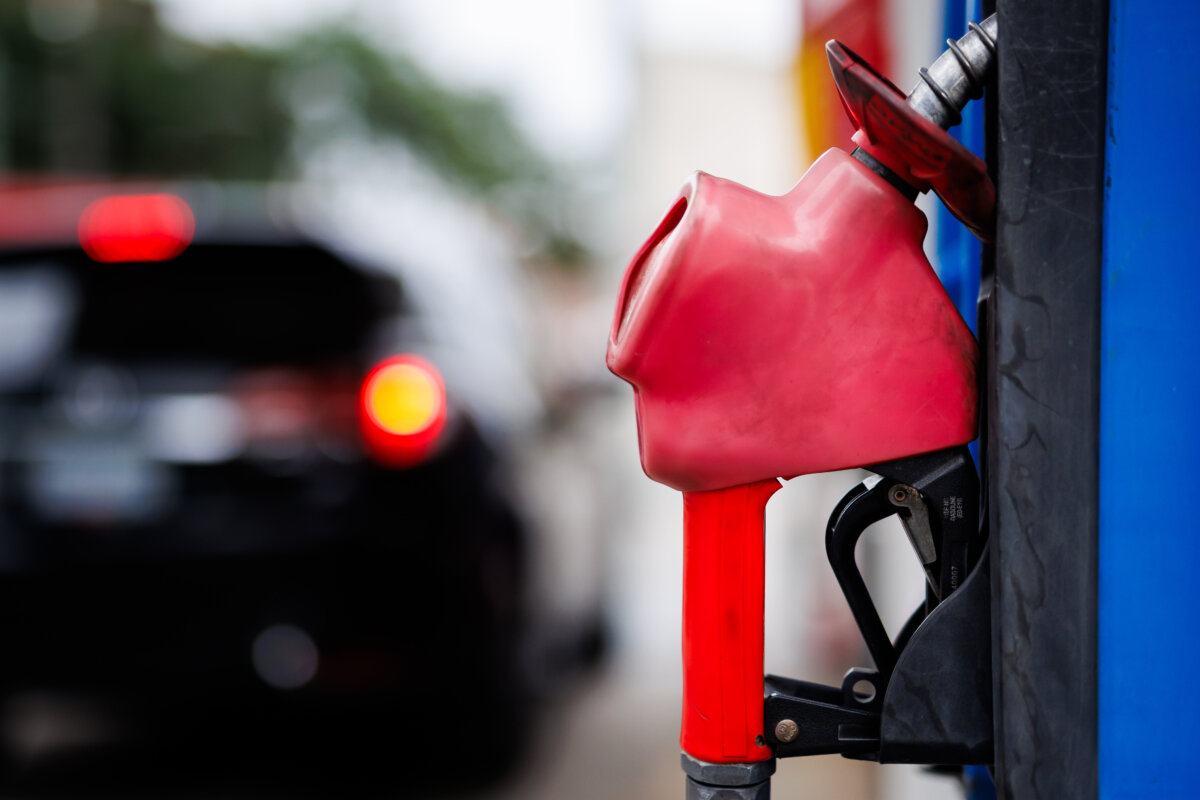

Canadian drivers are seeing some relief at the pumps after months of high gasoline prices, but the global oil supply problems that helped push prices up have yet to be resolved.
Canada’s national average gas price was $1.52 per litre on Nov. 20, down 28 cents from a month earlier, according to Canadians for Affordable Energy. Gas prices have been elevated amid conflicts in the Middle East and Ukraine, which have destroyed energy facilities and disrupted the flow of oil.
Energy experts say the decline reflects market expectations of an end to the Iran war and a normalization of global energy flows, and not a reflection of those fundamentals actually improving.
“Nothing has been resolved yet in these conflicts, whether it’s the Ukraine-Russian one, whether it’s the Middle East one. We’re still sitting at historically low inventories across the planet. The tensions are still very high in these parts of the globe,” said Carol Montreuil, vice president of the Canadian Fuels Association.
Dan McTeague, president of Canadians for Affordable Energy, said oil traders’ optimism in recent weeks “ignores some of the fundamentals, that the Strait of Hormuz is not back to normal.”
Strait of Hormuz
Oil prices began to rise in late February, after the United States and Israel launched strikes on Iran, which responded by restricting shipping through the Strait of Hormuz. Beginning in April, the U.S. military also imposed a blockade on Iranian oil.
At the same time, destruction of oil terminals in the Ukraine war, as well as Houthi attacks on Saudi Arabian oil tankers and pumping stations along the country’s East-West pipeline, have contributed to higher energy prices.
While Iranian missiles and drones have kept shipping volumes through the strait below normal, the U.S. military has reduced pressure on oil markets by providing naval escorts for oil tankers through the strait for around four months. One U.S. military official said that 28 million barrels of oil passed through the Strait on Nov. 18 alone.
The price of West Texas Intermediate (WTI) crude has fallen from US$105 on Oct. 30 to US$85 as of Nov. 20.
Montreuil said increased oil shipments through the Strait of Hormuz have eased some pressure on energy markets, although Iran continues to attack vessels passing through the waterway almost daily.
“Between the different narratives that are out in the media, it’s very difficult to understand exactly the situation as to how much crude is really coming out,” Montreuil said.
“One thing is for sure: [oil] inventories across the planet are still very low, and it’s going to take many, many months to bring these inventories back to where they were before the conflict.”
The United States agreed to release 172 million barrels from its reserves to alleviate price pressures. Its Strategic Petroleum Reserve has fallen to around 276 million barrels as of Nov. 13, the lowest inventory level since 1982.
McTeague said oil traders also appear to believe that Republican losses in the recent U.S. midterm elections will limit President Donald Trump’s ability to continue military operations against Iran.
“There seems to be some belief that presidential powers would be limited,” McTeague said. “Of course, it doesn’t include the fact that the White House has plenty of power.”
Trump has indicated that he will maintain the blockade and sanctions on Iran into 2027.
Gas Tax Holiday
The federal government took further action to address high gas prices in September, extending the suspension of the excise tax on gasoline and diesel until early 2027. The taxes, suspended in April, are scheduled to return at half their regular rates from Feb. 1 to March 31, before being fully reinstated on April 1.
Montreuil said there is no doubt that the tax holiday has brought gas prices down. When combined with the removal of the carbon tax in early 2025, prices at the pump are around 20 to 30 cents lower, he said.
However, the Liberals voted against a Conservative motion to eliminate federal taxes on diesel sales until July 1, 2027, and to end the industrial carbon price and Clean Fuel Regulations.
McTeague predicts that energy prices will rise again in the winter, with diesel in particular moving higher given that it is used for heating oil and furnace oil, in addition to shipping products and powering heavy farm equipment.
“As demand increases, so will the price of diesel. And given the world is short diesel—whether that be in Europe or many Asian Pacific countries—it’s likely that this is more of a temporary relief for a lot of people. So don’t get too used to it.”