
Venezuela has set out a plan to restructure $237.5 billion in debt, restore stability, and more than double its oil output.
Caracas said in a macroeconomic framework published on Tuesday that the country’s total debt, about 242 percent of GDP, is unsustainable and that Venezuela has been in protracted default since 2017.
Venezuela’s economy has been battered by years of hyperinflation, sanctions and, most recently, deadly earthquakes.
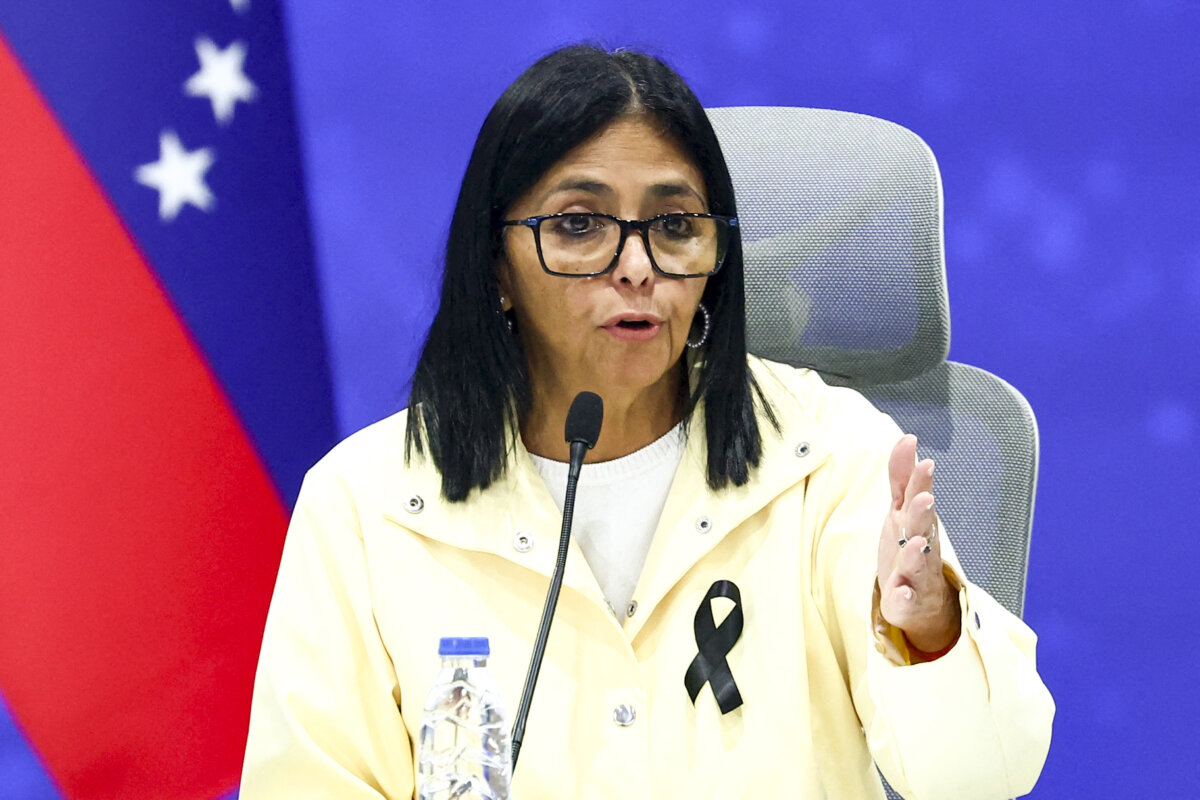
Venezuela, currently led by interim leader Delcy Rodríguez since the U.S. military captured former leader Nicolás Maduro in January, said it would pursue a single, comprehensive restructuring of debt owed by both the state and state oil company PDVSA, but did not specify how much relief it is seeking.
The largest block is about $110 billion in Eurobonds, around $46 billion of it unpaid interest. The rest comprises arbitration claims, bilateral and multilateral loans, bank debt, and PDVSA’s supplier, pension, and other nonfinancial liabilities, some of which are owed within the public sector.
Venezuela holds the world’s largest proven crude reserves, more than 300 billion barrels, but produced only about 1 million barrels a day in 2025, down from around 3.5 million in the 1990s.
The plan projects output reaching 2.9 million barrels a day by 2036, with GDP growth averaging 6.3 percent a year over the decade. It also expects the economy to grow 5 percent this year.
An oil agreement between the United States and Venezuela, announced in August, is a key component of that forecast.
It covers 17 oilfields holding roughly 65 billion barrels. North American Blue Energy Partners would fund their development, and the U.S. government would take a 35 percent stake in its parent company. The deal could generate more than $200 billion in revenue for the Venezuelan state over 25 years, according to the framework.
Earlier this month, ExxonMobil signed a memorandum of understanding with PDVSA to assess upstream opportunities, a potential return to a country that expropriated its assets almost two decades ago.
The agreement is nonbinding and commits the U.S. company to no specific project, and Exxon has not said which areas it is examining. It would need a final joint-venture or production-sharing contract before taking part in exploration or production.
Exxon described the memorandum as a meaningful first step, but said any future investment would require stable policies, clear regulations, strong investment protections, and competitive returns.
Venezuela has also amended its hydrocarbons law, lowering the maximum combined royalty and tax rate and adding alternative dispute-resolution mechanisms for investors.
Phased Reforms
The plan is organized into three phases: 12 months of normalization, two years of recovery, and longer-term diversification.
Early priorities include unifying the exchange rate, publishing central bank accounts, introducing fiscal rules, and overhauling tax collection. Another early goal is a push to attract Venezuelans living abroad back home.
Later goals include a sovereign wealth fund to manage oil income.
The government said it expects to eliminate the public-sector primary deficit by 2031 and to double the dollar value of the economy to about $200 billion by then.
It acknowledged that inflation, which stood at 475 percent at the end of last year, is expected to accelerate this year before converging to about 24 percent over the medium term.
The government’s own risk assessment lists slow oil recovery, oil price swings, delayed debt talks, weak administrative capacity, and the persistence of sanctions among the threats, though it describes overall risks as moderate.
Earthquake Aftermath
Earthquakes measuring 7.2 and 7.5 in magnitude hit the country on June 24, killing more than 6,000 people and leaving about 18,000 homeless.
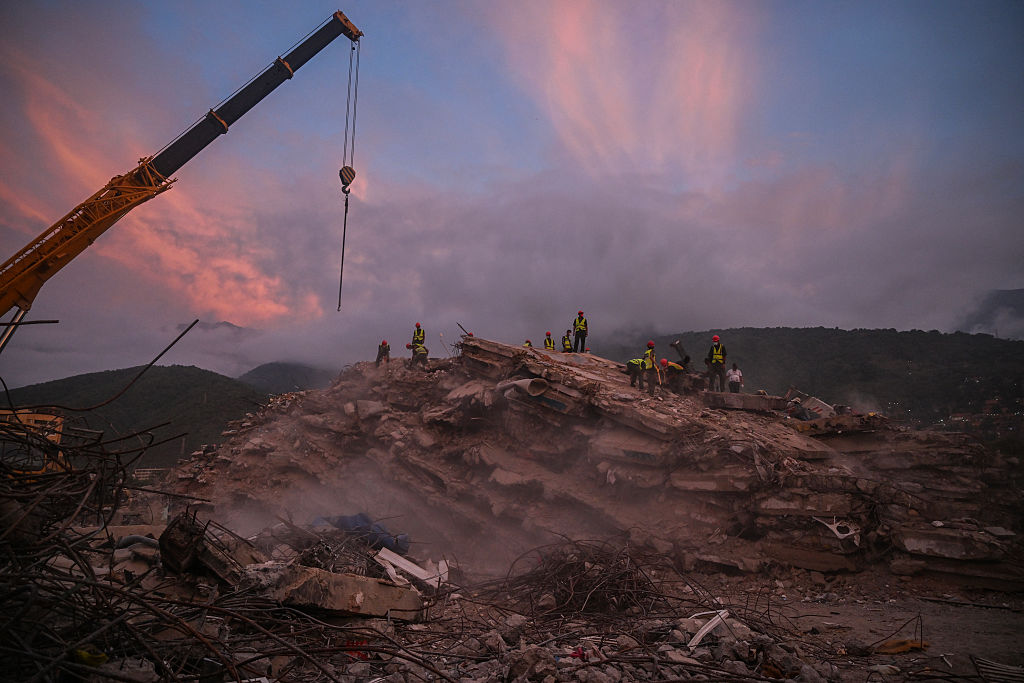 Rescue workers search through the rubble of collapsed buildings following the June 24 earthquakes along the coastal strip in Caraballeda, La Guaira state, Venezuela, on Aug. 19, 2026. (Juan Barreto/AFP via Getty Images)
Oil and gas infrastructure was not materially damaged, the document said.
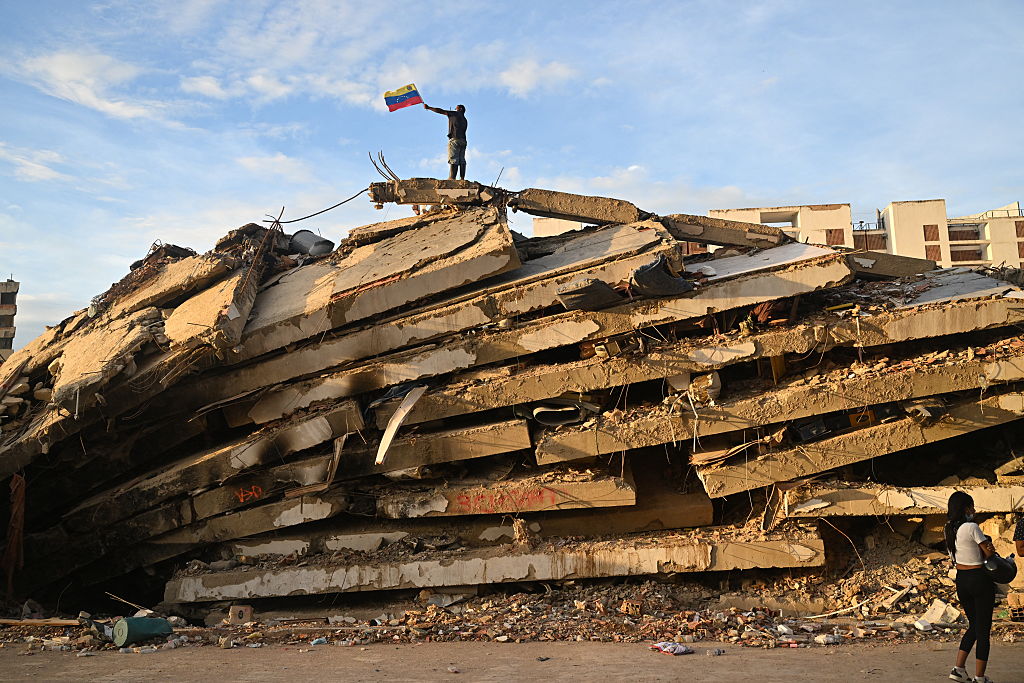 A volunteer waves a Venezuelan flag atop the rubble of the collapsed Obras del Poder Popular (OPP) building in Caraballeda, La Guaira state, Venezuela, on July 12, 2026. (Juan Barreto/AFP via Getty Images)