The United States will mediate working-level negotiations between Ukraine and Russia on Nov. 10–11 in Abu Dhabi, special envoy Steve Witkoff announced on X on Monday.
Witkoff said discussions will focus on post-war security arrangements, de-escalation, humanitarian efforts, and next steps toward peace.
“We look forward to building on the progress made in Kyiv, Oslo, and St. Petersburg toward a comprehensive, durable peace agreement that delivers lasting security for generations to come,” he said.
American negotiators will also meet this week in Brussels with representatives from France, Germany, the United Kingdom, the EU, and NATO, Witkoff added. Those talks will cover security guarantees for Ukraine, Europe’s post-war security architecture, and economic opportunities to support Ukraine’s reconstruction.
Russian officials said in late October that three-way talks involving the United States, Russia, and Ukraine were planned for Abu Dhabi in the first half of November.
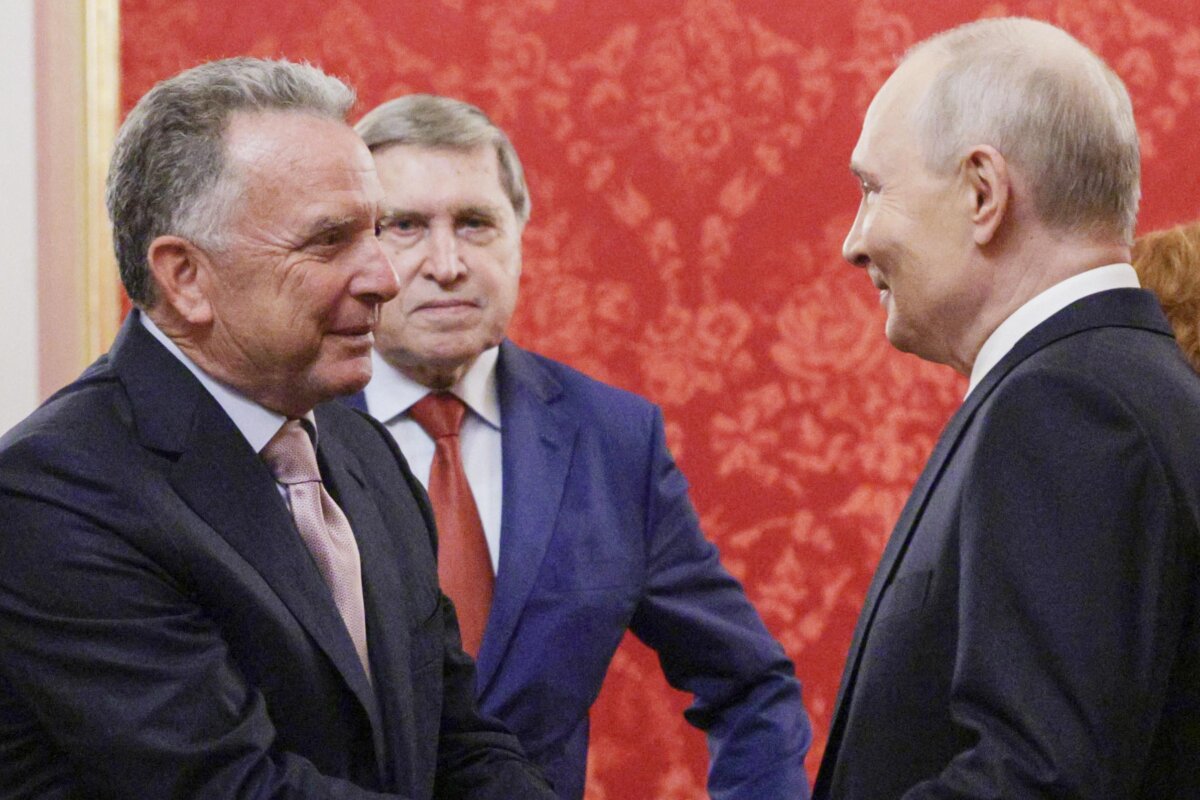
The Kremlin’s Oct. 23 statement followed a meeting two days earlier in St. Petersburg, where Russian President Vladimir Putin told Witkoff that Moscow was prepared to restart U.S.-mediated discussions with Kyiv.
After those talks, Moscow indicated the next round could begin as soon as Nov. 10 and would center on security arrangements for both sides once the fighting ends.
3-Way Talks
Kremlin spokesman Dmitry Peskov confirmed the sessions set for early to mid-November in Abu Dhabi would involve only the three parties.
Asked whether European representatives might join, Peskov said, “Nothing can be ruled out in advance.” He added, “But the talks we are discussing, which are scheduled for the first half of November in Abu Dhabi, will be held in a trilateral format.”
Putin has insisted that any future three-way talks aimed at ending the war must address security guarantees for both Russia and Ukraine, along with the broader security of Europe.
Peskov restated Moscow’s position that the planned negotiations would center on security arrangements for Russia and Ukraine once a deal is reached. He called the issue one of the “most important elements of reaching a peace settlement” and said no “comprehensive solution” could be achieved without it.
The last round of trilateral peace talks took place in February in Geneva, Switzerland.
On Nov. 1, a six-day localized ceasefire in the Ukrainian city of Oleshky, brokered by U.S. First Lady Melania Trump, expired. All sides described the pause as a success, with Moscow and Kyiv saying they would work to pursue similar operations in the future.
“The mission was a success, delivering critical aid to the region and enabling the evacuation of nearly 800 people,” the first lady said in a post on X on Nov. 1. “On behalf of America, I commend Russia and Ukraine for their leadership and cooperation surrounding the Oleshky ceasefire.”
She said that she hoped the move “serves as a foundation for lasting peace between both nations.”
Among those evacuated were 22 children and 21 mobility-impaired individuals who required special attention and assistance, the Ukrainian Military General Staff said in a Nov. 1 post on X.
The war began with Russia’s full-scale invasion on Feb. 24, 2022, and in its most recent analysis, released midyear, the Center for Strategic and International Studies found that combined Russian and Ukrainian casualties—dead, wounded, missing, and captured—have exceeded 2 million.