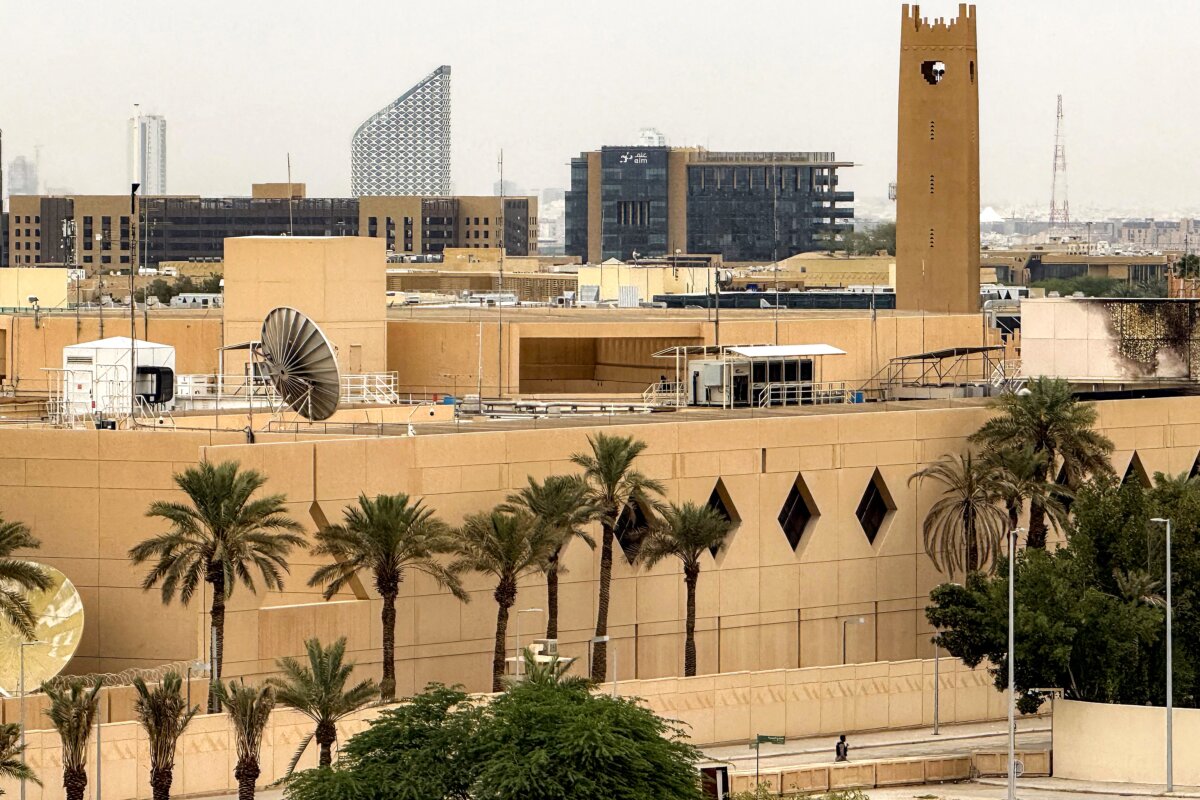

The U.S. State Department on Oct. 21 ordered non-emergency government employees and their families to leave Saudi Arabia as Iranian-supported Houthis increased attacks in the country.
The terrorist group has ramped up attacks against civilian airports and other critical infrastructure, resulting in civilian casualties and travel disruptions.
The State Department expects hostilities to escalate rapidly, according to the U.S. Embassy in Riyadh.
Houthis continued their attacks Wednesday evening, striking King Fahd International Airport in Dammam, killing one person and injuring eight others, the General Authority of Civil Aviation said.
The injuries ranged from minor to critical. Material damage caused by the attack was being assessed, the authority said.
The airport is the largest in the world and covers more area than the country of Singapore. Wednesday’s bombing was the second attack at the airport this month by Houthis. On Oct. 11, a drone or projectile targeted the facility, causing flight disruptions.
The Houthis have launched numerous drone and missile attacks on airports and oil facilities in Saudi Arabia in recent months as hostilities have intensified.
“The safety and security of Department personnel and their families remain our highest priority, and we will continue to take all necessary steps to protect and support them,” State Department spokesman Tommy Pigott said in a post on X.
U.S. government employees working in the kingdom require special authorization to use airports in the country after recent missile and drone attacks on airports, the State Department said in a security alert Wednesday.
Some flights were suspended at the King Khalid International Airport in Riyadh, the second-largest airport in the country, which usually serves about 111,000 passengers a day. The airport had reopened Wednesday to limited flights. The website appeared to be inaccessible.
King Abdulaziz International Airport in Jeddah and King Fahd International Airport in Dammam were operational with some delays and cancellations earlier in the day, according to officials.
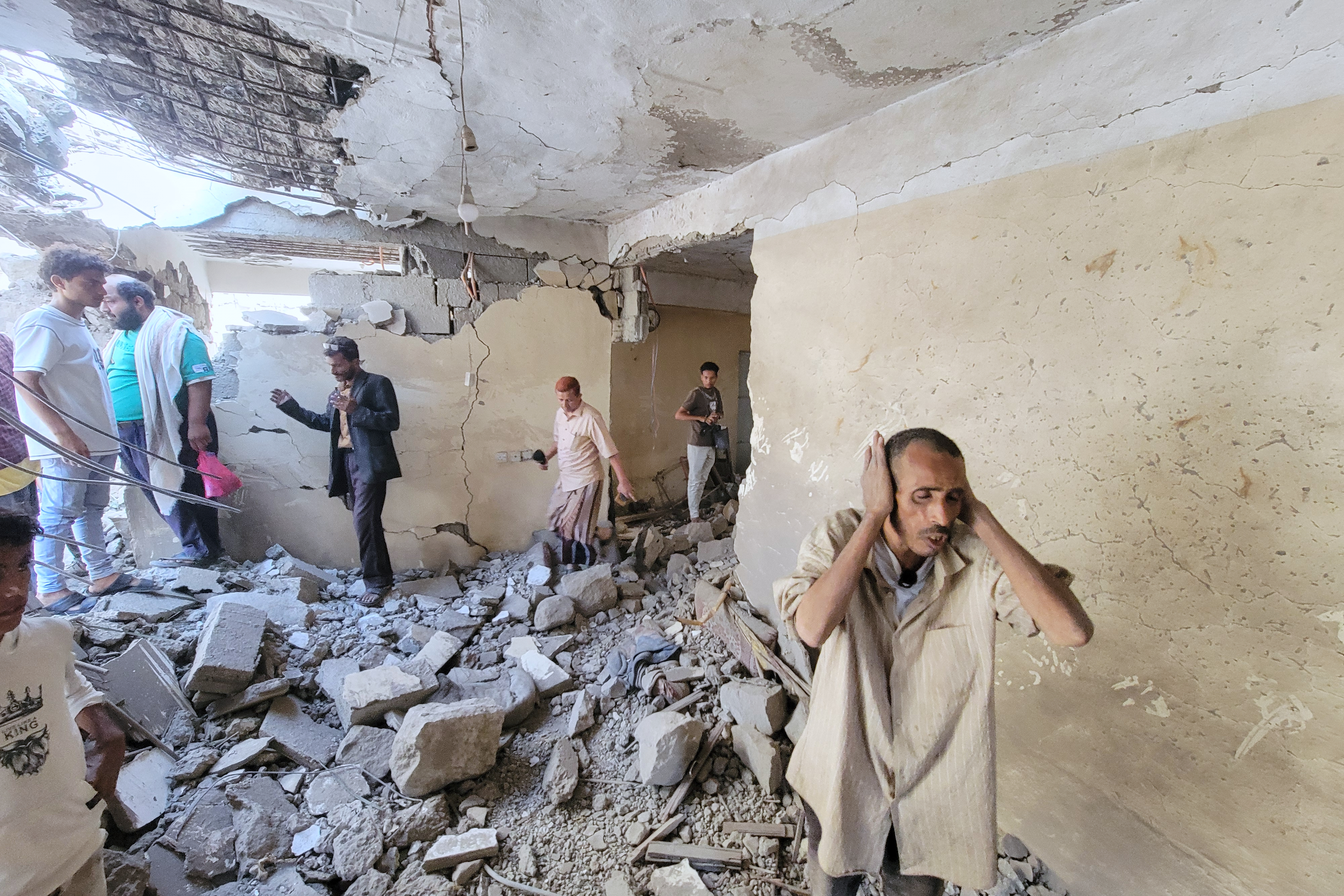 Residents walk on the debris of their homes after a missile strike at Seina district in Taiz, Yemen, on Oct. 20, 2026. (AP Photo/Marzouq Al Jabri)
British citizens were also advised not to travel to parts of Saudi Arabia Wednesday. The British government’s foreign affairs services advised citizens not to travel within about 6 miles of the Yemen border and against all but essential travel.
The United Kingdom pledged Tuesday to provide fighter jets to fly aerial patrols to support Saudi Arabia as the kingdom continues to battle the insurgent Houthi forces in Yemen.
State officials suggested Americans in the country consider taking a private car, train, or bus instead of using commercial airlines.
Land border crossings, including the King Fahd Causeway to Bahrain, remained open. All highways and roads in and around Riyadh, Jeddah, and Dhahran were also operational, according to State Department officials.
 Iran-aligned Houthi fighters pose next to a destroyed vehicle following what the source described as an attack on Saudi-backed forces in the location given by the source as al Jawf governorate, Yemen, in this screengrab taken from a video released by Houthi Military Media on Sept. 15, 2026. (Houthi Military Media/Reuters)
The attacks on shipping have intensified since July, putting pressure on global shipping.
Red Sea maritime traffic accounts for about 30 percent of global container traffic, 15 percent of global oil and shipping transits, and 12 percent of annual trade—worth about $1 trillion. An estimated 95 percent of shipping between Europe and Asia travels through the Red Sea, the Africa Center for Strategic Studies estimated.







