
The United States and Iran signaled over the weekend that they remained open to diplomacy, with both sides confirming that contacts were continuing through intermediaries, even as officials exchanged fresh military warnings.
The talks in Doha, Qatar, come as questions remain over whether the current pause in fighting will hold beyond the Nov. 3 U.S. midterm elections.
U.S. President Donald Trump has said the United States will not launch new strikes against Iran before the vote and has described talks with Tehran as productive, while leaving open the possibility of military action afterward.
He said on Oct. 31 that negotiations with Iran were going fine and that he was not “in much of a hurry” to reach an agreement. The president added that Washington still needed to address one or two Iranian nuclear sites, including the alleged underground nuclear facility at Pickaxe Mountain.
Speaking at the G20 Foreign Ministers’ Meeting in Atlanta, U.S. Secretary of State Marco Rubio said on Oct. 31 that Trump had not decided whether to launch fresh strikes against Iran and that he still preferred a diplomatic solution.
Rubio declined to give a timetable for the Qatari-backed talks, saying that discussions with Iran had “actually never stopped” and were continuing through direct contacts in some cases and through intermediaries in others.
“The President’s preference in any challenge around the world is to try to solve it diplomatically and peacefully, if possible,” Rubio said. “If there is a diplomatic solution we would be open to it. But obviously, it can’t be one that endangers our national security.”
Rubio said Washington’s main concern remained preventing Iran from becoming a nuclear weapons power and accused Tehran of fueling instability across the Middle East.
In a separate post on X after the G20 meeting, Rubio said secure supply chains depended on keeping critical maritime routes open, including the Strait of Hormuz and the Bab el-Mandeb Strait.
Iranian Foreign Ministry spokesperson Esmail Baghaei told reporters on Nov. 2 that diplomatic contacts remain ongoing, although the issues under discussion are highly complex, according to Tehran’s Tasnim News Agency.
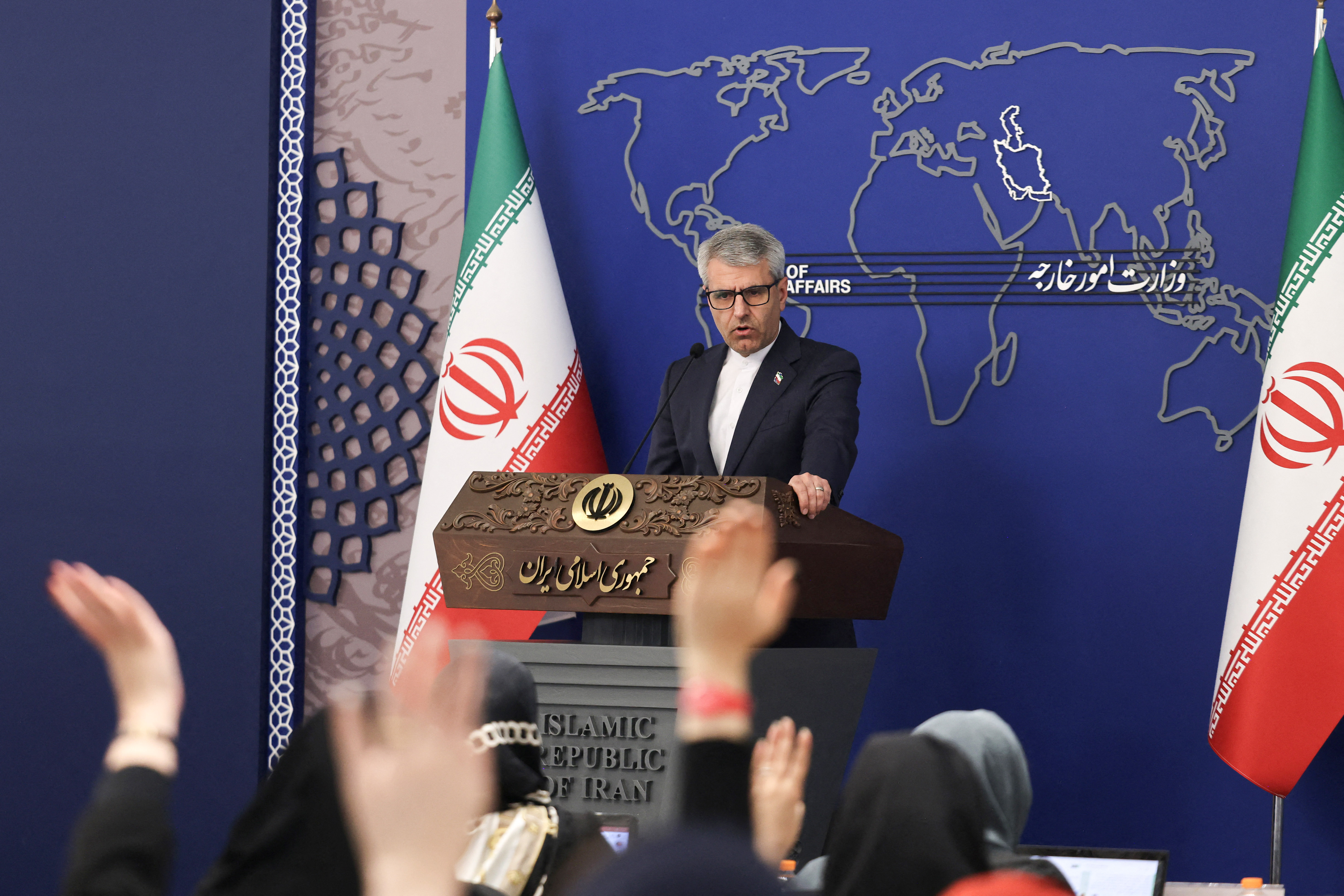 Iranian Foreign Ministry spokesman Esmail Baghaei talks to reporters during a weekly foreign ministry news conference in Tehran, Iran, on Feb. 10, 2026. (Atta Kenare/AFP via Getty Images)
Speaking to Al Jazeera on Oct. 31, Iranian Foreign Minister Abbas Araghchi said that discussions with Qatari mediators had shortened the proposed timeline for implementing Iran’s plan to reopen the Strait of Hormuz to two days from five.
He added that Tehran’s conditions had not changed.
“Our conditions include lifting the sanctions imposed following the Islamabad memorandum and reducing US forces in the region,” he said. “We demand the restoration of oil waivers and the release of all our frozen funds, including those held in Qatar.”
Nuclear Capabilities
The United States maintains that any broader agreement with Tehran must ultimately address Iran’s nuclear program.
One of the main U.S. demands is the complete destruction or removal of Iran’s enriched stockpile. Iran maintains that it has a right to develop nuclear technology for peaceful purposes under the Treaty on the Non-Proliferation of Nuclear Weapons.
Baghaei said on Nov. 2 that the United States had become the greatest threat to the treaty. He said that Washington undermined the accord by attacking Iranian nuclear facilities.
The International Atomic Energy Agency (IAEA) passed a resolution last year finding Iran noncompliant with its safeguards obligations under the Treaty on the Non-Proliferation of Nuclear Weapons.
Throughout 2026, the IAEA repeatedly urged Iran to cooperate with its inspectors as concerns over Tehran’s nuclear program continued.
In a joint statement, carried by Iran’s state-owned Islamic Republic News Agency in June, the Iranian Foreign Ministry and Iran’s Atomic Energy Organization said the IAEA report was “entirely political and biased” and said Tehran “has no choice but to respond to this political resolution.”
In reference to the United States, the UK, France, and Germany, the statement reads, “These actions by the four countries take place while they remain silent regarding the Zionist regime’s exclusion from the Non-Proliferation Treaty and its development of weapons of mass destruction programs, including nuclear weapons.”
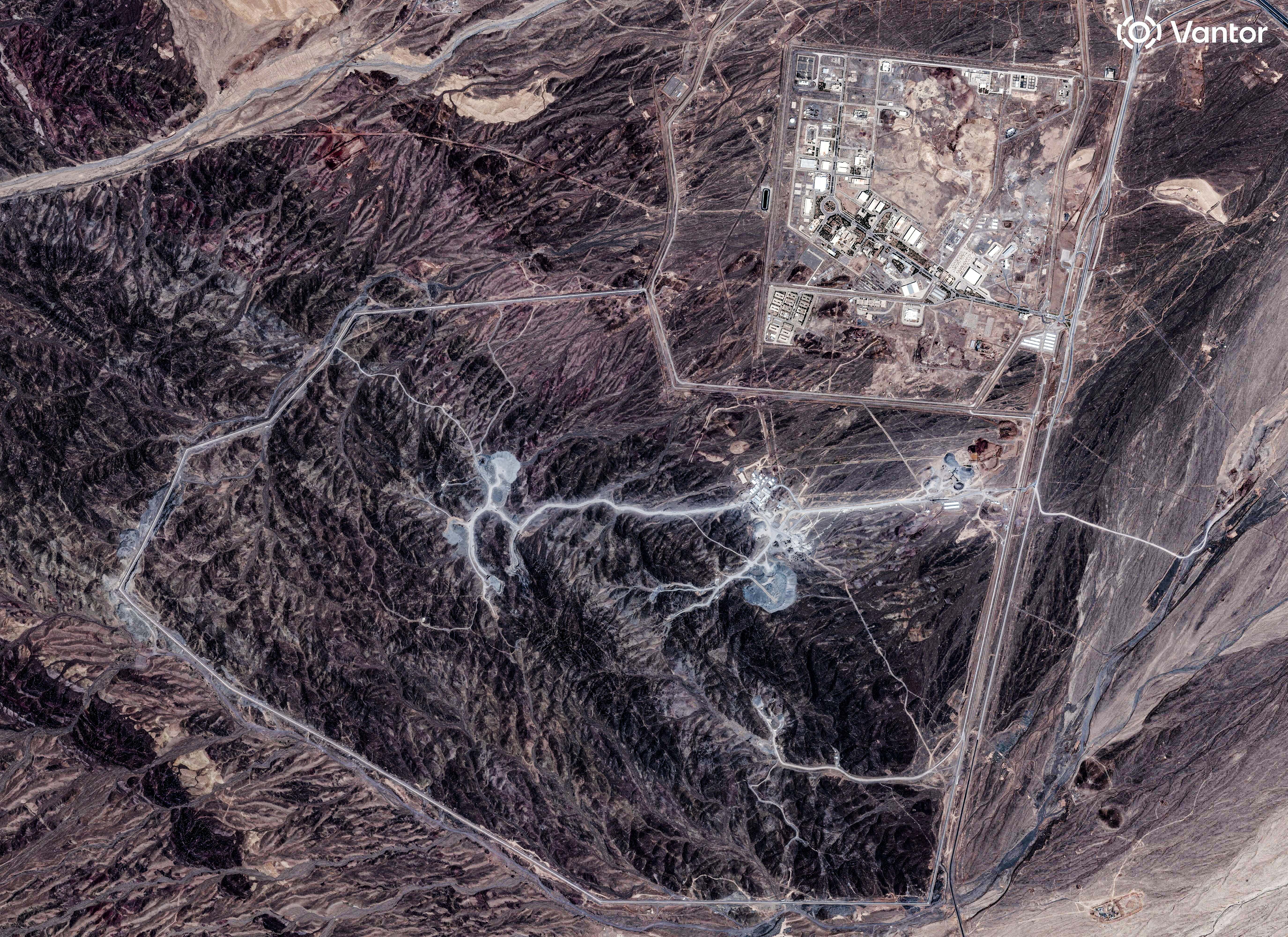 A satellite view shows an overview of the Natanz nuclear facility and Pickaxe Mountain, near Natanz, Iran, on June 30, 2026. (Vantor/Handout via Reuters)
In September, Trump said the United States had detected movement at the Pickaxe Mountain facility and suggested that the site could be targeted.
The Institute for Science and International Security said in an Oct. 16 report that satellite imagery from Oct. 7 showed no signs that the Pickaxe Mountain facility had resumed operations, with tunnel entrances remaining blocked and access restricted.
Dual Strategy
While Iranian officials left the door open to diplomacy, they also stepped up warnings about the consequences of any new military action.
“We are prepared for all scenarios,” Araghchi told Al Jazeera. “We have upgraded our weaponry, addressed our vulnerabilities, and tested new arms. Our forces are at the highest level of readiness.”
According to a Nov. 1 report by the state-owned Islamic Republic of Iran Broadcasting, Iranian army spokesman Mohammad Akraminia said any future war could spread beyond previous fighting and last longer.
 Iranian-made Zolfaghar missiles are displayed at Azadi Square in Tehran, Iran, on Aug. 2, 2026. (Atta Kenare/AFP via Getty Images)
Hamidreza Azizi, a senior Iran analyst at the Belgium-based International Crisis Group think tank, said on Oct. 31 that Iranian officials were seeking to convince Washington that another conflict would be broader, more unpredictable, and more costly, while still leaving room for negotiations to continue.
“The problem is that this approach also carries considerable risks,” he said. “By explicitly speaking of preemption, removing geographical limitations, and expanding the categories of potential targets, Iran may strengthen its deterrent messaging, but it also creates more opportunities for miscalculation.”