
Americans planning to travel to or from the Middle East should monitor airline and airport operations and develop contingency plans amid escalating safety threats in the region, the U.S. Embassy in Bahrain said in a Nov. 22 security alert.
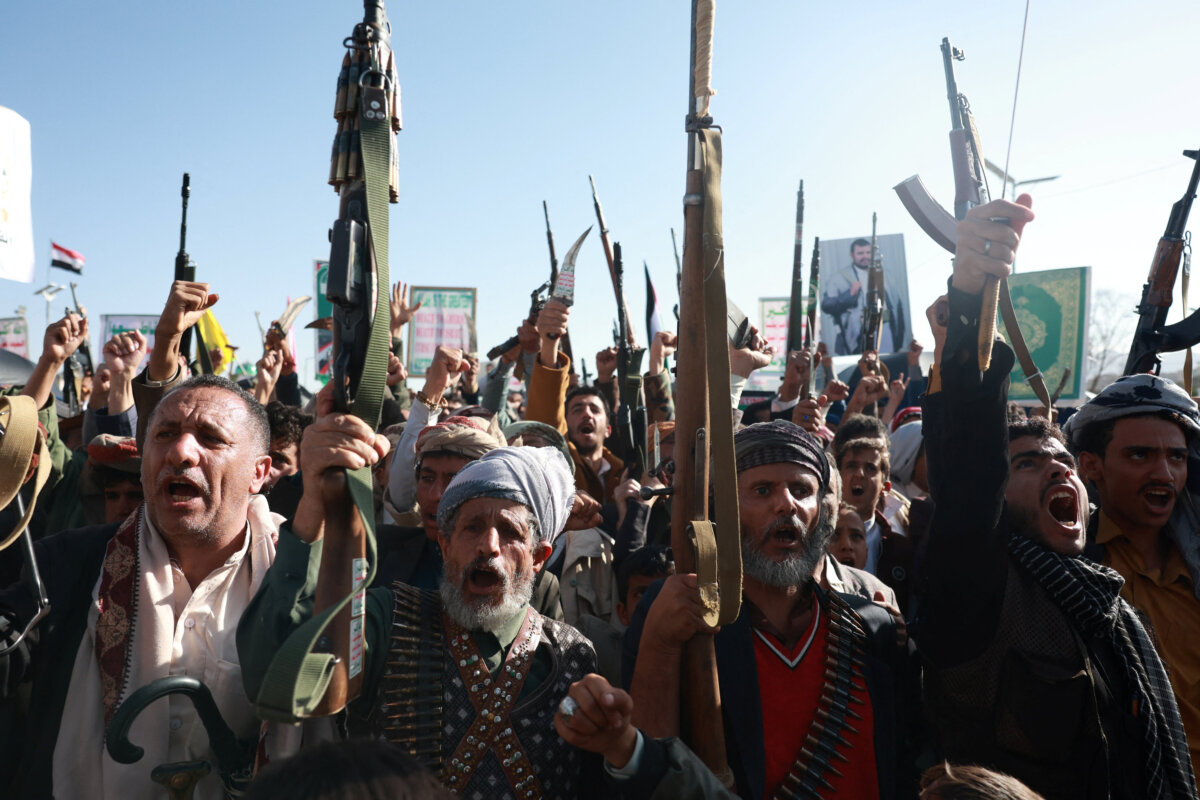
The alert said that Iran has attacked U.S. assets in Bahrain and Kuwait while Iranian-backed Houthis have targeted Saudi Arabia, striking civilian airports and other critical infrastructure, resulting in casualties and significant disruption to travel.
It added that hostilities could “escalate rapidly.”
Iran said on Nov. 15 that it used six drones to target a U.S. defense radar at Al-Riffa helicopter base in Bahrain. A civilian industrial facility in Bahrain was hit by an Iranian attack on Saturday.
The tallest skyscraper in Saudi Arabia’s financial district of Riyadh, the Public Investment Fund Tower, was attacked by the Houthis on Nov. 19, causing damage to the building. Saudi officials called the incident a terrorist attack.
Houthis claimed Sunday it had hit Saudi Arabia’s Rabigh oil refinery, located on the country’s western Red Sea coast.
Kuwait’s U.S. air defense systems and drone launchers at the Ali Al Salem Air Base came under attack from Iran on Nov. 18, according to the Iranian Army.
Kuwait’s foreign ministry said in a Nov. 18 post on X that “the continuation of these attacks constitutes a dangerous escalation that threatens the security and stability of the region and undermines diplomatic efforts aimed at de-escalation and reducing tensions.”
The U.S. Embassy warned that Iran, Houthis, and Tehran-backed groups “may target other U.S. interests overseas or at locations associated with the United States and Americans throughout the world, including U.S. businesses and other institutions.”
The alert said to be aware of potential airspace closures, flight cancellations, and travel disruptions.
The embassy asked Americans to stay away from windows, glass doors, and fallen debris in case of any aerial attack, and advised U.S. citizens to avoid all demonstrations and large gatherings, as well as any regions with a large police presence.
“Exercise caution and stay alert at locations publicly associated with the United States,” the embassy said. “Contact your airline directly for flight change details if your flight is affected.”
Bahrain, Kuwait, and Saudi Arabia are all designated as “Level 3: Reconsider travel” by the Department of State, which is the second most severe among the four advisory levels issued by the department.
The State Department urged Americans in the Middle East to enroll in the Smart Traveler Enrollment Program to get the latest security updates from the U.S. embassy or consulate.
A July 22 worldwide caution for U.S. citizens remains in effect, asking Americans outside the Middle East to reconsider travel to or through the region.
Iranian Deputy Foreign Minister Kazem Gharibabadi said Saturday that the country would take any necessary measures to break a U.S.-imposed naval blockade of Iranian ports.
U.S. President Donald Trump told Fox News on Sunday that there could be serious consequences for the Iranian regime if it tests the U.S. naval blockade.
Reuters contributed to this report.