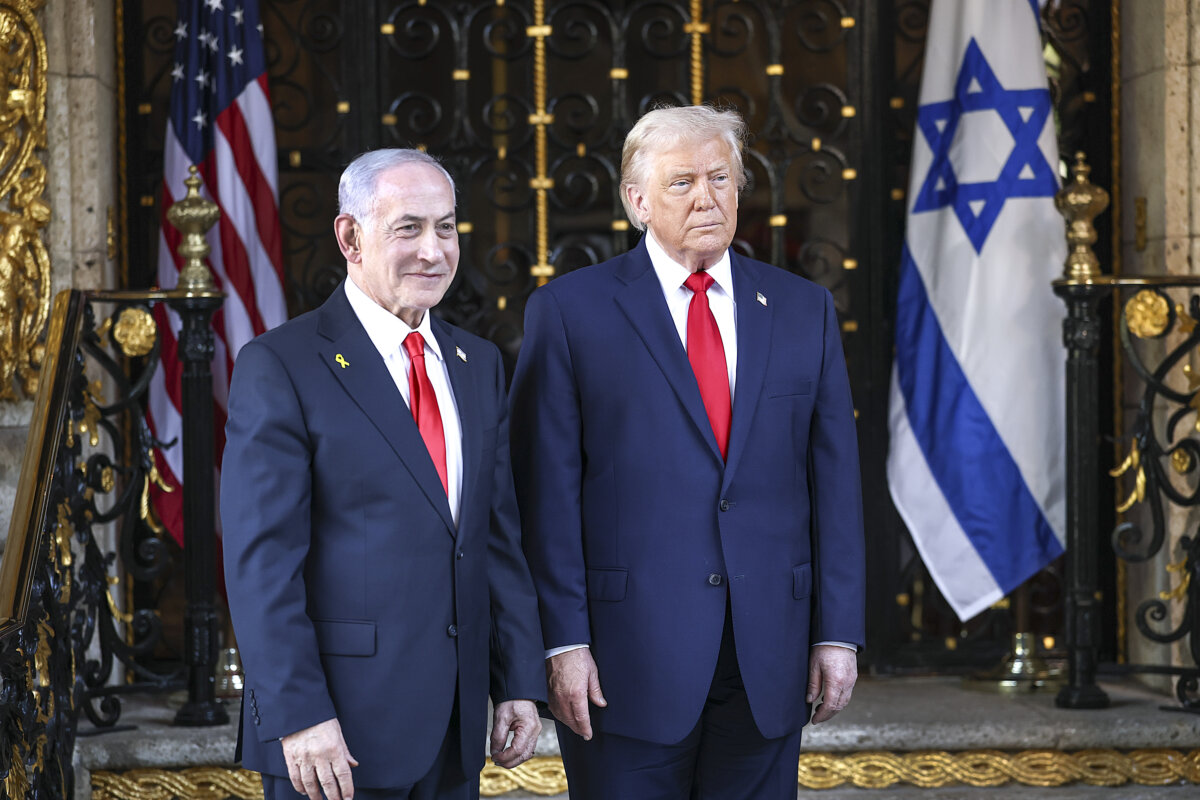

U.S. President Donald Trump confirmed on Sunday that he had held a phone call the previous day with Israeli Prime Minister Benjamin Netanyahu, saying the two leaders discussed Iran.
“We had a very good talk,” Trump told reporters.
The conversation came as the United States and Iran continued indirect diplomatic talks in Qatar over the weekend, with negotiations taking place against the backdrop of the Nov. 3 U.S. midterm elections and the finalization of Israel’s election results.
Speaking to reporters on Oct. 31, Trump said negotiations with Iran were “going fine” and stressed that he was not “in much of a hurry” to reach an agreement.
He also said the United States still needed to address one or two Iranian nuclear sites, including the suspected underground facility at Pickaxe Mountain.
Senior Israeli security and political officials told Epoch Magazine Israel that Tel Aviv is preparing for the possibility of a prolonged war with Iran following the U.S. midterm elections. According to the officials, military planners believe that fighting could resume between the Nov. 3 elections and the swearing-in of the new U.S. Congress on Jan. 3, 2027.
The officials said any decision to resume military operations ultimately rests with Trump.
In October, Netanyahu said he had instructed the Mossad intelligence agency and the Israel Defense Forces (IDF) to work toward bringing down Iran’s regime, according to a report by The Times of Israel.
Officials told Epoch Magazine Israel that the IDF had completed both offensive and defensive preparations and remained on high alert. They added that Israel was also preparing for the possibility of an Iranian preemptive strike.
U.S. Secretary of State Marco Rubio said on Oct. 31 that contacts with Iran had continued despite tensions between the two countries.
“There are multiple talks; talks have actually never stopped,” Rubio told reporters, adding that Trump’s preference is to resolve international disputes through diplomacy whenever possible.
“If there is a diplomatic solution, we would be open to it. But obviously, it can’t be one that endangers our national security.”
Iran Proxies
Rubio reiterated that Washington would not allow Iran to acquire nuclear weapons, arguing that Tehran remained a source of instability across the Middle East through its support for regional armed groups.
He added that Iran’s backing of Hezbollah in Lebanon, the Houthis in Yemen, and militias in Iraq had contributed to instability across the region.
The Israeli officials told Epoch Magazine Israel that they believed Iran was intensifying pressure on Hezbollah to join any future conflict if Tehran came under attack by Israel and the United States.
They said Tehran wanted to ensure it would not face Israel and the United States alone and hoped the Lebanese front could be activated to widen the conflict and increase pressure on Israel.
According to the officials, the IDF has contingency plans to seize the southern Lebanese cities of Tyre, Sidon, and Nabatieh if Hezbollah enters a renewed conflict. The plans also include extensive strikes on Beirut’s southern suburbs, possible naval deployments, and a blockade of the ports of Beirut and Tripoli, the officials said.