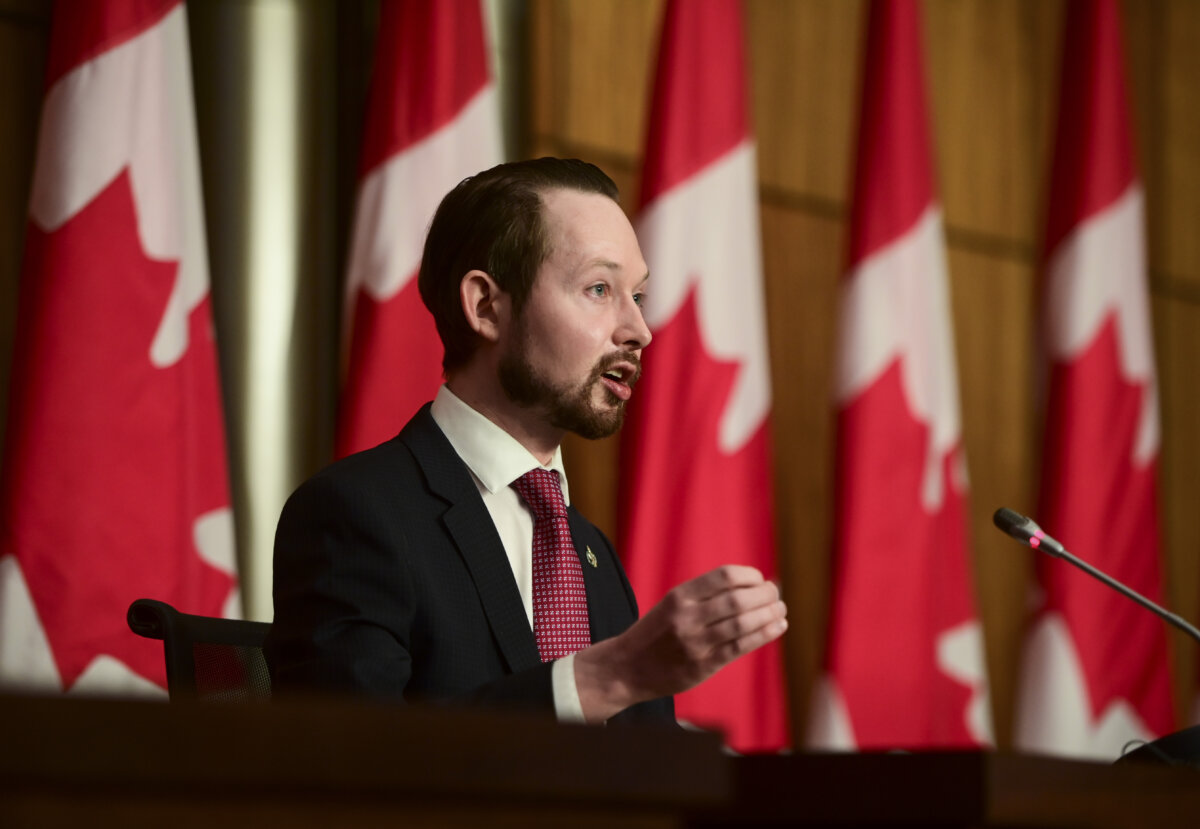

Conservative MPs raised security concerns about Ottawa’s law enforcement cooperation agreement with Beijing during a parliamentary committee meeting, questioning how Canada can effectively tackle foreign interference while partnering with a Chinese ministry that Canadian intelligence has linked to such activities.
Officials from Public Safety Canada and the RCMP told the House Committee on Procedure and House Affairs on Nov. 24 that safeguards are in place around sharing of personal information of Canadians with foreign law enforcement agencies.
However, when asked by MPs, they didn’t outline the safeguards in the agreement or say whether security officials had advised the federal government against signing it.
The agreement between the RCMP and China’s Ministry of Public Security was one of several reached during Prime Minister Mark Carney’s visit to China in January. Its contents have not been made public.
In announcing the agreement Jan. 16, the Prime Minister’s Office said Ottawa and Beijing were seeking “pragmatic and constructive engagement in public safety and security.”
“Our law enforcement agencies will increase cooperation to better combat narcotics trafficking, transnational and cybercrime, synthetic drugs and money laundering – and create safer communities for people in both of our countries,” the office said.
China’s Ministry of Public Security
Tory MP Michael Cooper cited the national security threat assessments in the 2024 public report from the Canadian Security Intelligence Service (CSIS) as part of his questions to security and government officials.
The report listed China’s Ministry of Public Security, Ministry of State Security and United Front Work Department as being involved in trying to recruit individuals to spy on Canadians who were promoting views contrary to those of the Chinese Communist Party (CCP).
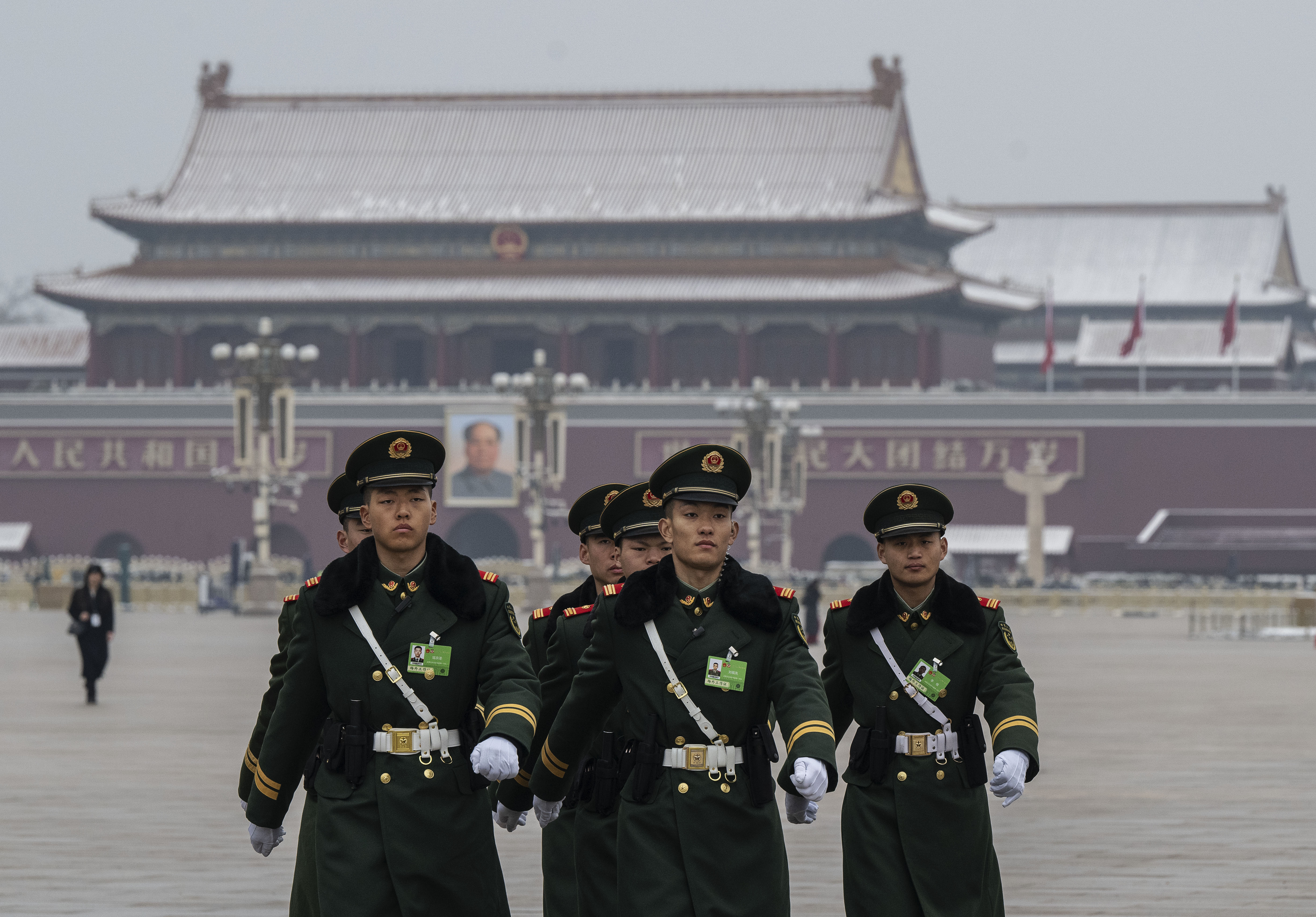 Members of the People’s Armed Police march in front of a portrait of former Chinese leader Mao Zedong at Tiananmen Square in Beijing on March 5, 2026. (Kevin Frayer/Getty Images)
Cooper asked CSIS Strategic Bureau Director General Jarrett Davis if he disputed that China’s Ministry of Public Security had been identified as taking part in foreign interference in Canada.
“No, I don’t dispute that,” Davis said.
The Chinese Ministry of Public Security has also been linked to overseas police operations and “liaison” points in Canada. An Oct. 27 report by Spain-based human rights group Safeguard Defenders identified over a dozen such “liaison” points in Canada as part of a network through which the CCP monitors and represses dissent in diaspora communities.
The stations are intended, in part, to “collect intelligence and monitor former PRC [People’s Republic of China] residents living in Canada as part of the PRC’s broader transnational anti-corruption, repression and repatriation campaign,” according to CSIS.
Cooper questioned Ottawa’s reasoning for entering the agreement with the ministry, noting that an individual was convicted in May in New York for involvement in operating an illegal Chinese police station in Manhattan under orders from China’s Ministry of Public Security.
Richard Bilodeau, assistant deputy minister at Public Safety Canada and national counter foreign interference coordinator, said it’s good to communicate with foreign counterparts.
“Regardless of geopolitical circumstances and decisions that are being made, we always look for ways to have dialog with our counterparts, whether it’s CSIS, RCMP, Department of Public Safety, with counterparts around the world,” Bilodeau said.
“We find those conversations can often be productive to resolving issues along the way.”
Asked by Cooper how Canadians can take seriously Ottawa’s promise to address the threat of transnational repression, Bilodeau said the government has made it clear that such foreign activities are unacceptable, citing the Countering Foreign Interference Act which received royal assent in June 2024.
“We do take transnational repression seriously, no matter which country it comes from,” Bilodeau said.
Sharing of Personal Information
Conservative MP Blaine Calkins asked David Greig, the RCMP’s director general of federal policing national security, what is being done to safeguard the personal information of Canadians under the agreement, given the Chinese ministry’s involvement in activities identified as threats to Canada’s national security.
“The sharing of information through the MOU is always done to ensure public safety of Canadians,” Greig said, adding that the RCMP conducted a national security review before entering into memorandums of understanding (MOUs) with foreign law enforcement agencies.
 Minister of Public Safety Gary Anandasangaree speaks in Ottawa on Feb. 26, 2026. (The Canadian Press/Justin Tang)
Calkins said he was surprised Ottawa had entered into the agreement given the findings of the public inquiry into foreign interference led by Justice Marie-Josée Hogue. The inquiry’s January 2025 report found that Beijing is the most active foreign actor meddling in Canada’s affairs, and recommended stronger measures to counter foreign interference.
Calkins asked if the RCMP, CSIS, or Public Safety had advised the prime minister or his national security adviser against entering into the agreement.
Bilodeau declined to provide what advice, if any, was given to the government but said “the existence of an MOU doesn’t lead to automatic information sharing.”
“Extensive consultations were undertaken with relevant stakeholders within the Royal Canadian Mounted Police and Global Affairs Canada,” the department said in a May 8 response, but declined to say what advice the agencies gave the government.
Public Safety said that any agreements with foreign law enforcement agencies “require confidentiality, and as such, are not tabled in Parliament nor released to the public.”
The department said the agreement allows for the exchange of information, assistance with investigations, training, and other forms of cooperation, but that any information sharing must comply with Canadian law.
It added that the MOU “does not create legally enforceable obligations” and that its oversight mechanisms are “based on administrative and cooperative compliance rather than judicial enforcement.”
Pressed on Nov. 24 on what safeguards in the agreement would prevent personal information potential shared with China’s Ministry of Public Security from being given to other CCP-controlled organizations, Greig said he couldn’t discuss the contents of the agreement but said the RCMP would be vigilant.
‘Flawed’ and ‘Dangerous’
The Nov. 24 exchanges follow repeated calls from opposition MPs, former law enforcement officials, and diaspora groups for Ottawa to publicly disclose the contents of the agreement.
Testifying before the House of Commons Standing Committee on International Trade on March 12, Garry Clement, former national director of the RCMP’s proceeds-of-crime program, described the agreement as “flawed” and “dangerous” for Canada’s national security.
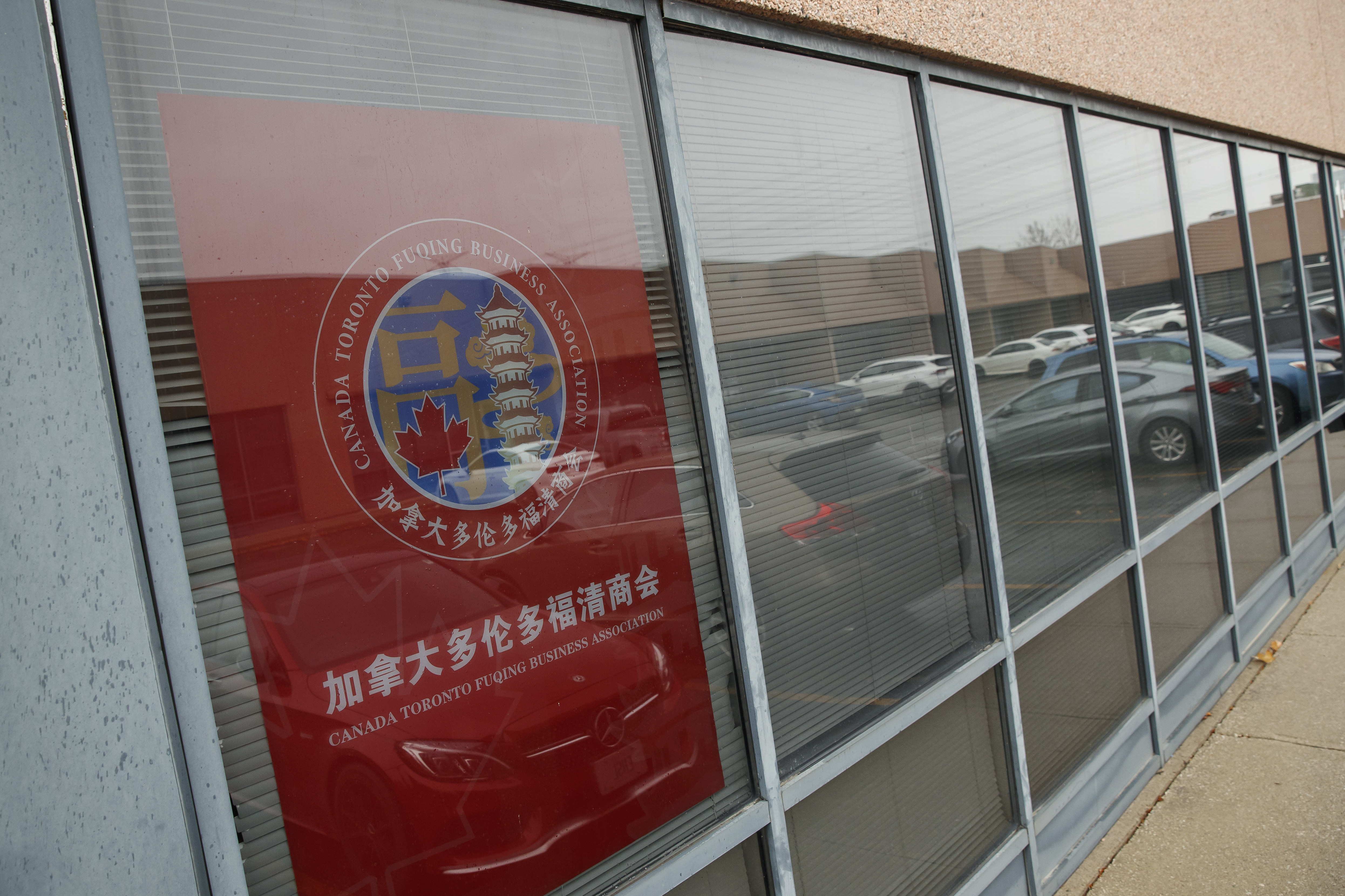 A building in a business park in Markham, Ont., is seen on Oct. 31, 2022, one of the locations in the Greater Toronto Area identified by Spain-based human rights group Safeguard Defenders as being among the sites of unofficial police stations allegedly run by police bureaus in China. (The Canadian Press/Cole Burston)
“Law enforcement in China is part of the PRC [People’s Republic of China] apparatus,” Clement said. “You can’t separate them from the government, and they do not operate under the rule of law. I experienced it firsthand.”
RCMP Senior Deputy Commissioner Bryan Larkin previously said the RCMP had agreed not to publicize the contents of the agreement without the consent of the Ministry of Public Security. During testimony before the Senate national finance committee he said the agreement was “very standard” and similar to agreements struck with the FBI, CIA and U.S. Drug Enforcement Administration.
This was greeted with sharp criticism from the opposition, with Tory MP Dean Allison saying Larkin’s comments represented “a complete failure of judgment.”
“The idea that Chinese police are being described as a ‘partner’ on par with the FBI is outrageous on its own,” Allison posted April 22 on X.
NDP MP Jenny Kwan has also called on Ottawa to disclose what safeguards the agreement has to prevent dissidents, human rights advocates, journalists and members of the Chinese diaspora from being targeted.
“In Canada, concerns surrounding alleged Chinese ‘police stations’ and foreign interference activities have already deeply undermined public trust and community safety,” Kwan wrote in a May 12 letter to Public Safety Minister Gary Anandasangaree.
Kwan added that China’s Ministry of Public Security has been “repeatedly linked by international human rights organizations, journalists, and democratic governments to intimidation campaigns and tactics abroad” and said Canadians deserve “clear answers” on how their personal information will be protected.
Mimi Lee, who heads the Toronto-based HongKongers Action Group, has said the agreement “creates the appearance of legitimizing the very actors accused of transnational repression,” citing longstanding concerns about foreign intimidation among diaspora communities in Canada.
“Diaspora communities have been sounding the alarm for years. Hong Kongers, Uyghurs, Falun Gong practitioners, Tibetans, and mainland Chinese dissidents have all reported intimidation, threats, and surveillance in Canada,” Lee said.
“This is not about geopolitics—it’s about safety. Canadians deserve to know that their government will protect them from foreign intimidation.”
Olivia Gomm contributed to this report.