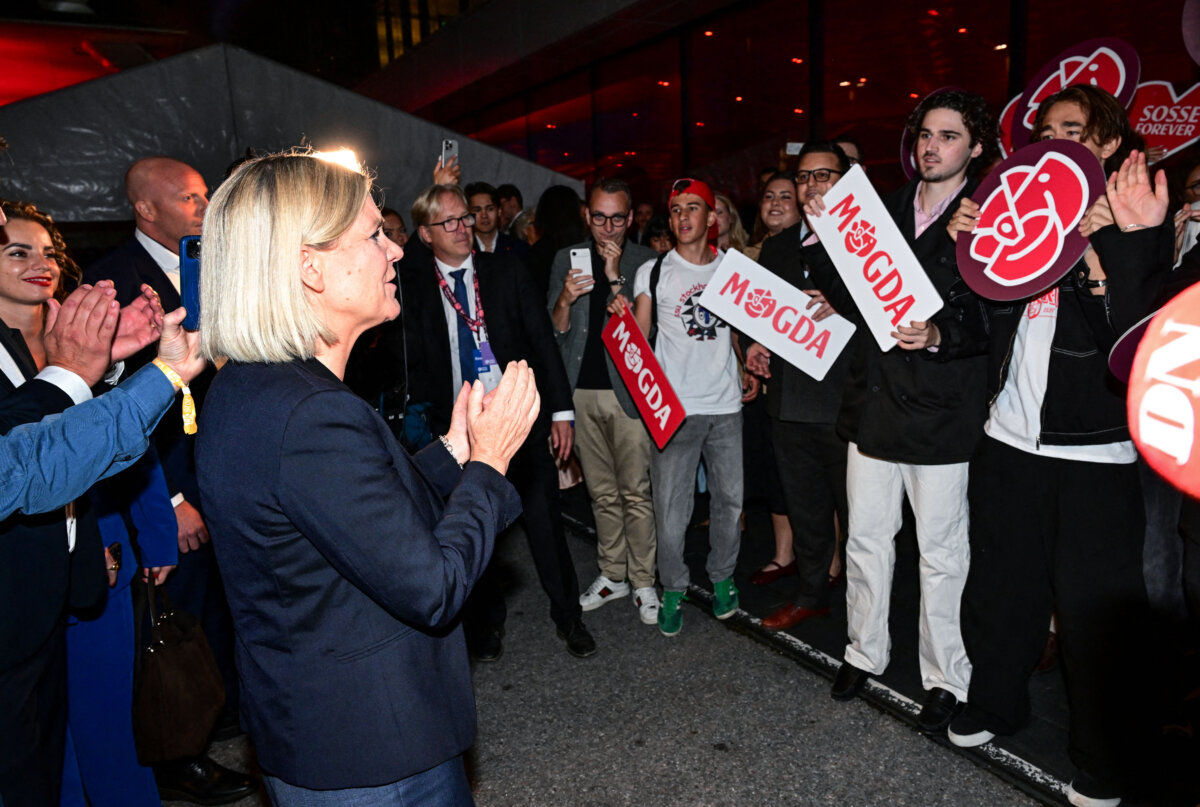

STOCKHOLM—Sweden’s center-left opposition looked set on Monday to form the next government, with a preliminary count projecting a win of 176 seats against the right-wing Tido parties’ 173.
Fewer than 28,000 votes separate the two blocs, and the balance could still shift on Wednesday, when more than 200,000 late-arriving early votes and ballots cast from abroad are counted, according to Sweden’s national public broadcaster SVT.
Votes cast abroad will be counted on Wednesday and could shift the allocation of seats, where a few thousand ballots may decide the outcome, according to SVT, Sweden’s national public television broadcaster. Final results are expected next weekend.
Controversy erupted after an exit poll by SVT showed that a large majority of voters with non-European backgrounds were backing parties on the left and far-left.
Sweden Democrats MP Tobias Andersson criticized the other parties in his right-wing bloc for “refusing to halt the granting of citizenships after we won the election” in 2022.
“If we lose, it will be because we granted more than 200,000 citizenships, and those people in turn voted for the left,” he wrote on X. “Lose-lose, as they say.”
A key issue in the campaign has been whether the anti-immigration Sweden Democrats would enter government if the right-wing bloc wins.
Social Democratic leader Magdalena Andersson has made keeping the Sweden Democrats out of government a central theme of her campaign, arguing that the election will determine whether her left-wing party gains direct influence over areas including defense, education, culture, and public finances.
“That would be a very different Sweden,” she said.
Magdalena Andersson emphasized social cohesion in her campaign and accused the Sweden Democrats of using “their platform to create division.”
The Social Democrats would need to reach an agreement with the Greens and the Left Party, as well as the Center Party, in order to form a government.
Mattias Karlsson, a Sweden Democrats MP and one of the party’s longtime leading ideological figures, warned that a change of government would reverse some of the policies enacted over the past four years.
“With a left-wing government, we will slide back toward an irresponsible migration policy,” Karlsson told The Epoch Times.
“Why? Because even though the Social Democrats have supported many of our policies on immigration and crime, they are allied with the Green Party and the Left Party, which are growing at their expense,” he said. “Those parties will carry considerable weight in any negotiations, and they want to dismantle many of the reforms we have passed on law and order.”
Karlsson also said, “We have also seen more open anti-Semitism … than in any Swedish election campaign since at least the Second World War,” especially from the Left Party, the successor to the Communist Party, he said.
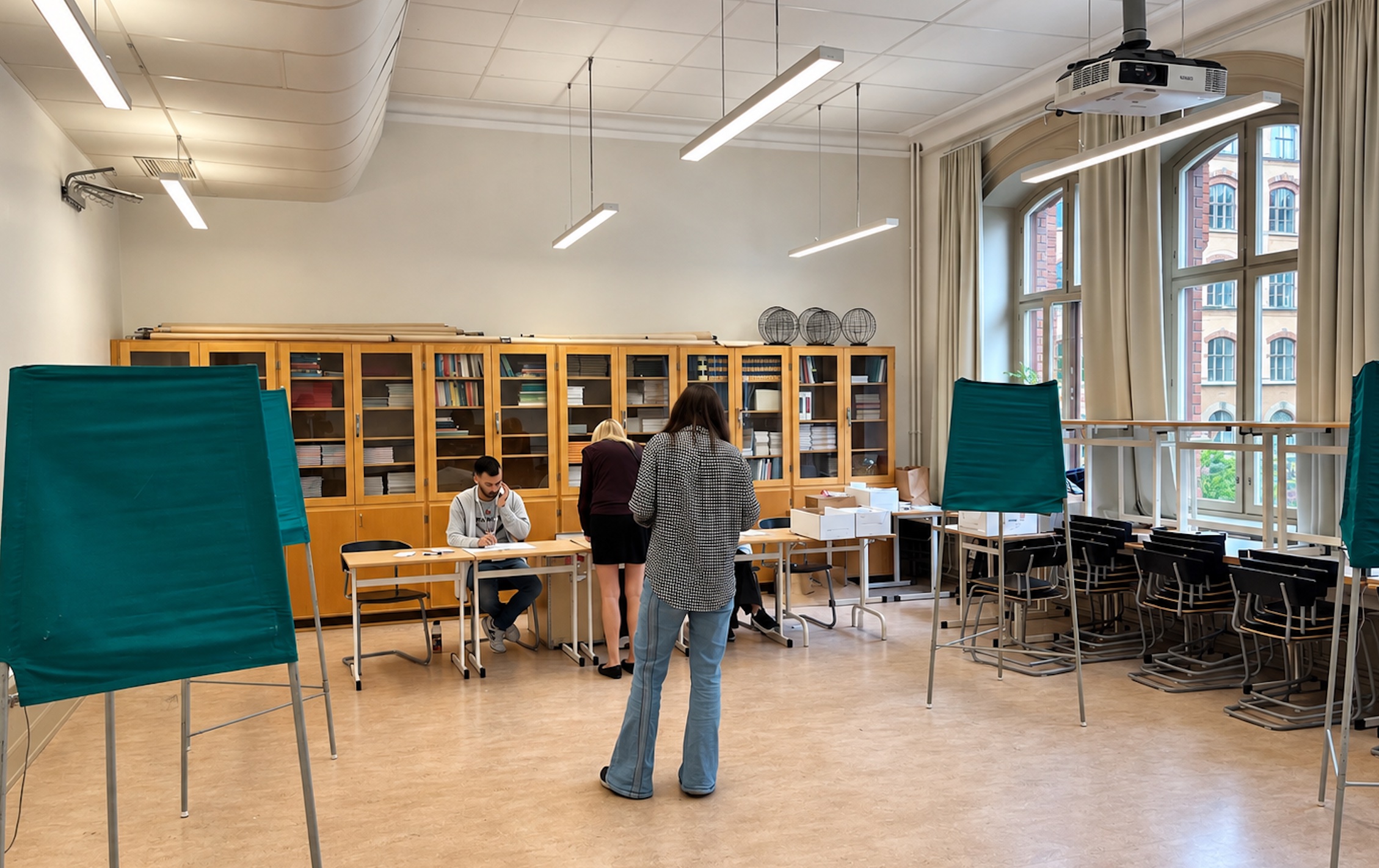 A classroom at Norra Real gymnasium converted into a polling station for Sweden’s general election on Sept. 13, 2026. (Etienne Fauchaire/The Epoch Times)
In 2022, the Moderates, Sweden Democrats, Christian Democrats, and Liberals won a razor-thin majority of 176 seats to 173, ending eight years of Social Democratic-led government after years of mounting concern over immigration, gang violence, and crime. The Sweden Democrats won 20.5 percent of the vote, overtaking the Moderates to become the country’s second-largest party behind the Social Democrats, who took 30.3 percent.
Immigration and Gang Crime
The resulting Tido Agreement allowed the Sweden Democrats to shape government policy while remaining outside the Cabinet.
After taking office, Prime Minister Ulf Kristersson of the Moderate Party told Parliament that “a paradigm shift” was now taking place in Swedish migration policy and pledged that his government would “launch the largest offensive against organized crime in Swedish history.”
His coalition government moved to tighten asylum rules toward the EU minimum, reduced Sweden’s annual refugee resettlement quota from 5,000 to 900, and in June secured parliamentary approval for a requirement that government agencies report people believed to be living in the country without a legal right to stay.
Since Jan. 1, immigrants who voluntarily return to their country of origin have also been eligible for grants of up to 350,000 kronor, or about $36,100, per adult and 600,000 kronor per household.
Migration Minister Johan Forssell said in January that asylum applications had fallen 30 percent in 2025 to 6,735, the lowest level since 1985. Asylum-seekers and their relatives accounted for 6 percent of immigration, down from 31 percent in 2018, while more people left Sweden than arrived for a second consecutive year.
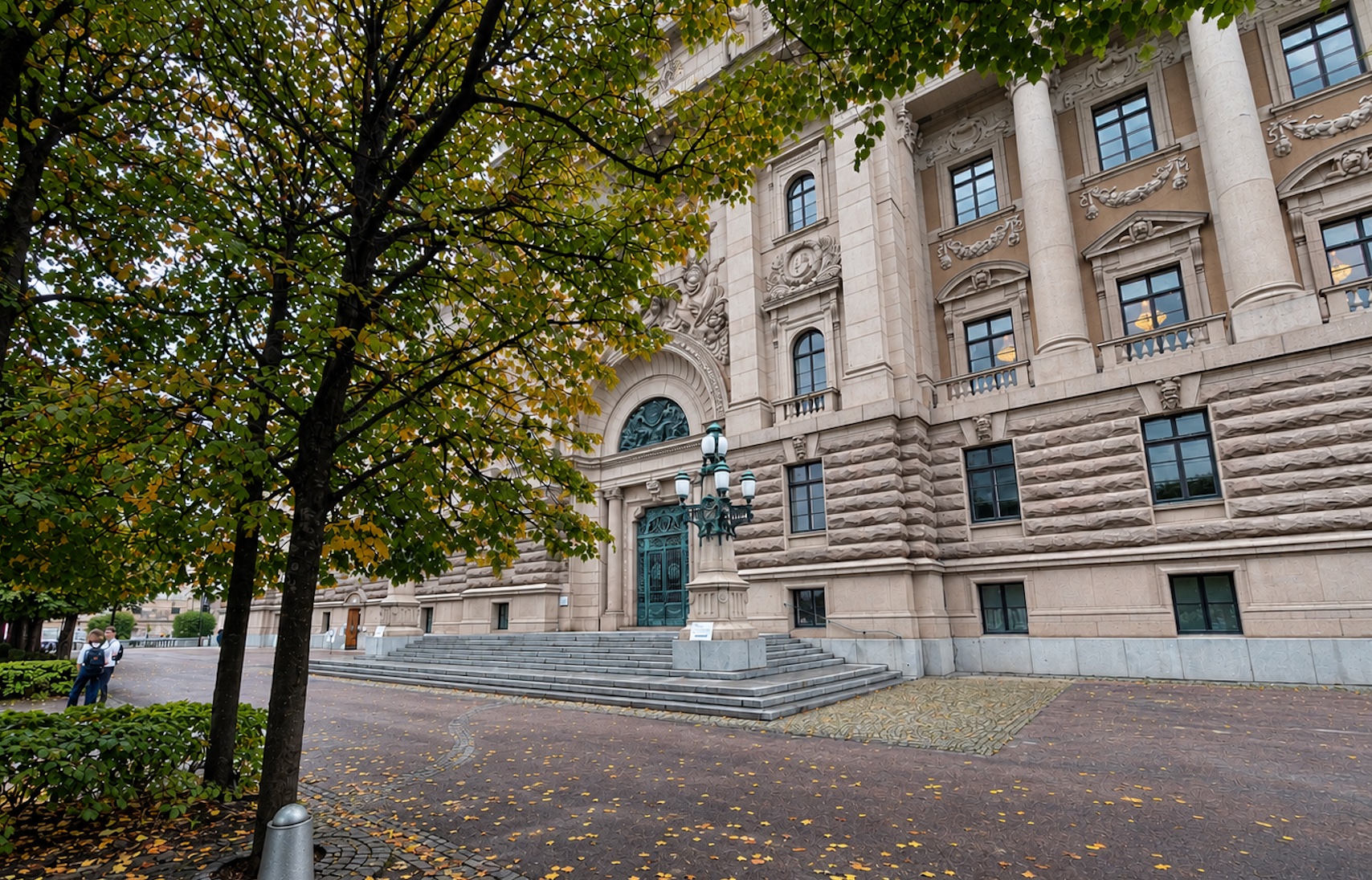 The Swedish Parliament (Riksdag) in Stockholm on Election Day, Sept. 13, 2026. The building was used as a polling station. (Etienne Fauchaire /The Epoch Times)
The Tido parties introduced “safety zones,” in which police can search people without individualized suspicion, while expanding electronic surveillance and toughening criminal penalties.
On Aug. 13, the Riksdag voted 281–66, with support from the Social Democrats, to lower the age of criminal responsibility from 15 to 14 for offenses carrying prison sentences of at least four years. The measure took effect on Sept. 10, just three days before the election.
The crackdown coincided with a sharp decline in gun violence.
Shootings fell from 390 in 2022 to 147 in 2025. Police recorded just 39 shootings in the first half of 2026, the lowest figure for any six-month period since records began in 2017.
Police have credited new investigative tools and working methods for some of the improvement, while cautioning that conflicts between criminal networks remain intense and that efforts to prevent gangs from recruiting new members have made less progress.
The National Council for Crime Prevention recorded 84 homicides in 2025, eight fewer than the previous year and the lowest total since 2012.
Yet these issues are no longer necessarily dominating voters’ concerns.
In Verian’s August survey for SVT, 64 percent of voters named healthcare as one of their most important issues, with schools and elderly care close behind. Law and order had fallen in importance compared with 2022, while energy had dropped to ninth place.
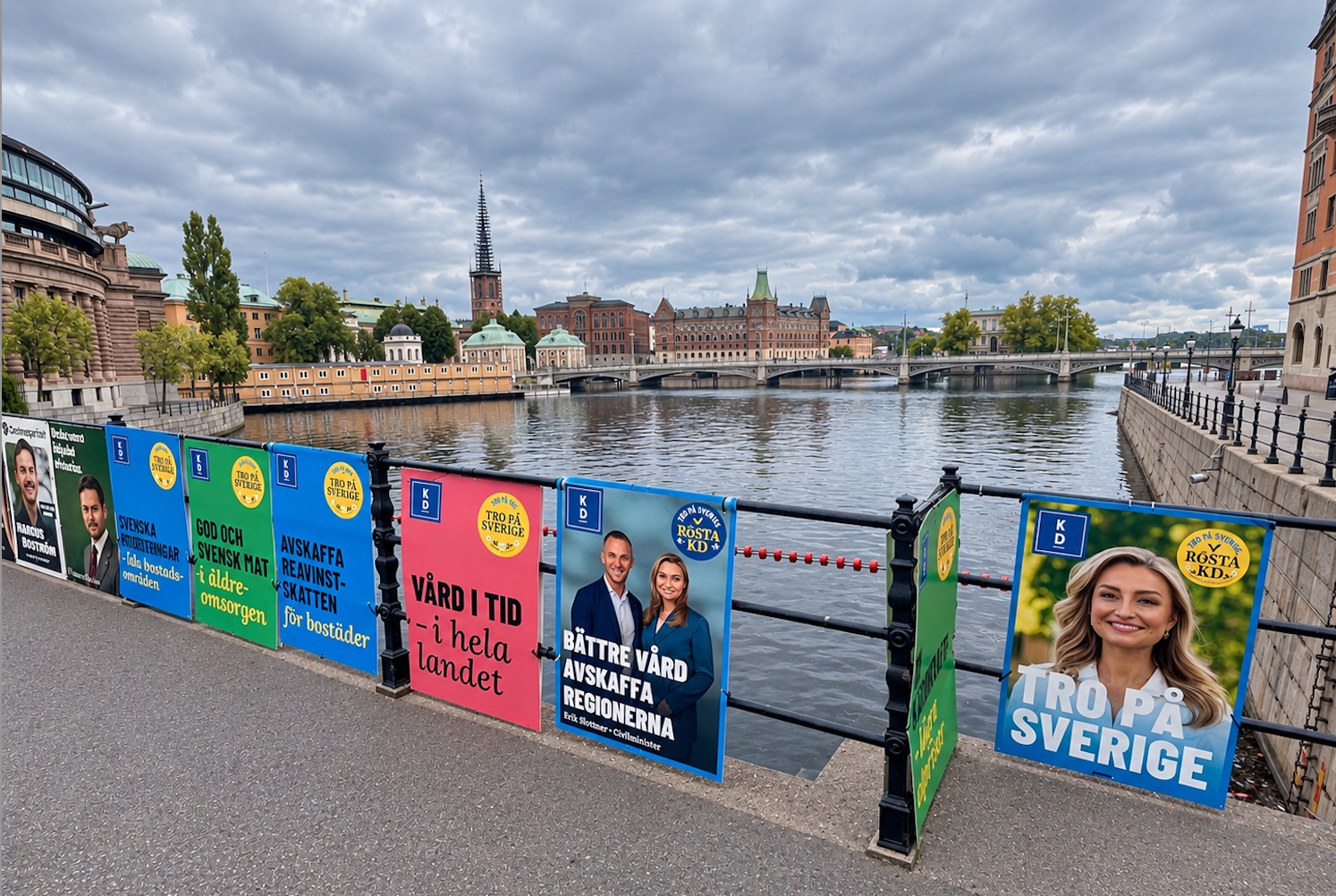 Campaign posters along a waterfront railing in central Stockholm ahead of the Sept. 13, 2026, election. (Etienne Fauchaire/The Epoch Times)
From Nothing to Kingmaker
The election also marked another stage in the Sweden Democrats’ transformation from an isolated protest party into one of the central forces of Swedish politics.
Founded in 1988 by activists including figures from the nationalist Keep Sweden Swedish movement, the party entered Parliament for the first time in 2010, winning 5.7 percent of the vote under leader Jimmie Akesson, who has led it since 2005.
Its 2026 platform, titled “We Are Making Sweden Sweden Again,” calls for keeping asylum immigration at the lowest possible level, deporting foreign nationals convicted of serious crimes, continuing incentives for voluntary “remigration,” and expanding the circumstances under which citizenship can be revoked from naturalized Swedes convicted of crimes.
The Left Party described the Sweden Democrats as “the parliamentary representatives of organized capital and organized racism.”
In 2025, Left Party MP Vasiliki Tsouplaki accused government representatives and the Sweden Democrats making statements that singled out Muslims “as responsible for social problems,” adding that this “normalizes Islamophobia and lowers the threshold for hatred and threats.”
Nima Gholam Ali Pour, an Iranian-born Swedish MP for the Sweden Democrats, told The Epoch Times that the vast majority of Swedish mosques “have some kind of relationship” with the Muslim Brotherhood or with Muslim-majority countries that he described as not being democracies but “Islamic dictatorships.”
“That means they are not politically neutral entities,” he said. “They are a route for foreign powers, such as Iran, Qatar, and Turkey, and Islamist organizations to gain influence in Sweden.”