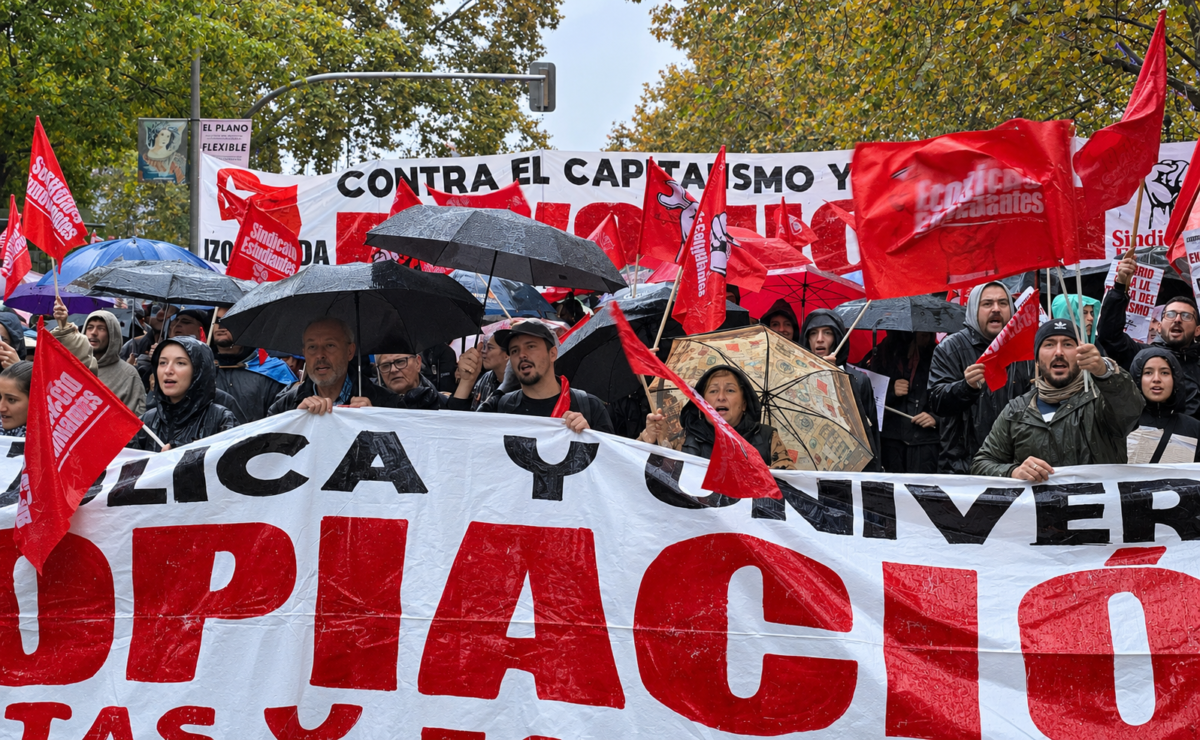

MADRID—Spain’s first general strike in 14 years, called by left-wing unions with the backing of Prime Minister Pedro Sánchez’s Socialist government, ended in riots in Madrid and Barcelona on Nov. 11.
Protesters blocked highways and industrial areas across Spain from early morning, while public transport ran on reduced schedules. Thousands marched in Madrid, Barcelona, Bilbao, Valencia, Zaragoza, and other cities.
Spain’s two largest unions, CCOO and UGT, joined tenants groups in calling a 24-hour strike over wages and rising housing costs, drawing criticism from conservative politicians, who called it an attempt to sway the vote 18 days before the snap general election.
Blockades, Clashes in Madrid and Barcelona
The day began early at Mercamadrid, Madrid’s main wholesale food market, where about 1,000 strikers gathered. Other protesters blocked or disrupted access roads into the city during the morning rush hour, and similar actions took place at bus depots.
Around midday, protesters disrupted traffic on Gran Vía, forcing stores such as Primark and H&M to close their shutters under pressure from demonstrators who chanted “general strike,” “the struggle is the only way,” and “we are all antifascists.” Riot police later charged at them.
At 6 p.m., the main march left Atocha, Madrid’s central train station, and headed toward Plaza de España in heavy rain. Protesters carried left-wing banners and chanted anti-capitalist slogans, and some also chanted pro-Palestinian slogans. The central government’s delegation in Madrid put attendance at 120,000, and the Tenants Union put it at 600,000.
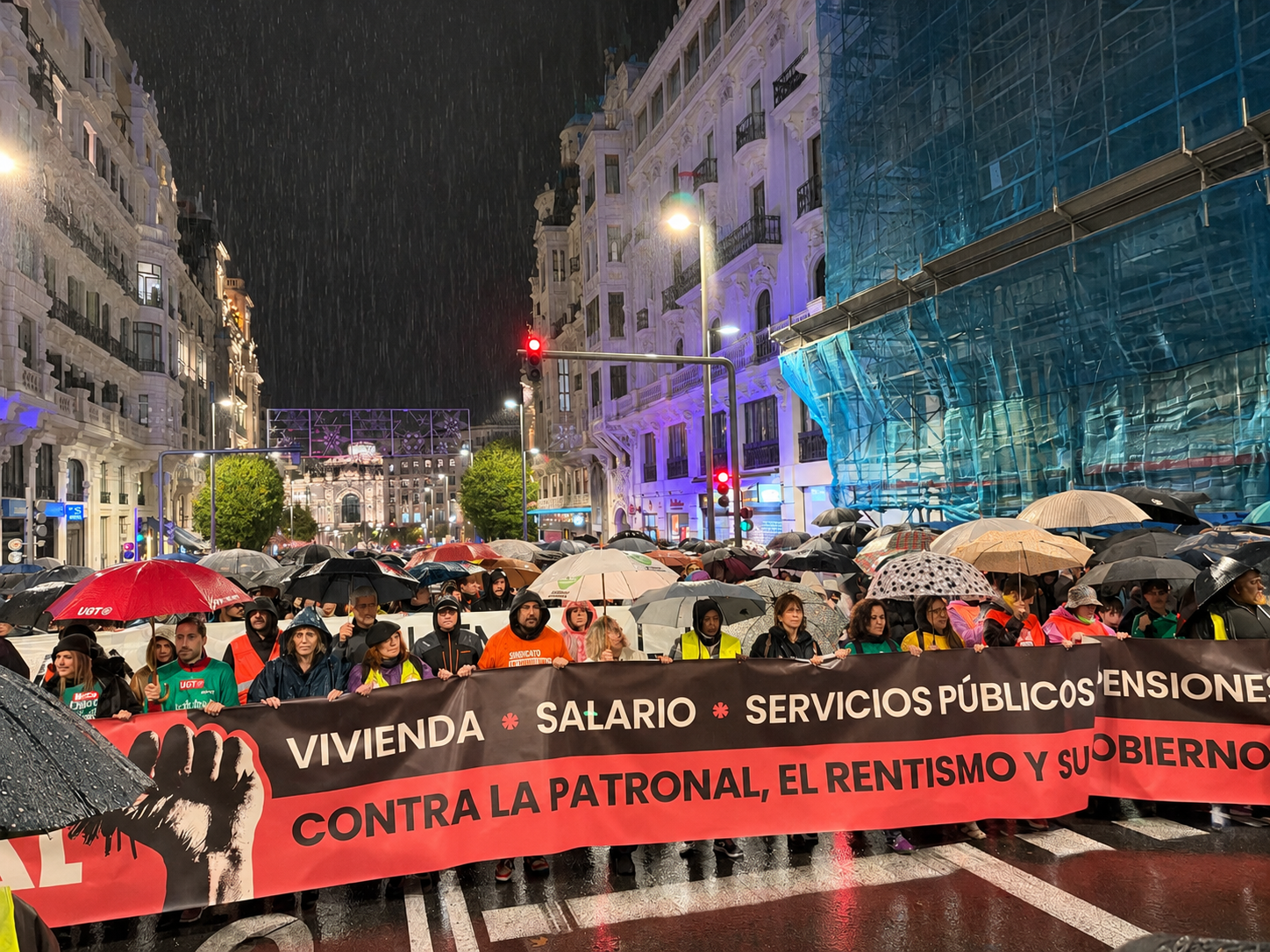 Left-wing protesters march during a nationwide 24-hour general strike organized by labor unions and tenants’ groups in heavy rain in Madrid on Nov. 11, 2026. (Etienne Fauchaire/The Epoch Times)
In Barcelona, police counted 55,000 protesters, while organizers claimed 400,000. The march ended in clashes and looting, El País reported. Hooded protesters threw fireworks at Catalan police, smashed shop windows and looted stores on the Passeig de Gràcia shopping street, and set fire to garbage bins and barricades.
By 10 p.m., Spanish authorities counted 74 arrests nationwide.
Protesters Target the Right
In Madrid, Juan, an activist with the far-left party Podemos, told The Epoch Times that he had come for two reasons.
“We believe a huge demonstration of workers and citizens could weaken the right and the far right,” he said, adding that he was also there because “people are struggling to make ends meet.”
David, an office worker holding a banner that read “Racism and rentierism kill,” told The Epoch Times that he was protesting “to make ends meet and live with dignity” and against the right “because they are completely against the working class.”
Alejandro, 26, who described himself as a communist activist, told The Epoch Times that the protesters were also rising up against what he criticized as militarism, “because there are billions for military equipment, but only crumbs for education and housing.”
“Young people and the working class marched together, independently of this capitalist government,” he said. “The future will be communist, and it is being forged right now here and with our comrades in France, Italy, Germany, and elsewhere.”
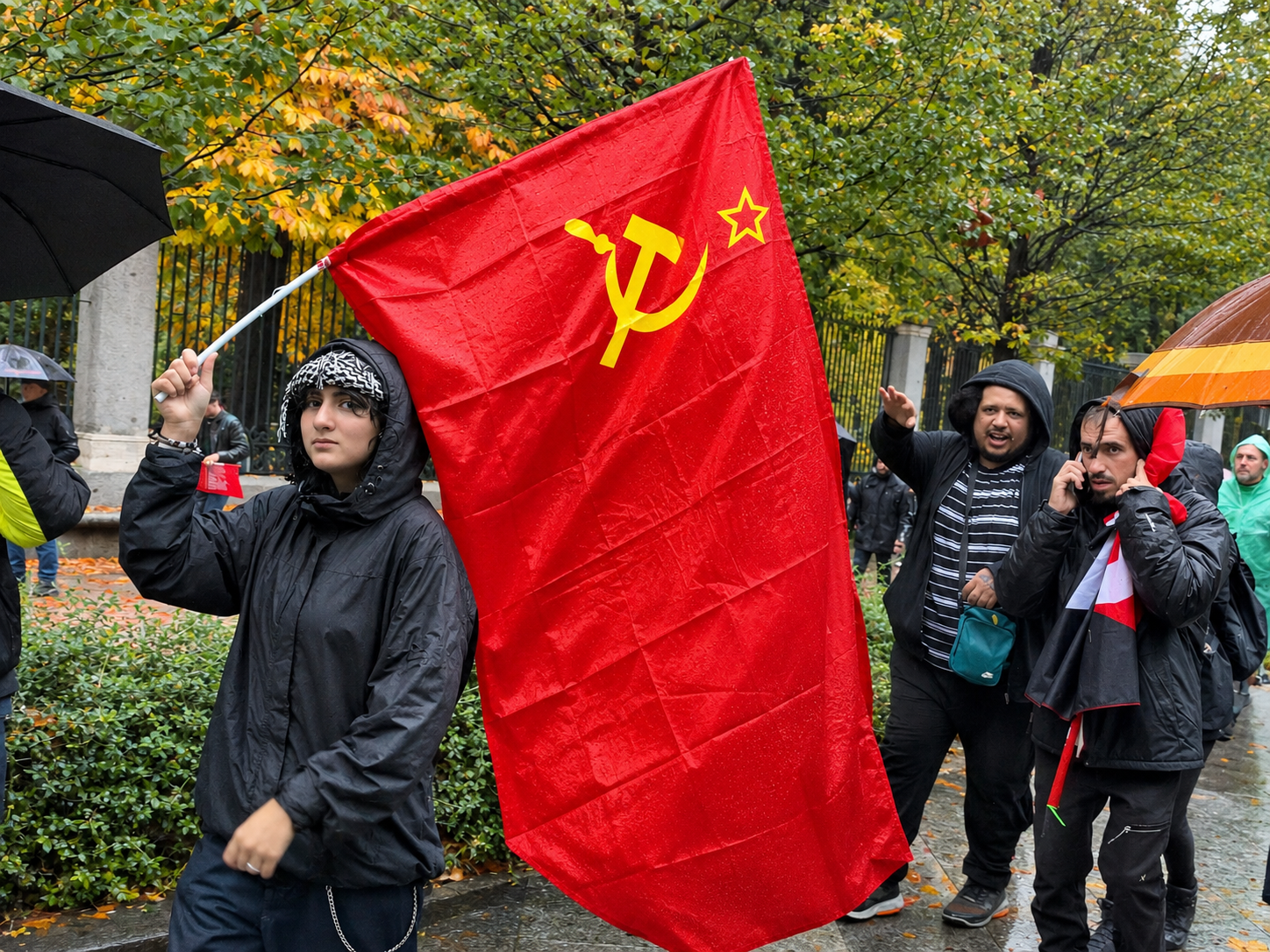 A protester carries a red flag bearing the communist hammer-and-sickle symbol during the main march in Madrid on Nov. 11, 2026. Labor unions and tenants’ groups staged a nationwide general strike over wages and rising housing costs ahead of Spain’s snap general election. (Etienne Fauchaire/The Epoch Times)
Government Backs the Walkout
Spain’s last general strike, in November 2012, targeted the austerity measures of Mariano Rajoy’s conservative government.
Sánchez’s Socialist Party said it supported the Nov. 11 strike. The government’s official agenda for the day listed no public events for Sánchez or his ministers, except two who were traveling abroad.
Deputy Prime Minister and Labor Minister Yolanda Díaz, of the junior coalition partner Sumar, urged workers on Nov. 6 to join the walkout.
“What is a strike if it is not political?” she said at a UGT event.
Sánchez told the Barcelona daily La Vanguardia that it was “not a strike against anyone” but one “in favor of a common response from all levels of government” on housing. Socialist deputy leader María Jesús Montero said in October that it was being called “against the opposition.”
In a Nov. 8 interview with the newspaper El Debate, UGT Secretary-General Pepe Álvarez said, “No, of course it will not go against the government.”
Unions said 4 million of Spain’s roughly 23 million workers took part. The employers confederation CEOE put average participation below 5 percent, called the strike a “failure,” and said it did not understand why the government had encouraged people to join it.
Opposition Denounces ‘Electoral Strike’
The conservative Popular Party (PP) and the right-wing Vox party accuse the unions of pursuing electoral aims on the government’s behalf.
“We are not facing a general strike but an electoral one, a preventive strike against the next government,” PP Secretary-General Miguel Tellado said on Nov. 11.
In an interview on Cadena Cope, Vox leader Santiago Abascal called it “a political strike that should not be legal” and said the unions were acting “solely at the service of the government.”
The unions say the strike is not aimed at the right. In a Nov. 11 interview with Onda Cero, Álvarez denied that the strike was targeting the opposition or intended to help the government.
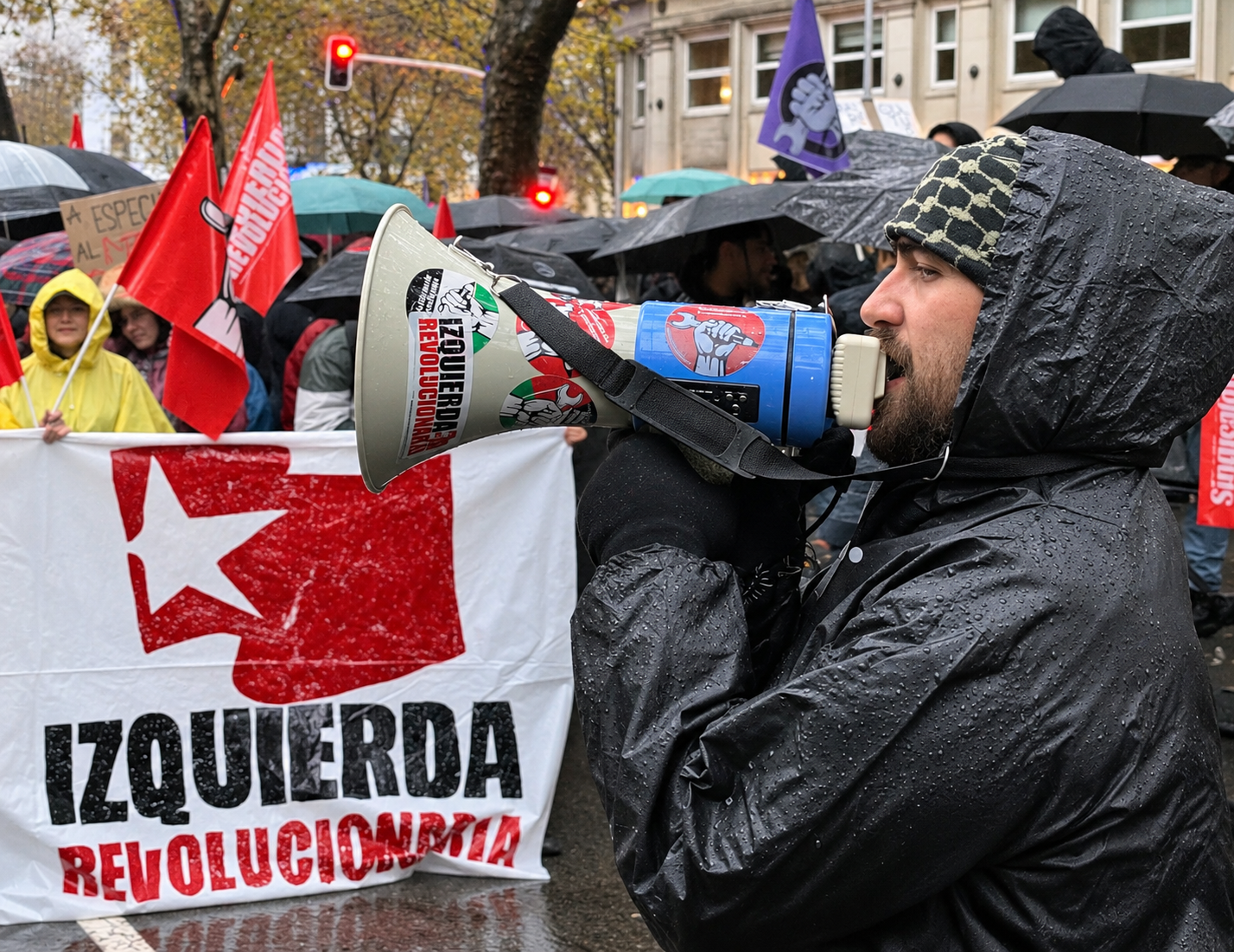 A protester speaks through a megaphone in front of a banner reading “Revolutionary Left” during the main march in Madrid on Nov. 11, 2026. (Etienne Fauchaire/The Epoch Times)
Housing Takes Center Stage Before Nov. 29 Vote
Sánchez called the Nov. 29 election in early October after Parliament rejected his decrees on evictions and rents and after weeks of protests over the eviction of an 87-year-old Madrid woman who later died.
Meanwhile, average rent in Spain stands at 1,176 euros ($1,315), about 98.7 percent of a young person’s average monthly salary, according to the Youth Council of Spain.
The snap election also came amid scrutiny of Sánchez’s government over a migrant crisis in Ceuta, Spain’s North African enclave, and corruption scandals involving his party, his family, and his inner circle, and a deadly train crash in October.
PP President Alberto Núñez Feijóo told Cuatro on Nov. 9 that the early election was called to “cut off the judicial investigations” that “directly affect the Socialist Party.”
The Socialists trail in the polls, and a polling average by the aggregator Electocracia projects a combined 195 of the lower house’s 350 seats for the PP and Vox, 19 more than is needed for a majority. The official campaign begins on Nov. 13.