
Saskatchewan’s projected deficit has shrunk by more than 4 percent to $784 million, largely due to higher resource revenues, according to the province’s mid-year financial update.
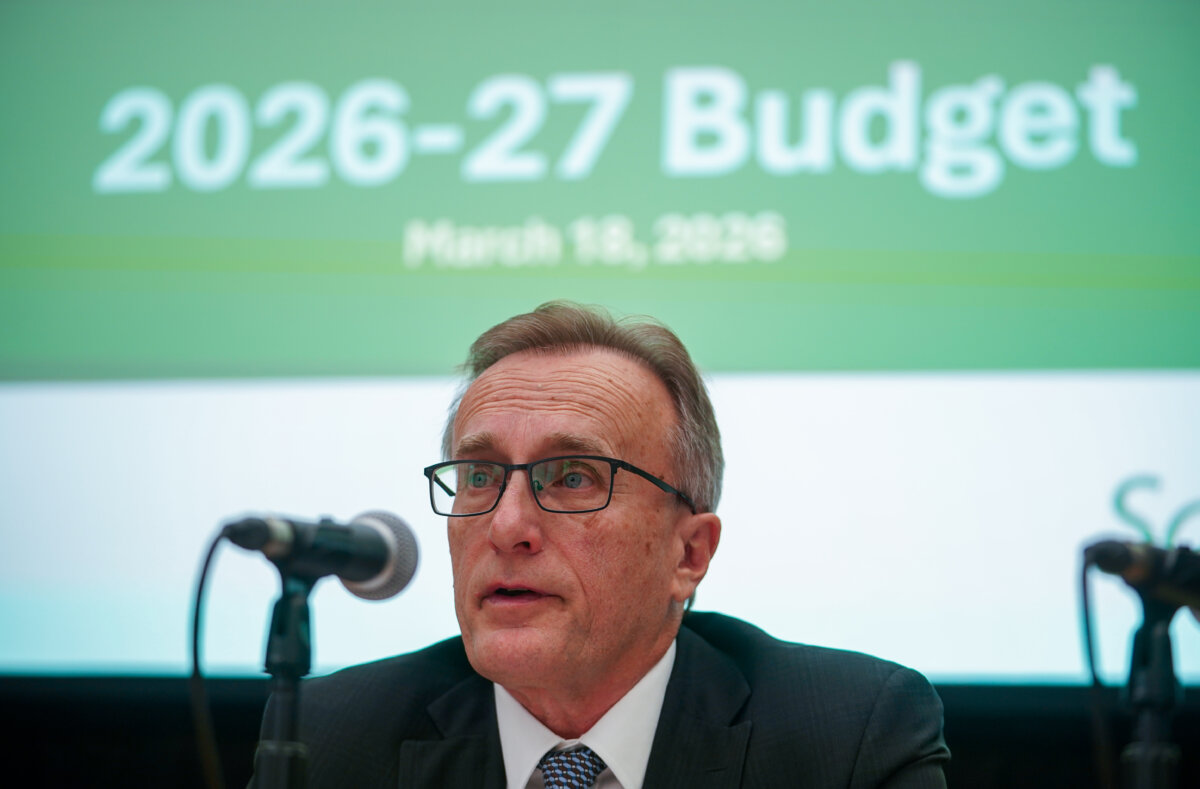
Finance Minister Jim Reiter presented the update on Nov. 25, outlining the province’s financial position through the second quarter of the 2026-27 fiscal year.
The province budgeted $21.4 billion in revenue and $22.2 billion in expenses for 2026-27, with a projected deficit of $819.4 million. However, the mid-year update showed revenue was forecast to increase by $668.5 million, or 3.1 percent, while expenses were expected to rise by $632.7 million, or 2.8 percent. The net difference narrowed the projected deficit by $35.8 million to $783.6 million.
Non-renewable resource revenues were forecast to increase by $725 million, driven by higher-than-anticipated prices for oil, potash, and uranium.
Reiter told reporters that the province’s financial position was largely in line with March’s projections despite geopolitical uncertainty, noting higher oil prices had increased government revenues and expenses while affecting affordability.
“But on the budget itself and on the mid-year, I’m comfortable that it’s as close to what we projected in spite of all that turmoil,” Reiter said. “Again, I think there’s going to be lots of bumps on the road, but the future looks bright.”
The finance minister said the government planned to return to a surplus within four years by controlling expenses and growing revenues through economic development rather than increasing tax rates.
Asked about temporarily suspending the provincial fuel tax, Reiter said doing so would affect revenues allocated to highways. He said the government had instead prioritized reducing personal income taxes, with further reductions planned for next spring’s budget.
Budget Projections
Health expenses were projected to rise by $350 million, mainly because of increased demand for services. Spending on protecting people and property was forecast to increase by $202.4 million, reflecting flooding and wildfire response costs and higher operating expenses at correctional centres.
Social services expenditures were also forecast to rise by $57 million, partly because of increased use of the Saskatchewan Income Support program.
The province’s gross debt is forecast to reach $43.8 billion at fiscal year-end, up $236 million from budget, largely because of increased borrowing requirements at SaskPower.
Saskatchewan’s projected net debt-to-GDP ratio improved to 15 percent from the budget estimate of 16.1 percent, the second-lowest among provinces. Alberta had the lowest ratio at 7.5 percent, while Newfoundland and Labrador had the highest at 42.6 percent.
The government forecast the provincial economy would grow by 1.5 percent in 2026, the third-highest rate among provinces. It also highlighted more than 60 major projects worth over $100 billion in the planning or construction stages, including new potash, uranium and base metal mines.
Housing starts increased by 5.9 percent in the first three quarters of 2026 compared with the same period last year, the update said. Employment grew by 2,800 positions through October, while the unemployment rate averaged 5.9 percent.
MLA Trent Wotherspoon, the NDP’s shadow minister for finance, criticized Reiter’s comment about being “comfortable” with the budget, and accused the Sask. Party government of breaking its election commitment to balance the budget by next year.
He noted its last surplus was in 2022, after resource prices rose following Russia’s invasion of Ukraine.
He said that despite receiving more than $700 million in additional resource revenues, the government had not provided additional cost-of-living relief or improved access to health care.