
The Alberta government has introduced a new bill that, if passed by the legislature, will require universities and colleges to maintain a neutral position on political and ideological matters while encouraging freedom of thought and debate.
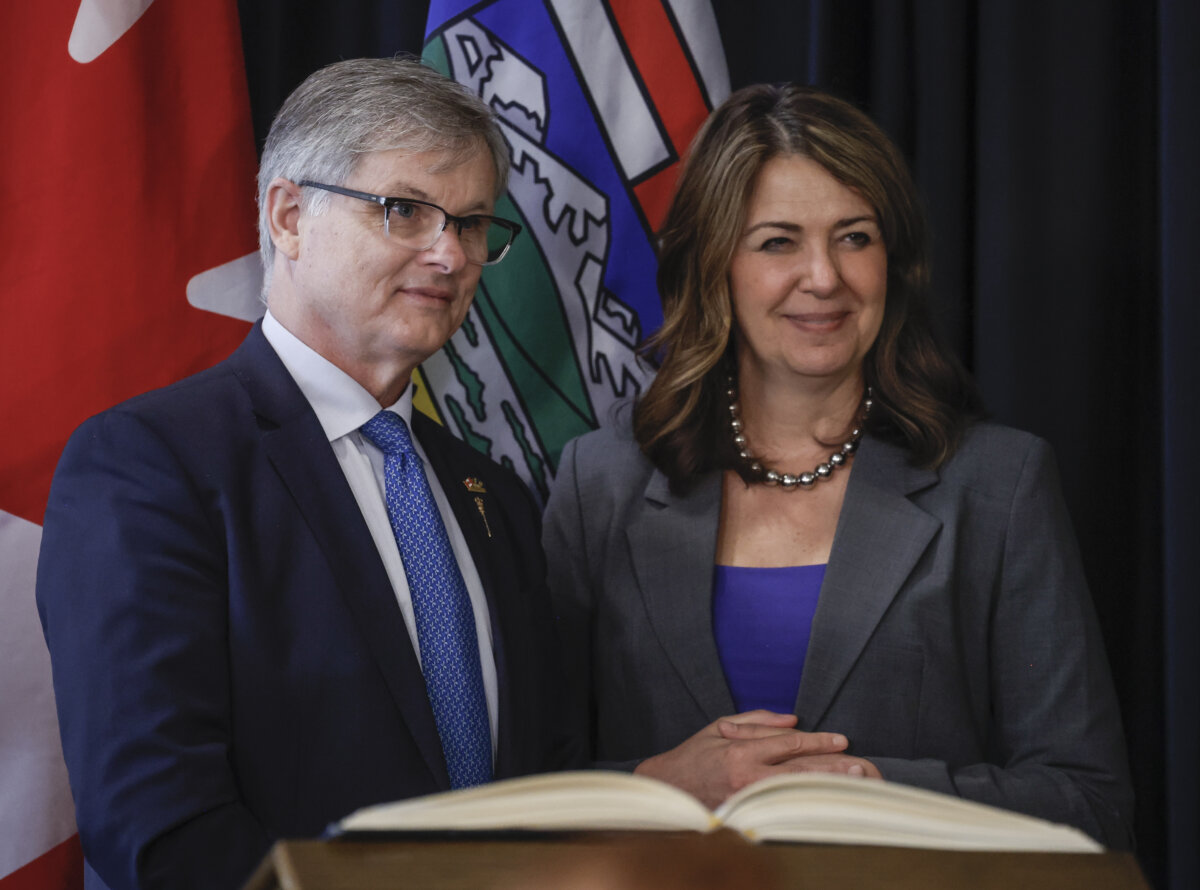
The bill tabled on Nov. 3 by Advanced Education Minister Myles McDougall would prevent Alberta’s post-secondary institutions from making official statements or taking institutional stances on social and political issues or belief systems that fall outside their core academic and research missions.
Bill 38, also known as the Advanced Education Statutes Amendment Act, would make changes to the Post-secondary Learning Act, McDougall said during a Nov. 3 press conference at the Alberta legislature.
McDougall said campuses should foster an environment where people can challenge ideas, listen to diverse viewpoints—whether they are popular or not—and engage in respectful debates.
“When an institution speaks officially, we expect it to stay neutral on political, social, and ideological issues,” McDougall told reporters. “That leaves the debate where it belongs: with students, faculty, and staff. Students, faculty, and staff would remain free to share their lawful views.”
McDougall said the bill would require public and independent universities and colleges to establish and meet “freedom of expression policies.”
The minimum standards and requirements will be established through future orders in council and government regulations, the minister said. He also indicated there will be repercussions for institutions that do not meet these neutrality expectations. The specific penalties are still under consideration and are anticipated to be finalized by next year.
“I don’t see this as being a problem,” McDougall said. “I think most institutions already feel that this is the role of the institution and I think there’s a general consensus on this.”
Bill 38 carves out some exceptions to the proposed law, however.
For instance, schools can officially express grief or solidarity following tragedies, such as natural disasters or mass casualties, but these statements must remain strictly humanitarian. They cannot cross into geopolitical debates, assign blame, or take a stance on the underlying political context surrounding the event.
Schools will also still manage their day-to-day speakers, events, and policies, McDougall said.
The bill will not impact private or First Nations post-secondary institutions if it is made law, the province said in a press release.
Alberta NDP MLA David Eggen, who serves as his party’s shadow minister for advanced education, criticized the proposed legislation, saying it “does very little” to tackle the issues facing post-secondary institutions, such as underfunding.
“It’s a huge waste of time. Institutions all have their standards by which they operate under,” Eggen told reporters during a press scrum.
Tuition Changes
If passed, the legislation will also reshape how post-secondary tuition is regulated for domestic students in the province.
The bill would replace the current framework—which caps overall average annual domestic tuition increases at 2 percent—with a system where the government establishes maximum dollar limits for specific programs or categories of programs.
“Going forward, every program would have a clear maximum set by ministerial order so students and families can plan ahead,” McDougall said.
Tuition fee increases for existing domestic students would remain capped at a temporary 2 percent for the 2027-28 academic year to provide stability during the rollout of this new system, he said.
The Professional Governance Act would undergo minor technical amendments to simplify the professional licensing requirements for individuals in specialized engineering and geoscience fields, McDougall said.
The Association of Professional Engineers and Geoscientists of Alberta would oversee both groups, eliminating the need for the two separate regulatory bodies currently in place.
“The result would be less duplication and simpler licensing with the same strong oversight that protects the public,” he said.
Bill 38 has passed first reading in the legislature.