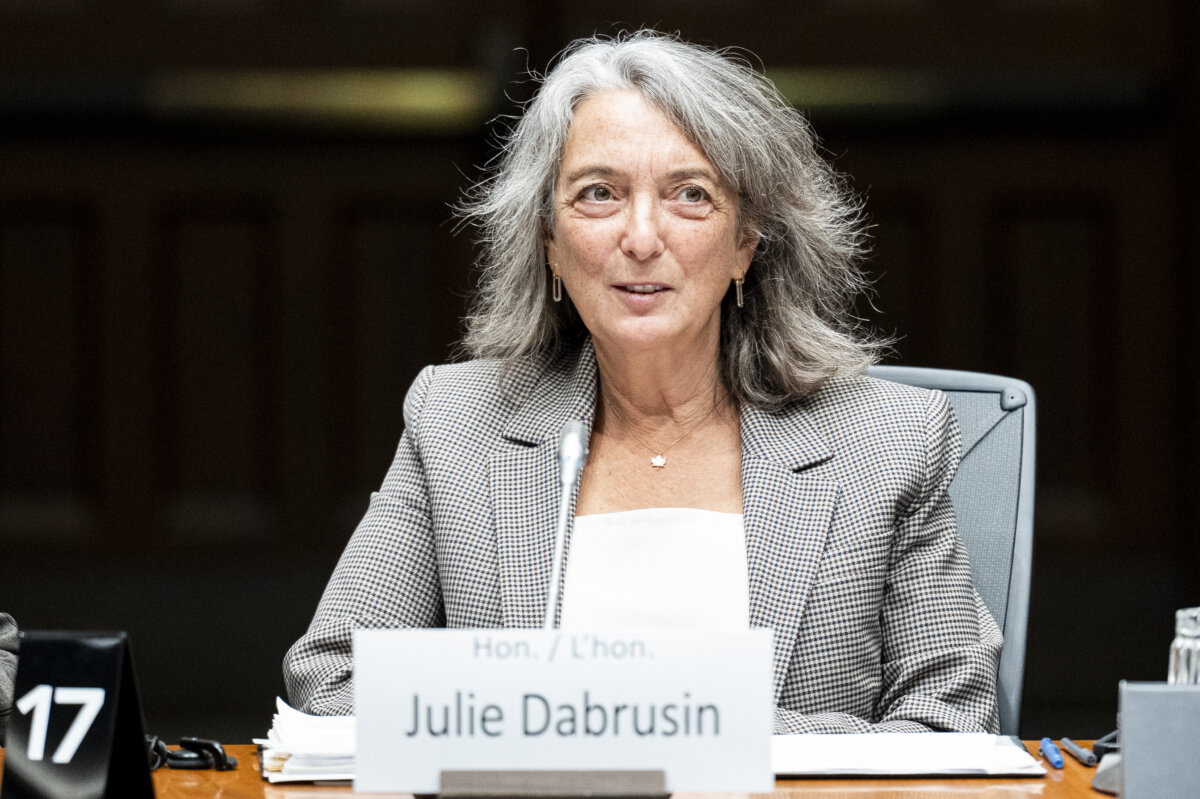

The federal government says it won’t appeal an Alberta Court of Appeal ruling that found the Impact Assessment Act (IAA) is unconstitutional and infringes on provincial jurisdiction.
The office of Environment Minister Julie Dabrusin said in a media statement that Ottawa will instead amend the act, which governs federal assessments of the environmental and other impacts of major projects, in response to the ruling.
In its Oct. 9 ruling, the court found that changes Parliament made to the IAA in 2024 had failed to resolve constitutional problems identified by the Supreme Court of Canada in 2023. Four of the five Alberta Court of Appeal judges found that the act’s designated-projects provisions and regulations continued to exceed federal constitutional authority, except as they applied to federal projects.
The majority found that the legislation could allow Ottawa to regulate an entire provincial project rather than limit its decisions to effects within federal jurisdiction.
Impact Assessment Act
The IAA, enacted in 2019 under former Prime Minister Justin Trudeau, established a federal process for reviewing environmental, health, social, and economic effects of major projects. Projects were required to undergo planning and assess the potential impacts before receiving authorization to proceed.
Alberta and Saskatchewan opposed the legislation, arguing it infringed on provincial jurisdiction and made it impossible for major pipeline projects to proceed, dubbing the legislation the “No More Pipelines Act.”
In October 2023, the Supreme Court of Canada ruled that the IAA’s designated-projects section was unconstitutional, as it allowed Ottawa to rule on matters beyond its jurisdiction. The Supreme Court upheld separate provisions of the act that govern projects that federal authorities carried out on federal lands or outside of Canada.
Parliament amended the legislation in June 2024 to focus more on adverse effects within federal jurisdiction. Alberta referred the amended law to its Court of Appeal in November 2024, questioning whether the changes had resolved the constitutional problems.
Alberta argued the amendments had not meaningfully changed the law, since Ottawa could still prevent provincial projects from proceeding or determine whether they were justified. The federal government, however, maintained that Parliament had addressed the constitutional concerns the Supreme Court identified.
Alberta Premier Danielle Smith said in a statement on X on Nov. 12 that her province “wins again,” with the federal government agreeing not to appeal the court’s decision. She said this would require a “major overhaul” of the IAA, resulting in the “elimination” of all federal interference in provincial infrastructure projects.
“We will continue to stand up for Alberta’s provincial rights at every turn. And we will keep winning those battles,” she said.
The Canadian Press contributed to this report.