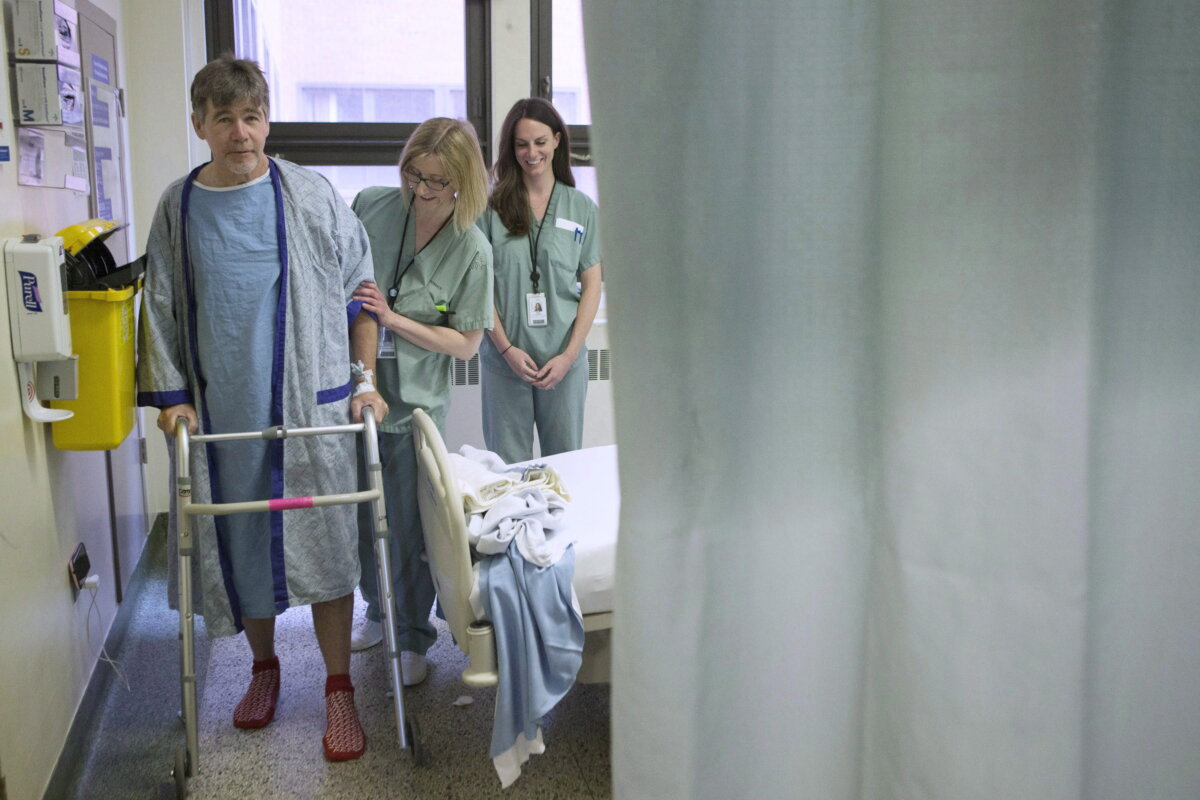

Ontario is investing $125 million to support the completion of up to 20,000 orthopedic procedures at private clinics during the next two years in a bid to reduce surgery wait times.
Health Minister Sylvia Jones says the expansion will decrease wait times for hip and knee replacements, ensuring that 90 percent of patients in Ontario receive care within the clinically recommended timeframes.
“While Ontario has the shortest surgical wait times of any province in Canada, we’re working to deliver even more connected and convenient care for people, when and where they need it,” Jones said in a July 2 press release, noting that the funding will allow patients to receive “the care they need sooner and closer to home.”
There are currently more than 900 community surgical and diagnostic centres throughout Ontario, most of which provide diagnostic imaging services.
The province has opened up a call for applications this week to license community surgical and diagnostic centres for orthopedic services in Ontario. The province said it anticipates the new licences to be issued next year.
All of the newly established surgical centres will receive accreditation from Accreditation Canada, the same organization responsible for setting quality standards for hospitals, according to the province.
No centre is permitted to deny an insured service to a patient who opts not to acquire uninsured “upgrades,” the province said. Similarly, no patient will be allowed to pay for expedited access to insured services over others.
Liberal health critic Adil Shamji says he supports the idea under the right circumstances, but adds the province has nowhere near enough guardrails in place to ensure the system will operate safely.
Ontario Premier Doug Ford’s Progressive Conservative government first introduced sweeping changes to the delivery of health care in 2023 in response to a massive surgical and diagnostic test backlog. The province said its latest announcement will continue to build on that.
Wait Times on Rise
The wait times for essential surgeries in Canada, such as knee and hip replacements, have been slow to improve since the pandemic, according to a June report from the Canadian Institute for Health Information.
It found that increasing health care demands due to population growth and aging, as well as health workforce shortages, have led to the increase in wait times. A shortage of health-care personnel, particularly surgical staff, is another element leading to extended wait times, the report said.
The study examined surgery timeframes from April 1 to Sept. 30 in 2019 and 2024.
It found the proportion of patients undergoing hip and knee replacement surgeries within the advised six-month time frame declined, despite a rise in the number of procedures by more than 20 percent.
The Canadian Press contributed to this report.