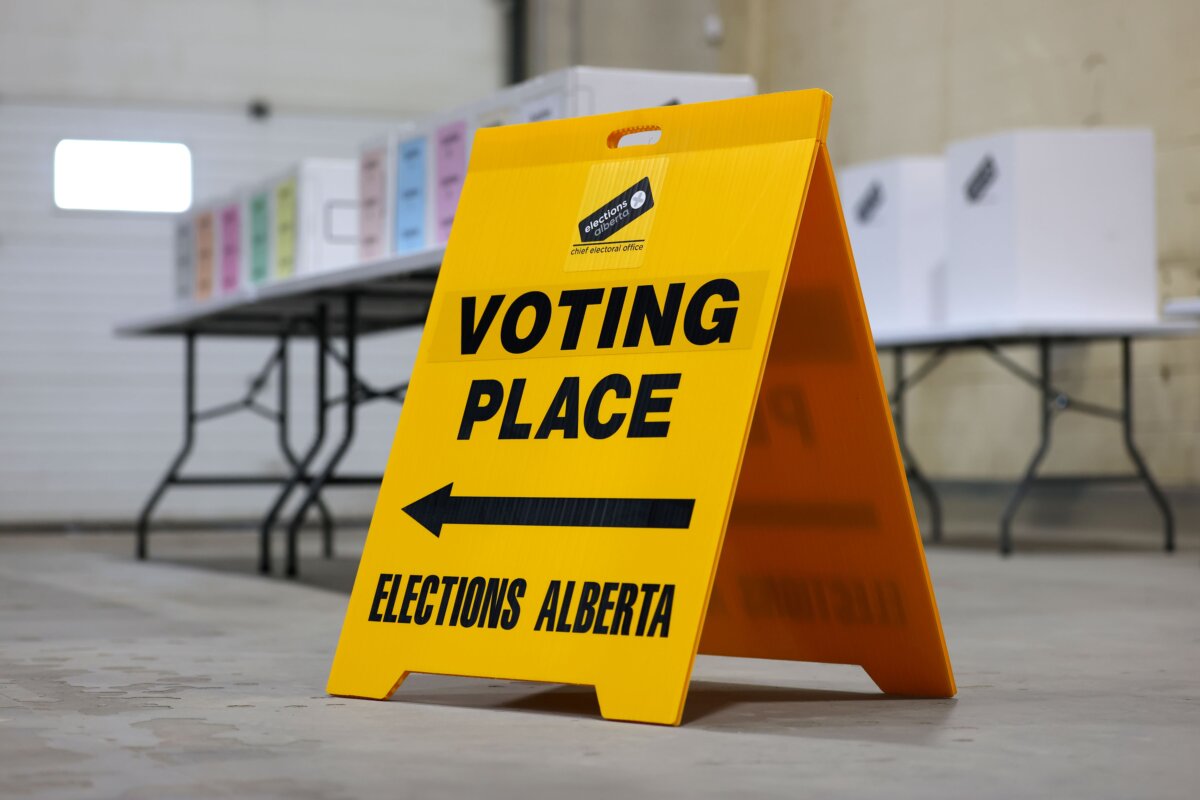

Alberta’s Oct. 19 referendum attracted the highest voter turnout for a provincewide vote in at least five decades, with participation exceeding that of the province’s last general election, new data shows.
Elections Alberta released the official referendum results on Oct. 29, showing that voter turnout reached 70.4 percent on the highest-turnout questions. In comparison, the 2023 provincial election recorded a turnout of 60.5 percent.
That makes this year’s referendum the highest-turnout provincewide vote since at least 1975, although it fell short of the record of 81.8 percent set in the 1935 general election.
A total of more than 22.1 million votes were recorded across the referendum’s 10 questions, which addressed Alberta’s future in Canada, as well as immigration, provincial autonomy, and voting requirements.
Two questions recorded the highest voter turnout in the referendum, with participation reaching 70.4 percent on each.
The question on Alberta’s future in Canada recorded a turnout of 70.4 percent, with 74.95 percent voting for the province to remain in Canada and 25.05 percent supporting holding a referendum on separation.
The question on whether Albertans should be required to prove their citizenship before voting in provincial elections recorded the highest turnout, at 70.42 percent.
Participation remained high across all 10 questions, with turnout ranging from 69.96 percent to 70.42 percent.
Other Referendum Results
Albertans supported five of the 10 referendum proposals and rejected the other five.
Four of the approved proposals concerned immigration and access to provincial services.
On whether Alberta should have greater control over immigration levels, 54.86 percent voted “yes” and 45.14 percent voted “no.”
Voters also supported restricting provincially funded services for people without Alberta-approved immigration status, with 52.46 percent in favour and 47.54 percent opposed.
Another 53.12 percent supported requiring permanent residents to live in Alberta for at least one year before accessing social assistance, while 46.88 percent opposed the measure.
The narrowest approval came on whether temporary residents should pay fees or premiums to access publicly funded education and health-care services. That proposal passed with 51.78 percent support, compared with 48.22 percent opposed.
Meanwhile, voters rejected four proposals involving constitutional changes.
On whether provinces should have a greater role in appointing judges, 54.64 percent voted no and 45.36 percent voted yes.
A proposal to abolish the Canadian Senate also failed, with 52.72 percent opposed and 47.28 percent in favour.
Voters rejected allowing provinces to opt out of federal programs while retaining federal funding to establish their own education, health-care, and social services programs. That proposal received 42.44 percent support, while 57.56 percent opposed it.
Another 55.83 percent opposed strengthening provincial authority in areas where provincial and federal powers overlap or conflict, compared with 44.17 percent who supported the proposal.
The official results also showed that 37.9 percent of votes were cast during six days of advance polling, while 31.8 percent were cast on referendum day.
Mail-in voting accounted for another 29.4 percent, while approximately 1 percent were cast through mobile voting at locations including long-term care homes, hospitals, treatment centres, emergency shelters, and community support centres.
The Canadian Press contributed to this report.