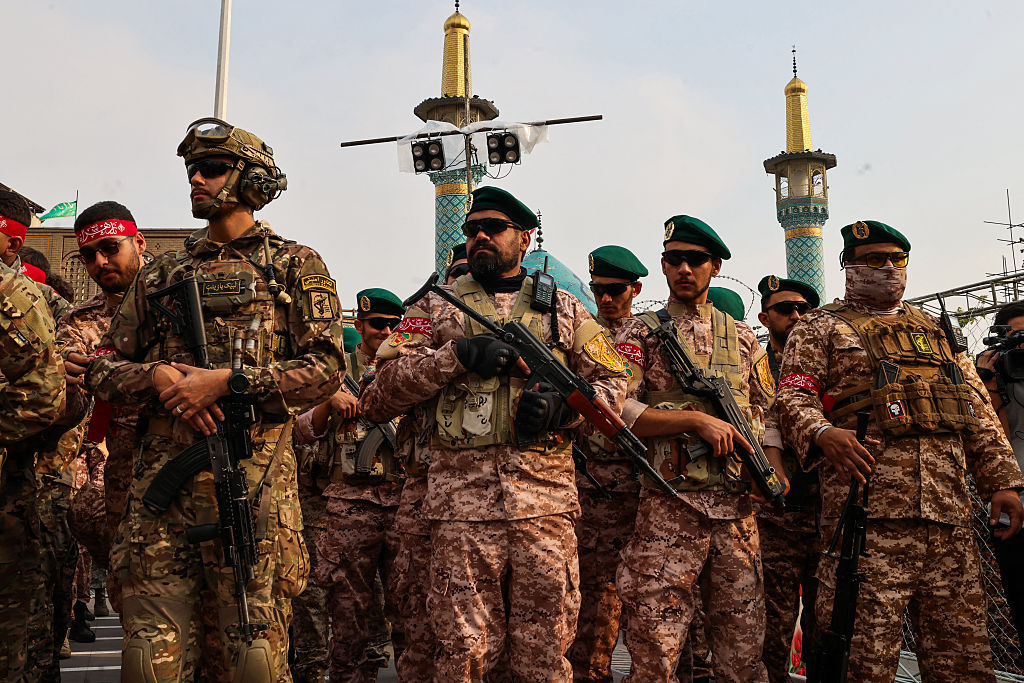

Iran stated on Nov. 9 that its armed forces are updating the country’s military doctrine to focus on rapid response and operational effectiveness without geographical limitations, days after removing a self-imposed limit on the range of its ballistic missiles.
Iranian military spokesperson Brig. Gen. Mohammad Akraminia said recent directives from Iran’s commander-in-chief, Ayatollah Mojtaba Khamenei, were being incorporated into the military doctrine. Last month, Khamenei warned that “any kind and level of threat” from the United States or Israel would face a response without geographic limits.
Akraminia said the move toward an offensive doctrine requires appropriate weaponry and changes in methods of warfare.
Iran’s previous doctrine was based on defensive operations and retaliatory or punitive deterrence, he said.
“Under this framework, the objective was to repel the enemy’s initial strike and then deliver a second strike proportionate to the enemy’s action, within the geographical boundaries of the region and against US bases in the region,” he said, according to the Iranian semi-official outlet ISNA.
Akraminia said the doctrine is intended to strengthen Iran’s deterrence regardless of political developments, including those in the United States or Israel.
The announcement follows Nov. 7 comments by Islamic Revolutionary Guard Corps (IRGC) spokesman Hossein Mohebbi that Tehran had lifted its self-imposed restrictions on missile range, according to ISNA.
For years, Iran maintained that it voluntarily limited the range of its ballistic missiles to about 2,000 kilometers (1,200 miles), stating that the restriction reflected a defensive doctrine rather than technical limitations.
In March, Iranian Foreign Minister Abbas Araghchi reiterated that position during an interview with NBC News.
“We have capability to produce missiles, but we have intentionally limited ourselves to below 2,000 kilometers of range because we don’t want to be felt as a threat by anybody else in the world,” Araghchi said.
Asked whether the restrictions had now been removed following recent calls by Iran’s leadership for an “immediate and effective response” to threats without geographic limitations, Mohebbi told ISNA that the restriction “has been lifted for us.”
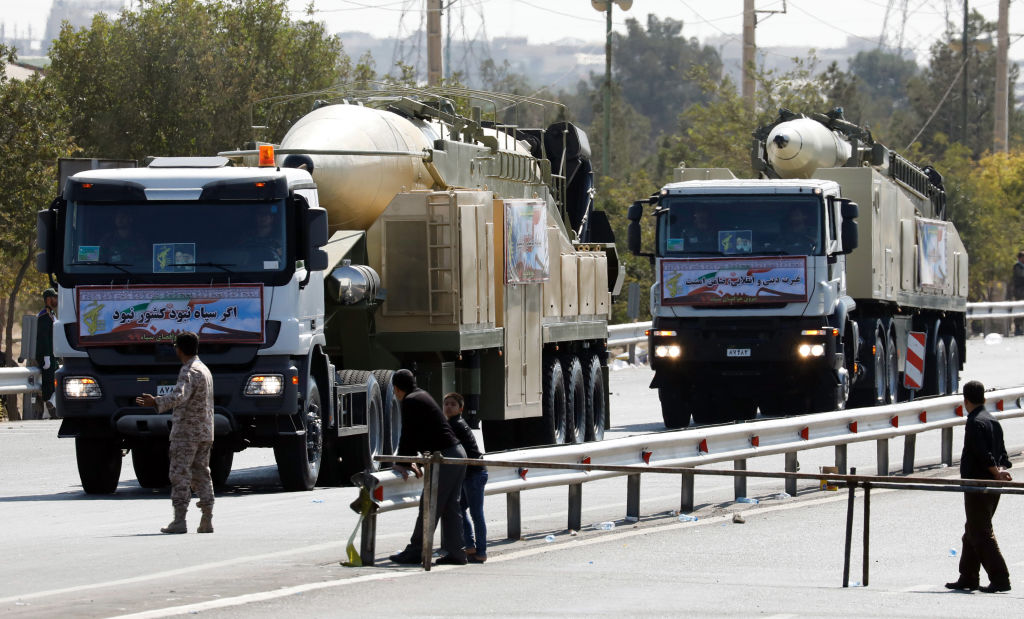 An Iranian long-range missile is displayed during a military parade in Tehran, Iran, on Sept. 22, 2017. (STR/AFP via Getty Images)
Since the outbreak of the Iran war in February, Iranian attacks have targeted several countries across the region, including Bahrain, Kuwait, Oman, Qatar, Saudi Arabia, and the United Arab Emirates, as well as affecting maritime security in the Strait of Hormuz.
U.S. and British officials said in March that there was an unsuccessful attempt to hit the strategic UK–U.S. military base at Diego Garcia. It’s unclear how close the missiles came to the island, which is about 4,000 kilometers (2,500 miles) from Iran.
 An aerial view of Diego Garcia in the Chagos Island group. (U.S. Navy via AP)
The Israeli military had stated that Iran launched a two-stage intercontinental ballistic missile at the base. NATO Secretary-General Mark Rutte said at the time that the alliance could not confirm Israel’s assessment.
Iranian Foreign Ministry spokesman Esmail Baghaei, in a March 23 post on X, dismissed the claims as Israeli disinformation.
New US Task Force
The military announcements come amid fresh U.S. measures aimed at restricting Iran’s military supply chains.
U.S. Central Command stated on Nov. 7 that it had created a new task force to help prevent Iran from transporting advanced weapons, alleged dual-use technologies, sanctioned materials, and illicit revenue across its land borders and the Caspian Sea.
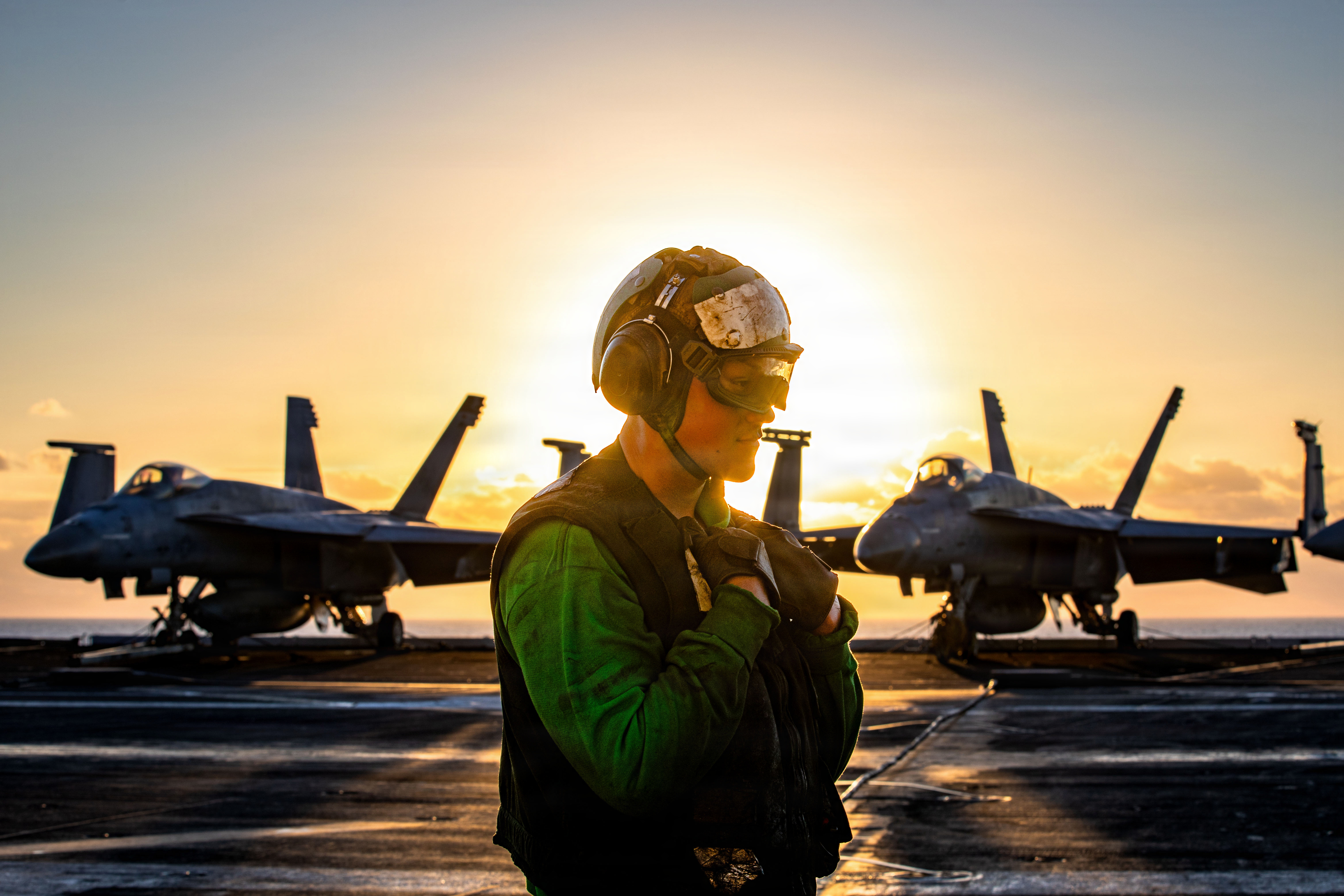 A U.S. Sailor observes flight deck operations on the flight deck of the world’s largest aircraft carrier, USS Gerald R. Ford, during Operation Epic Fury, on Feb. 28, 2026. (U.S. Navy photo)
The new initiative “reinforces the success of our ironclad blockade against Iran at sea,” he said.
Central Command noted that the U.S. naval blockade of Iranian ports has, in recent months, prevented Tehran from exporting more than $25 billion in crude oil.
The military developments come as diplomatic efforts between Washington and Tehran remain stalled.
Negotiations
U.S. Secretary of State Marco Rubio said on Nov. 8 that there was no indication that negotiations with Iran were close to a breakthrough.
“You have a number of countries that continue to engage them with different ideas, but I wouldn’t say we’re on the verge of a breakthrough,” Rubio told reporters before departing Florida for a G7 foreign ministers’ meeting in Paris.
“The president would always prefer to solve this and every problem diplomatically. Sometimes that’s not possible, unfortunately.”
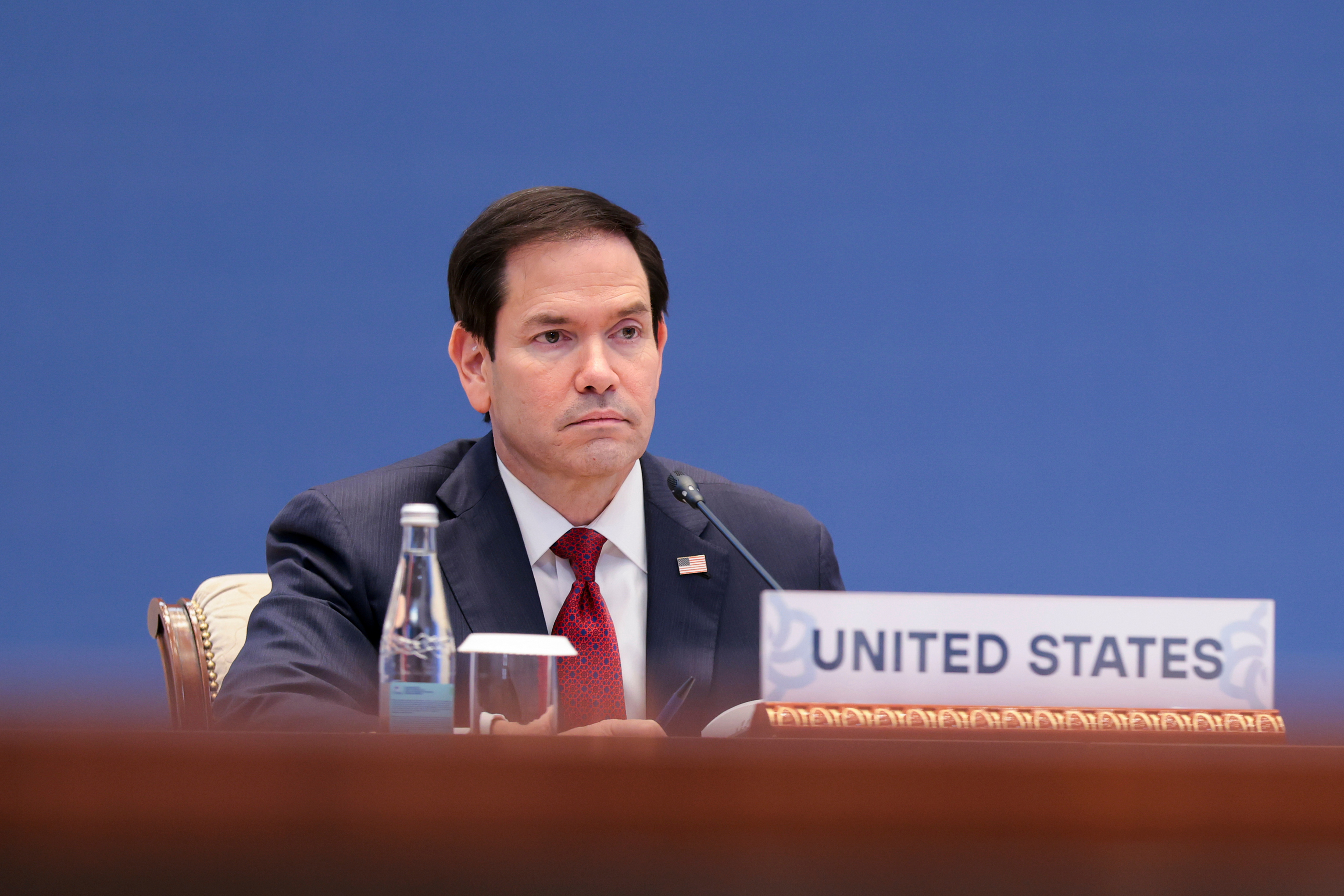 U.S. Secretary of State Marco Rubio participates in the C5+1 ministerial meeting in Samarkand, Uzbekistan, on Oct. 19, 2026. (Kylie Cooper/via AP)
Iran responded on Nov. 9 by defending its proposal to resume negotiations within two days, after previously suggesting a seven-day period.
Baghaei said on Nov. 9, according to Iranian state news agency IRNA, that Tehran’s conditions, including ending hostilities, lifting the U.S. naval blockade, and removing sanctions before negotiations resume, were reasonable.
He also dismissed the newly established U.S. military task force targeting Iran’s land trade as a political diversion following Republican losses in the U.S. midterm elections.