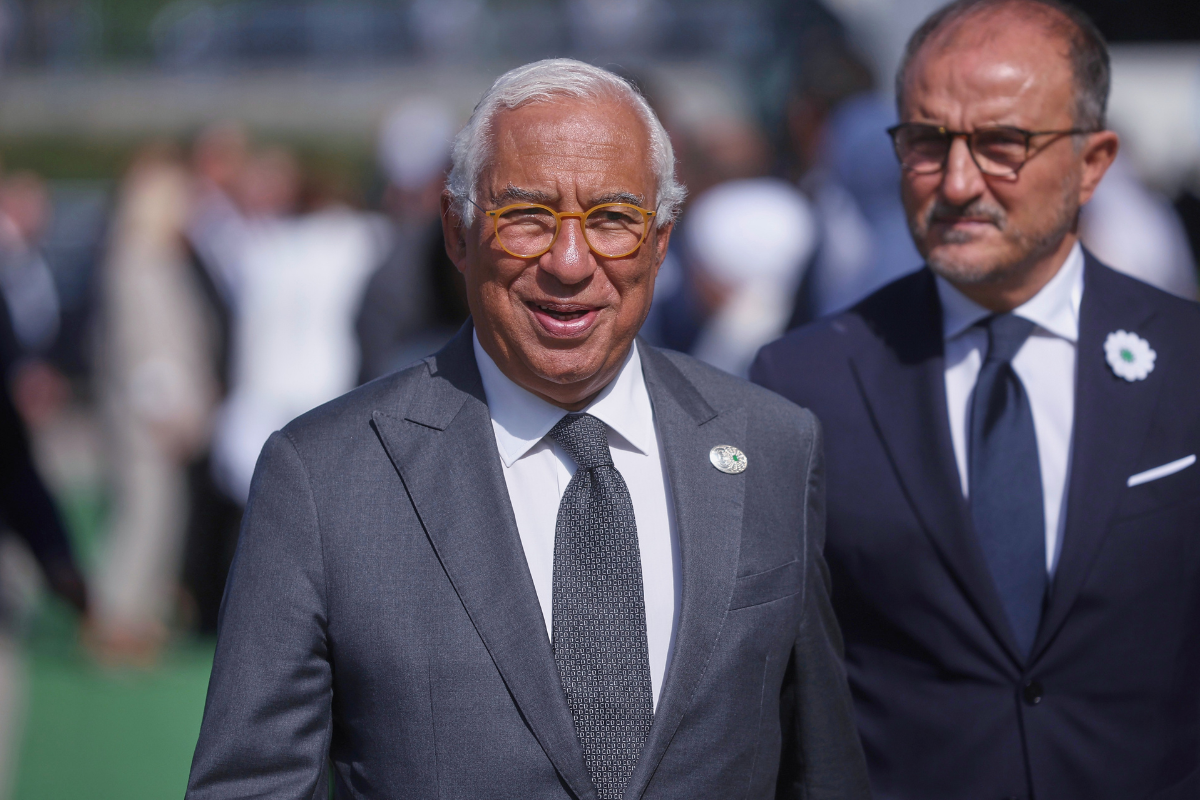

European Union leaders gathered in Brussels on Nov. 26 for a two-day summit to discuss the bloc’s next seven-year budget and financial support for Ukraine, with the aim of reaching an agreement in December.
European Council President António Costa presented a revised proposal for the EU’s Multiannual Financial Framework (MFF) for 2028–2034 on Nov. 21, which would set the bloc’s long-term spending commitments at 1.58 trillion euros ($1.74 trillion)
“We need a long-term budget that is fit to finance our key priorities while keeping national contributions at a reasonable level,” Costa said in a Nov. 26 post on X.
The proposed budget includes approximately 740 billion euros ($813 billion) for agricultural support, regional development, fisheries, migration, border management, and internal security.
Costa’s proposal also includes five new sources of revenue for the bloc, including revenues from digital services and national contributions based on tobacco excise duties and uncollected electronic waste.
EU leaders are seeking to reach a budget agreement at their next summit, scheduled for Dec. 17–18.
The proposed budget has already faced opposition from several member states.
Slovak Prime Minister Robert Fico said on Nov. 23 that Poland, the Czech Republic, Hungary, Slovakia, and Austria considered Costa’s proposal “not unacceptable acceptable for us.”
Fico said the four Visegrad countries—Poland, the Czech Republic, Hungary, and Slovakia—would adopt a common negotiating position focused on agricultural support and cohesion funding for poorer regions.
Polish Prime Minister Donald Tusk said: “I will be very firm and will not accept any version of the EU budget that would lead to higher energy prices, severe social costs, or a weakening of the defense capabilities of Poland and other countries on the eastern flank.”
Czech Prime Minister Andrej Babis said earlier on Monday the proposal was “absolutely unacceptable.”
The Netherlands has also expressed opposition, with Dutch Prime Minister Rob Jetten telling reporters ahead of Thursday’s summit that his government was not prepared to accept the current proposals.
“The budget needs to be modernised and needs to be downsized if we want to strike a deal,” Jetten said.
“It is now up to Costa to come with a better proposal.”
The EU’s seven-year budget requires unanimous approval from all 27 member states.
Under the proposed financial framework for 2028–2034, the EU would establish a Ukraine Reserve of up to 88.9 billion euros ($98 billion) to support the country’s accession to the bloc and longer-term reconstruction.
Separately, the European Commission proposed on Nov. 18 an additional 45 billion euro ($49.4 billion) loan to Ukraine for 2027, which would be repaid if Russia pays war reparations.
The proposed loan would build on the EU’s existing 90 billion euro ($98.9 billion) Ukraine Support Loan for 2026 and 2027.
Germany has called for all 27 member states to participate in financing Ukraine.
“We must ensure that Ukraine receives sufficient support in the coming years,” German Chancellor Friedrich Merz said on entering the summit.
“I don’t think anyone in Europe can have any interest in seeing new waves of refugees from Ukraine if this war does not come to an end.”
Hungarian Prime Minister Peter Magyar reiterated in Bratislava on Nov. 23 that Budapest opposed linking financial support for Ukraine to the EU’s seven-year budget and would not accept making such financing an obligation.
On Thursday Magyar said that mood was less than optimistic.
“I have just outlined to the other 26 heads of state and government Hungary’s priorities and the red lines we will not cross,” he said in an Nov. 26 post on X.
“Having heard the completely opposing positions around the table, I would put the chances of reaching an agreement today at virtually zero. An agreement around Christmas looks unlikely too,” Magyar added.
Marine Le Pen, a leading figure in France’s right-wing National Rally party, could cease providing financial support to Ukraine if she became president.
In an Oct. 15 post on X, Le Pen said she “had nothing, personally, against” Ukrainian President Volodymyr Zelenskyy and would be willing to travel to Ukraine to speak with him.
“But we no longer have the financial means to provide aid that has cost us 6 billion euros per year so far,” she added.
Reuters contributed to this report.