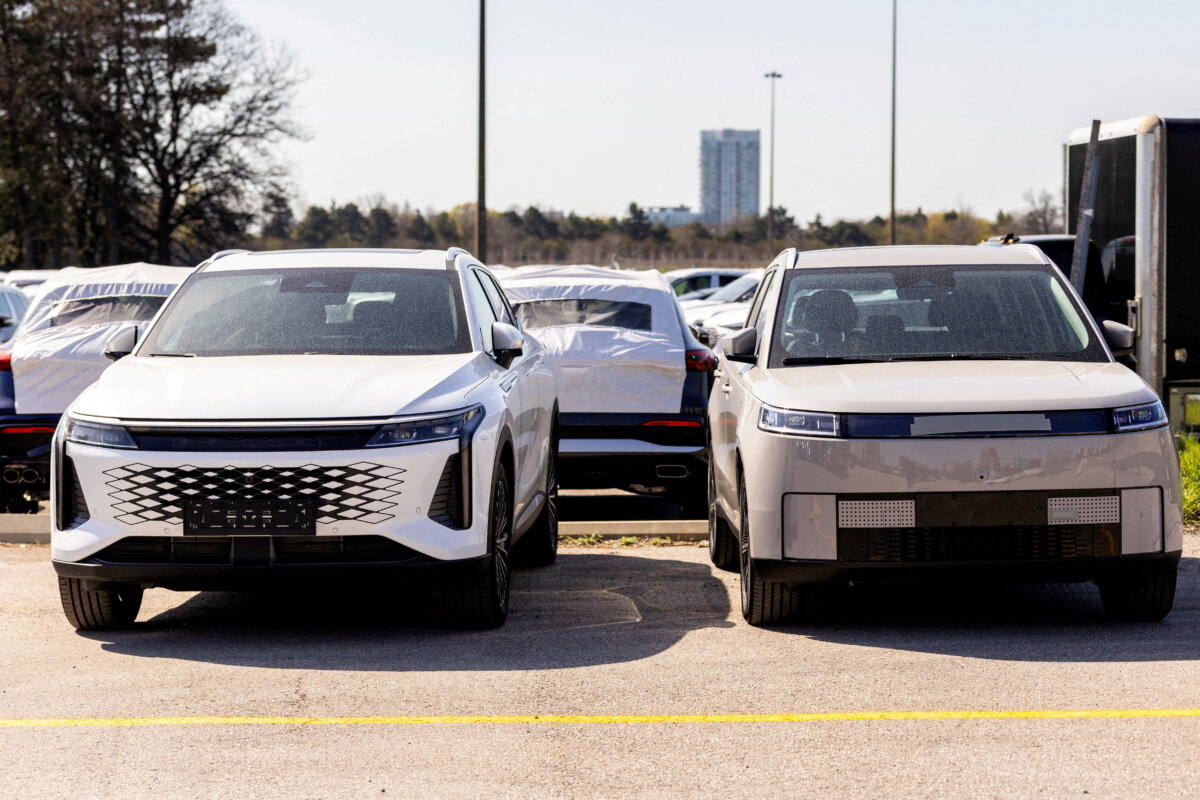

The European Union has imposed temporary caps on imports of hybrid passenger vehicles in a move to protect its domestic automotive industry and curb shipments from China and other countries.
On Nov. 24, the European Commission said these restrictions are needed to protect the EU industry from a sharp recent increase in imports of such vehicles.
The measures will go into force on Dec. 1 following an investigation that found imports of hybrid vehicles into the EU had increased significantly since 2023.
According to the commission’s investigation, imports of Chinese hybrid vehicles into the EU increased by almost 1,000 percent in the 12 months to June 2026 compared with 2023.
China faces an annualized import quota of 350,000 hybrid vehicles, compared with 486,582 imported into the EU in the 12 months to June 2026, according to European Commission figures.
The provisional safeguard measure will be in place for a maximum of 200 days. But definitive measures may be imposed within nine months from the initiation of the investigation.
The EU said that the surge in imports of hybrid passenger vehicles into the EU “has been driven by growing global production overcapacity” and is also prompted by increased use of trade-restrictive measures in other major markets.
It added that the investigation showed that EU-based manufacturers of hybrid passenger vehicles are “losing market share, putting the long-term viability of their hybrids business at risk – despite a growing EU market.”
It found that the threat of serious injury to the EU industry is imminent, requiring safeguard measures to protect EU producers.
The measures follow an agreement reached between Brussels and Beijing on Oct. 9, during trade talks in the Chinese capital, to curb Chinese exports of hybrid and plug-in hybrid vehicles to the bloc.
The restrictions also apply to imports from Japan, the United Kingdom, Turkey, South Korea, Mexico, Morocco, Serbia, and the United States.
“It is essential that the final arrangements recognise the unique UK-EU automotive relationship as allies in adversity, and do not create new barriers to our shared supply chains,” said Mike Hawes, chief executive of the British motor trade association SMMT.
A Dutch court issued a preliminary injunction barring Chinese automaker BYD from selling its Ti7 SUV in the European Union after finding that it infringes Jaguar Land Rover’s registered design rights for its Defender model.
Jaguar Land Rover (JLR), part of India’s Tata Group, launched the case earlier this year after BYD announced on its UK website that its seven-seater plug-in hybrid Ti7 SUV was available to order, with customer deliveries scheduled to begin in January 2027.
The District Court of The Hague ruled on Nov. 20 that BYD’s Ti7 SUV did not create a sufficiently different overall impression from the British automaker’s Land Rover Defender L663 model.
In a statement, BYD said it “strongly disagrees” with the ruling and will appeal it.
“The BYD Ti 7 is the result of BYD’s own independent design work and infringes none of JLR’s rights,” BYD said. “We will pursue every legal avenue to demonstrate that this decision is incorrect.”
BYD’s new car registrations in Europe more than doubled to 322,818 in the first 10 months of 2026, surpassing Ford, Tesla, and Nissan, according to data published on Nov. 24 by the European Automobile Manufacturers’ Association.
The figures cover the EU, the UK, and countries in the European Free Trade Association.
In 2024, the European Commission imposed additional customs duties on battery-electric vehicles manufactured in China following a year-long anti-subsidy investigation.
The additional duties ranged from 7.8 percent to 35.3 percent, on top of the standard 10 percent import tariff, with BYD facing an additional 17 percent duty.
The definitive duties were imposed for an initial period of five years.
Reuters contributed to this report.