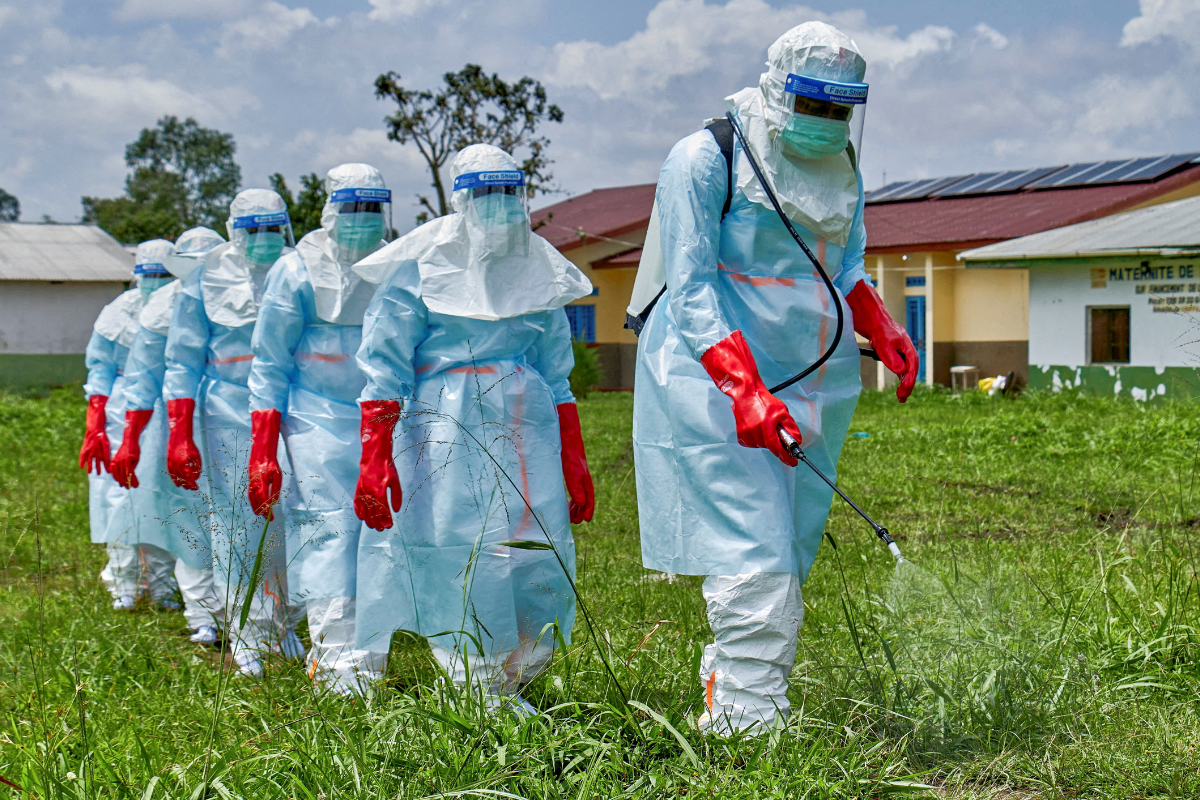

Congo’s Ebola outbreak remains out of control six months into the response, Médecins Sans Frontières (MSF) has said, with there being a disconnect between the resources available and what is actually reaching patients, communities, and medics.
MSF, also known as Doctors Without Borders, said on Thursday that urgent action is needed to ensure resources are directed to where they are needed most, and that critical shortcomings were undermining efforts to contain the outbreak and save lives.
“Despite the vast amounts of money provided for the response, many frontline responders are left trying to contain the outbreak with empty hands and empty pockets,” said Dr. Javid Abdelmoneim, the president of MSF International.
“Our teams are often left speechless by the dysfunctions they witness in many areas. Six months into the response, this situation is simply unacceptable.”
According to a Nov. 11 statement from Congo’s National Institute of Public Health, there have been 11,114 confirmed cases and 5,433 deaths as a result of Ebola, representing a case fatality rate of 48.9 percent.
Some of the problems highlighted by MSF include that response staff are untrained and unpaid, ambulances do not have any fuel, and healthcare staff are left without the supplies or technical support they need to handle suspected cases.
“One of our greatest concerns is the persistent failure of the epidemiological surveillance system, a cornerstone of any Ebola response,” the statement said. “Despite the resources officially allocated to this critical activity, surveillance remains deeply problematic, with entire areas poorly covered or even completely neglected.”
The current outbreak is caused by the rare Bundibugyo ebolavirus and was detected in mid-May in Congo, which has dealt with more than a dozen Ebola outbreaks in the past.
It has become the deadliest outbreak in Congo’s history, surpassing the 2018–2020 epidemic, in which 2,299 people died.
Across Africa, this epidemic is now second only to the 2014–2016 West African outbreak, which infected at least 28,600 people and killed more than 11,000 across Guinea, Liberia, and Sierra Leone.
MSF acknowledged that in the six months since the start of the outbreak, authorities in Congo and international partners have achieved some tangible results, including in the expansion of isolation and treatment units and diagnostic capability. However, the shortcomings “remain profound and largely unaddressed, despite being widely acknowledged,” the statement said.
The Epoch Times contacted the government of Congo and the World Health Organization (WHO) for comment, but did not receive responses by the time of publication.
Lack of Security Is an Obstacle
WHO Director-General Tedros Adhanom Ghebreyesus acknowledged issues such as safety and frontline worker pay delays in his opening remarks to a member state briefing on the outbreak on Nov. 11 in Geneva.
“Insecurity is now one of the greatest obstacles to the response,” Tedros said, listing a number of attacks against civilians, healthcare workers, and health facilities.
He said that during an attack in Cantine-Aloya last week, 66 civilians were killed, including three healthcare workers.
Other incidents included gunfire near an Ebola treatment center, an arson attempt on a treatment center, and threats against healthcare workers.
“These incidents restrict humanitarian access, disrupt operations, make it harder to reach communities quickly, and give the virus an advantage,” the WHO chief said.
Dr. Andrew Peter Obat, the regional Ebola coordinator for the International Organization for Migration (IOM), an intergovernmental organization within the U.N. migration agency, said that since the outbreak, the IOM has conducted 55 million screenings in Congo and 11 other neighboring countries.
“IOM is expanding our screening into the informal areas based on the data that we are seeing,” Obat said in a Nov. 11 post on X. “And we must also involve the community and make sure that the mobility corridors and other crossing points are included in the response, so that we mitigate the cross border infection.”







