
International divisions over fossil fuel reliance and climate financing derailed negotiations at the COP31 climate summit Sunday in Turkey, leaving participating countries without an agreed outcome for the first time since 2009.
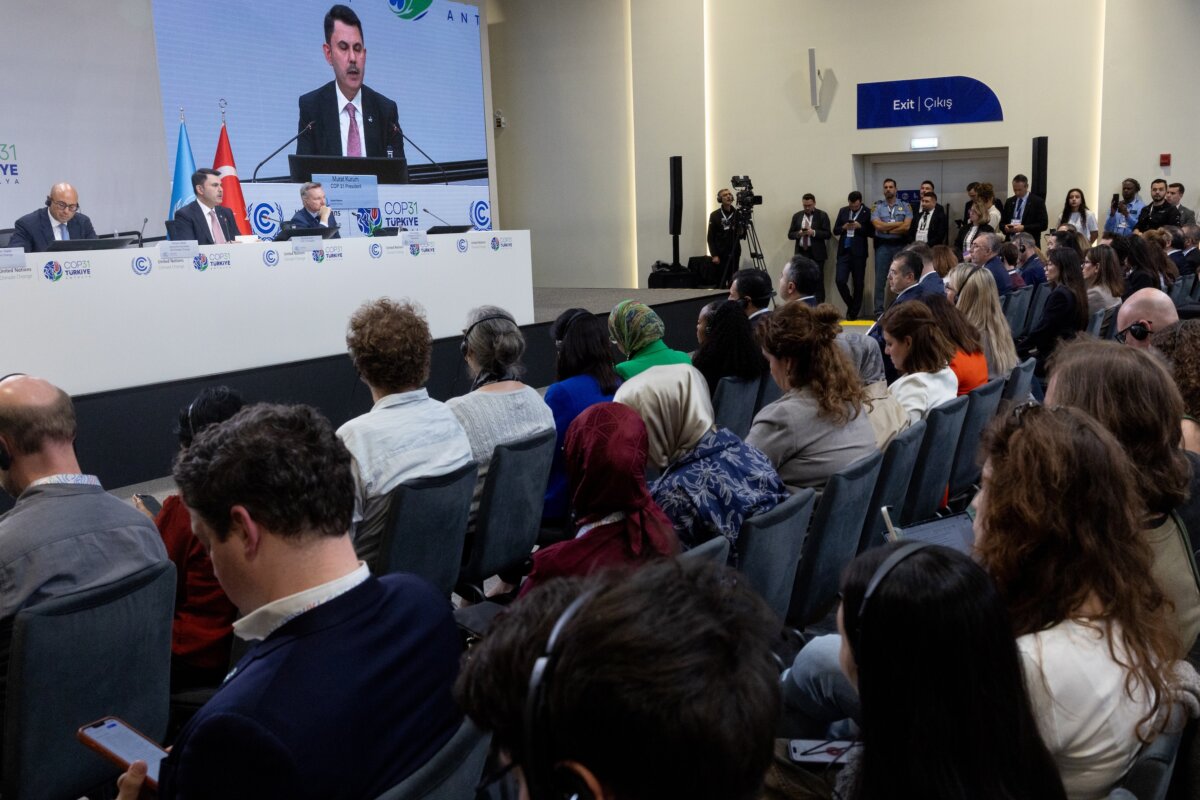
The breakdown came after two weeks of negotiations, which extended two days beyond the scheduled Friday conclusion. Countries failed to reach a consensus on a 10-page compromise package during Sunday’s closing plenary, chaired by COP31 President Murat Kurum of Turkey.
The failure exposed disagreements over how quickly countries should transition away from fossil fuels and who should shoulder the financial burden of climate change policies.
Although the document referenced the landmark 2023 Dubai agreement calling for a transition away from fossil fuels, the final 10-page proposal omitted any mention of fossil fuels, oil, coal, or phase-out.
There was resistance from major oil-producing nations such as Saudi Arabia.
The omission of language calling for a transition away from fossil fuels became a sticking point for the United Kingdom, Norway, and several Latin American and island nations.
Climate financing was another major point of contention. The draft called for tripling adaptation funding to help poorer countries address extreme weather, but failed to establish specific figures for the proposed increase.
Kenya’s delegation added that the text ignored Africa’s needs and circumstances, insisting that nations responsible for historic emissions must lead in providing financial support.
Environmental groups criticized the Turkish-backed proposal to boost electricity’s share in global energy consumption from 23 percent to 35 percent by 2035, arguing it shifted costs to developing economies without curbing oil and gas production.
The EU and others said the proposals were too weak in the fight against global warming.
“There is nothing to do. We did all that we could,” Kurum told the closing plenary, saying he would not advance any new text.
Irish Minister for Climate Darragh O’Brien, said it was “unconscionable” to have a climate deal without reference to fossil fuels or transitioning away from them.
Norwegian Climate Minister Sigrun Gjerlow Aasland said the proposed draft “takes us backwards. Panama’s delegation rejected the draft for failing to match the scale of the planetary crisis.”
U.N. Secretary-General Antonio Guterres expressed frustration with the failure of world leaders to reach an agreement.
Guterres asserted that while a consensus was not reached in the negotiating room, there was no ambiguity in the science.
“The climate crisis will not wait for governments to find common ground,” Guterres said in a statement.
The first draft on Nov. 16 called for phasing out fossil fuels and for developed countries to reach net-zero by 2030 and net-negative emissions by 2040, only for subsequent drafts, starting with the second draft, released Nov. 19, to omit fossil fuels.
Provisions emphasizing carbon capture technologies faced pushback from campaigners who warned they would be a loophole to prolong fossil fuel extraction.
The negotiation collapse comes as a U.N. Environment Programme (UNEP) report released in October warned that global temperatures are on track to exceed the 1.5-degree Celsius (2.7-degree Fahrenheit) warming target established under the 2015 Paris Agreement.
The past three years were the world’s warmest on record, according to the World Meteorological Organization. The UNEP report said that full implementation of countries’ current climate pledges would limit warming to approximately 2.6 degrees Celsius this century.
Nations will return for COP32 in Addis Ababa, Ethiopia, in November 2027.
Reuters contributed to this report.