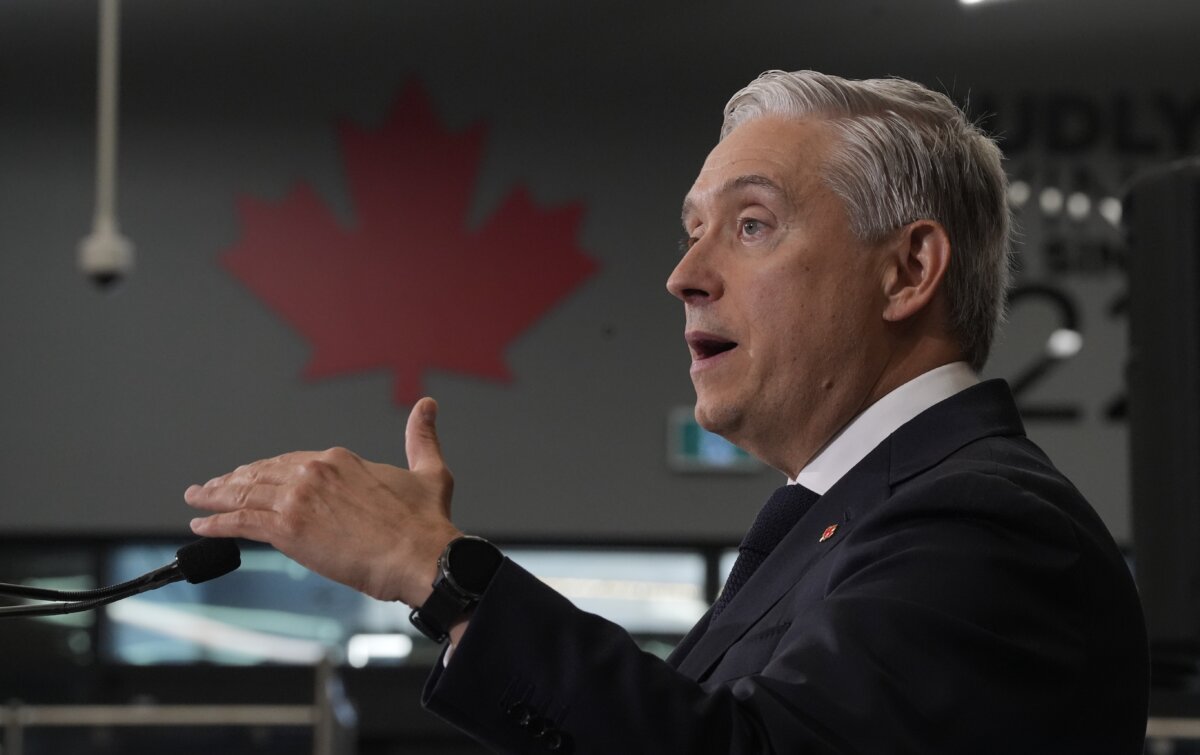

Finance Minister François-Philippe Champagne says the upcoming federal budget will include measures to help small and medium-sized businesses, as well as initiatives aimed at boosting Canada’s productivity.
“I think you will see in this budget a journey to fixing a number of things, to make things more simple, to simplify the life of small and medium-sized businesses,” Champagne said at the Canadian Club of Toronto on Nov. 2.
The finance minister said the Nov. 5 budget will include measures that aim to “go further” in supporting these businesses, which accounted for about 64 percent of private-sector employment in Canada in 2024.
Champagne suggested the budget would address the difficulties smaller businesses face in navigating the tax system, saying the rules can be “quite difficult” and often require a “tax adviser to figure out.” He said this will include the Productivity Mega Deduction, which allows businesses to immediately write off the cost of eligible investments in machinery, equipment, technology, and other productive assets.
“I’ll give you a real-life example. I was at a coffee place recently, and someone asked me, ‘What’s in it for me?’ Well, I say, ‘For example, if you buy a new coffee machine, that would qualify,’” Champagne said.
The federal government estimates that about two-thirds of investment in capital assets will qualify for the deduction. The measure is expected to cost $36 billion over five years. Champagne said it is projected to generate up to an average of $22 billion in additional economic output annually over 10 years.
Champagne also said the budget will provide more details about the Canada Strong Fund, which the government plans to use to attract private-sector and individual investment in projects involving areas such as energy, critical minerals, and agriculture. The fund is intended to allow Canadians to share in the returns generated by those investments.
Ottawa plans to contribute $25 billion over three years to establish the fund. The Finance Department has estimated the associated debt-servicing costs at about $967.5 million over that period.
“Canadians will be able to see themselves in that and own a piece of the future of this country. So I don’t want to go too quickly on that because I think this is going to be generational,” Champagne said.
The finance minister said the budget will focus on increasing business investment, expanding trade, and diversifying Canada’s trading relationships beyond the United States, as well as improving productivity, which he said has “lagged in this country.”
For too long, Champagne said, too much of Canada’s economic growth has “depended on expanding population, rather than increasing what each worker and business can produce.”
Champagne also revealed that the budget will be titled “Canada’s Future: Masters of Our Destiny,” a reference to the “Maîtres chez nous” (Masters in our own home) slogan associated with Quebec’s Quiet Revolution in the 1960s. Prime Minister Mark Carney has invoked the phrase in speeches about strengthening Canada’s economic independence and sovereignty amid tensions with the United States.
The Conservatives has called for the upcoming budget to reduce what they describe as “wasteful, inflationary spending,” including cutting bureaucracy, consultants, certain foreign aid programs, benefits for “fake” asylum claimants, and corporate handouts, along with cancelling the Alto high-speed rail project.
“Cancelling this waste will save Canadians almost $200 billion over the coming years,” said a Nov. 2 news release from the party.
The Tories have also called for Ottawa to lower the debt-to-GDP ratio, eliminate taxes on diesel until Canada Day 2027, suspend the GST on fuel until the summer, and permanently eliminate the Clean Fuel Standard.