Prime Minister Mark Carney says his government is supporting a Venezuela-led transition of power in the aftermath of the U.S. capture of Venezuelan leader Nicolás Maduro, with Washington saying it will lead the transition.
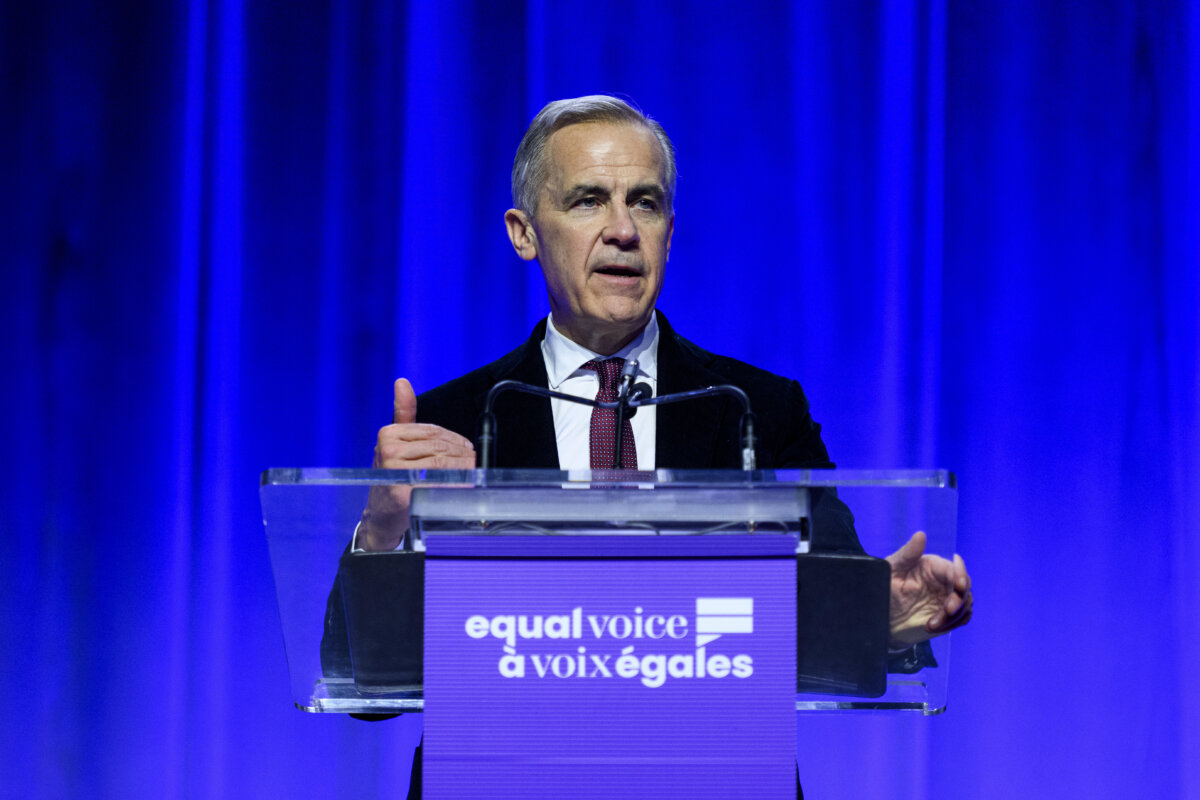
Carney spoke with former Venezuelan Opposition leader María Corina Machado in a Jan. 4 call, the Prime Minister’s Office (PMO) said in a statement, during which Carney condemned Maduro’s “brutally oppressive, criminal, and illegitimate regime” and thanked Machado for speaking out on behalf of the Venezuelan people.
The statement said Carney also “affirmed Canada’s steadfast support for a peaceful, negotiated, and Venezuelan-led transition process that promotes stability and respects the democratic will of the Venezuelan people.” Carney said such a process must be “anchored in the Venezuelan people’s sovereign right” to build their own future in a democratic society.
Carney said he would stay in contact with Nobel Peace Prize winner Machado and “international partners” regarding the situation in Venezuela.
U.S. military forces struck the Venezuelan capital of Caracas on Jan. 3 and captured Maduro and his wife Cilia Flores. Maduro, who has ruled the South American country since 2013, was flown to New York to face indictment on several drug trafficking charges.
The two are currently being held at the Metropolitan Detention Center in the New York City borough of Brooklyn, and face federal charges that include drug trafficking and collaborating with gangs designated as terrorist organizations.
Carney released a statement after the U.S. military operation was carried out, saying that Canada welcomed the “opportunity for freedom” in Venezuela, but added that all parties needed to “respect international law.” Carney also noted in the Jan. 3 statement that Canada has not recognized the “illegitimate regime of Maduro” since it “stole the 2018 election.”
U.S. Secretary of State Marco Rubio said during a Jan. 4 interview on NBC’s “Meet The Press” that the United States is seeking a “holistic transition” in Venezuela, and said the cooperation from the country’s military and police leadership is essential to that transition. He said while Machado is “fantastic,” much of the Venezuelan opposition is no longer located within the country, and short-term issues need to be immediately addressed.
Machado previously served as a member of the National Assembly of Venezuela. She ran for the presidential election in 2023, before being banned from running by the Maduro-run Supreme Court in January 2024. Machado named Corina Yoris as a replacement candidate, who was later replaced by Edmundo González. Machado said she had gone into hiding from the Maduro government following the July 2024 presidential election.
U.S. President Donald Trump recently commented when asked by reporters that Machado does not have the “support within or the respect within the country” to lead Venezuela. Vice-President Delcy Rodríguez became acting president following Maduro’s capture, and Trump has said the United States will lead Venezuela until it is back on track. Trump said that Rodríguez is “essentially willing to do what we think is necessary to make Venezuela great again.”
Rodríguez condemned the U.S. capture of Maduro and his wife during a Jan. 3 speech and said Maduro is still the president of Venezuela. She did not declare herself to be the president of the country, but said she was open to dialogue with the United States.