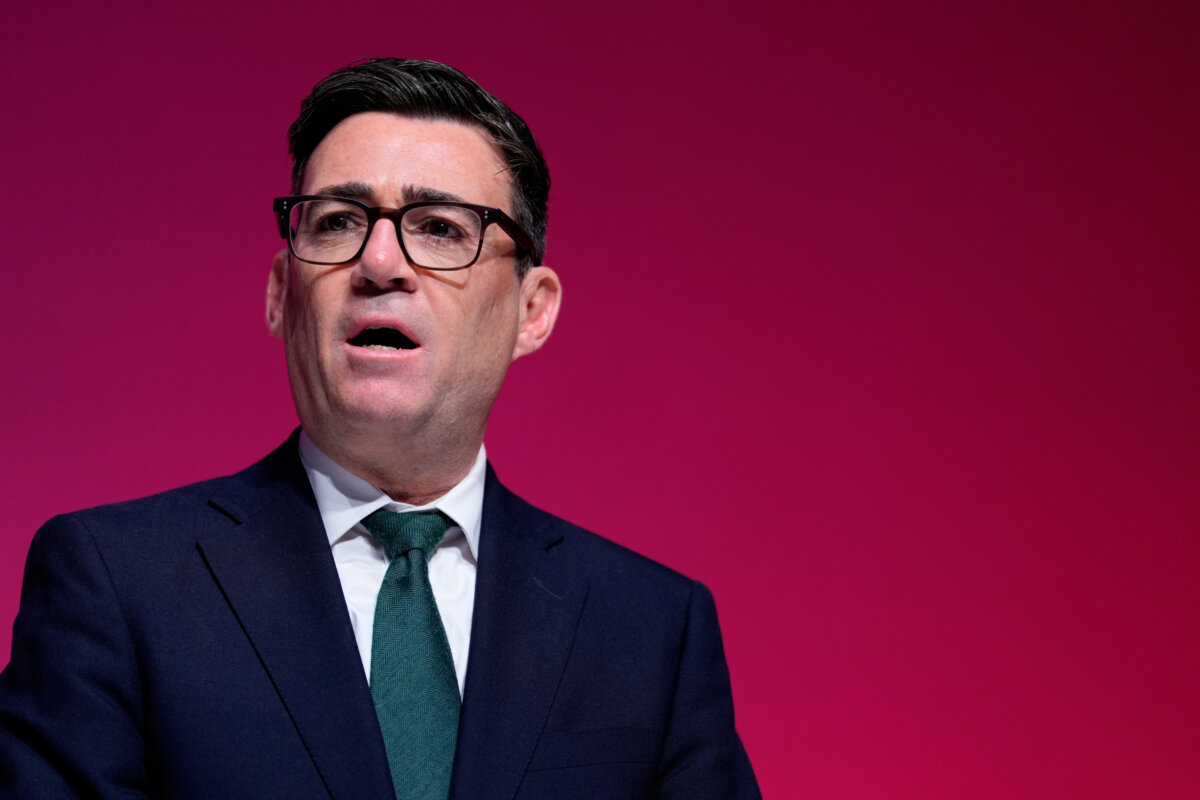

UK Prime Minister Andy Burnham wants to have a difficult conversation about Brexit, according to excerpts of a speech he is due to deliver on Monday evening.
The British leader, who has been in office for almost four months, will say the “obvious truth” of the costs of leaving the European Union needs to be addressed, ahead of a summit in Brussels on Nov. 20, Reuters reported.
Burnham hopes to reach an agreement with the 27-nation bloc, which the UK left in 2020 after a referendum four years earlier, on issues such as food exports and youth mobility.
London’s Labour government says that reaching such deals could help lower costs for consumers in the short term and ease some of the friction caused by Britain’s acrimonious exit from the EU.
However, alongside potential summit agreements, Burnham is also seeking a broader reappraisal of the Brexit deal reached between the previous Conservative government and Brussels after years of negotiations and multiple changes of prime minister.
The prime minister says he wants to have a conversation about its legacy, which he argues has been avoided for years, describing it as “like the emperor’s new clothes—where no one is prepared to say the obvious truth,” in remarks he is set to make at a speech at the Lord Mayor’s Banquet at the Guildhall in the City of London during the evening of Nov. 16.
“Well, I say it as I see it. And to be frank, the emperor has nothing on. The Brexit we were given has not worked. We have lost more than we gained,” his prepared remarks state.
Burnham’s approach marks a contrast to his predecessor as prime minister and leader of the Labour Party, Keir Starmer, who said returning to the EU’s customs union or single market, and the reinstatement of freedom of movement were “red lines” his government would not cross in the Labour manifesto for the 2024 election.
That election saw Labour return to power after 14 years in opposition.
Burnham is set to say that any agreement reached at the Friday summit will respect those red lines, while improving the Brexit deal.
Under a well-established, non-binding convention in British politics, governments are expected to honor their manifesto pledges, even after a leadership change, until a new general election is held.
The next British general election will be in 2029, unless Burnham chooses to call it earlier.
The Epoch Times contacted the prime minister’s office for comment but did not receive a response by the time of publication.
“I think most people—whether they voted Leave or Remain—don’t think this Brexit deal is working,” British Foreign Secretary Ed Miliband told the BBC on Nov. 16, adding that, a decade on from the Brexit referendum, the status quo was “not good enough” and hasn’t “delivered positive economy change” for Britain.
For example, the foreign secretary claimed that one in seven businesses that exported to the EU before the UK left have stopped doing so, saying the current arrangement has made the British economy weaker and people poorer.
Opposition parties in the UK have criticized Burnham for his European aspirations.
Conservative deputy leader Alex Burghart accused the prime minister of “reopening a debate the country settled long ago, while ignoring the challenges facing Britain today,” after Burnham espoused similar views to those expressed in the excerpts in a speech to the Welsh Labour Party conference on Nov. 14.
“Instead of tackling the spiraling welfare bill, fixing our economy, and properly funding our defense, Burnham is preparing to hand Brussels more money in an effort to distract from the mess his party has gotten us into,” Burghart told the Manchester Evening News on Saturday.
Reform UK deputy leader Richard Tice also took aim at the prime minister in comments to Talk TV, saying that the expression to remember in this scenario is “leave meant leave,” when asked about the speech excerpts.
“It didn’t mean stroke your chin. Navel gaze for a few years, and then flip to the British people and try and cozy up and handcuff yourself to a failing, rioting, I’ll just repeat that, rioting, bunch of European nations who are doing economically even worse than we are,” Tice said.
“Why would you want to go back to something so patently failing, and then paying for the privilege.”