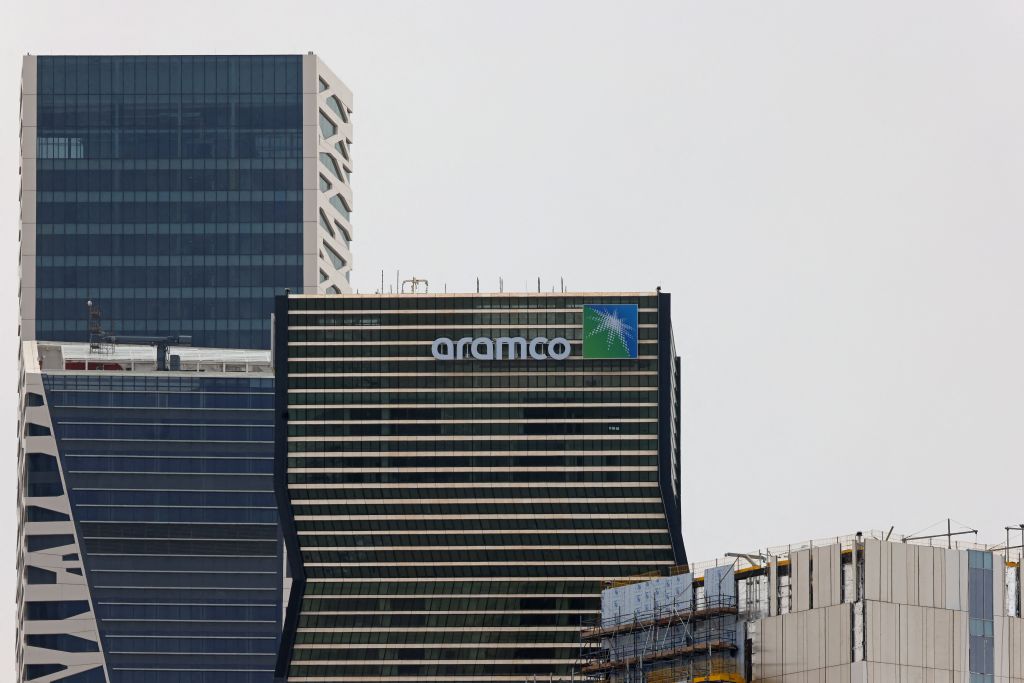

Debris from an attempted attack blew out windows across several floors of Aramco Tower in the financial district of Riyadh, Saudi Arabia, on Nov. 8.
The Saudi Ministry of Energy said the damage was limited and there were no casualties, while the Saudi-led coalition said it had intercepted Houthi terrorist group missiles over the capital.
Civil defense authorities issued multiple public warnings in the capital of Riyadh and the southern province of Najran on Nov. 8, urging residents to remain indoors. Authorities said danger had passed in the capital on Nov. 9, minutes after raising an alert.
Hostilities between Saudi Arabia and Yemen’s Iran-backed Houthis have escalated since July after a period of relative calm that followed the expiration of a U.N.-brokered truce in October 2022.
The Houthis, who claimed responsibility for the Nov. 8 attack, have stepped up missile and drone strikes on Saudi airports, ports, and oil facilities.
Latest Escalation
Houthi spokesperson Yahya Saree said the group carried out four operations using ballistic missiles, cruise missiles, and drones.
According to Saree, the first operation targeted King Khalid International Airport, Aramco storage tanks, and Riyadh’s financial district. He also claimed that a second strike targeted Aramco facilities in Abqaiq, while two additional attacks targeted Saudi military positions in Yemen.
Saree said the attacks were launched in response to what he described as Saudi airstrikes that killed civilians in Yemen, including attacks on Al-Hadara Market in Al-Wazi’iyah and residential buildings in Bani Hashish.
A day earlier, Saree said Saudi forces had carried out 105 airstrikes and missile attacks across multiple Yemeni provinces during the previous 24 hours, alleging that dozens of civilians had been killed or wounded.
He said the Houthis had recorded 4,369 Saudi airstrikes and missile attacks since the latest escalation began.
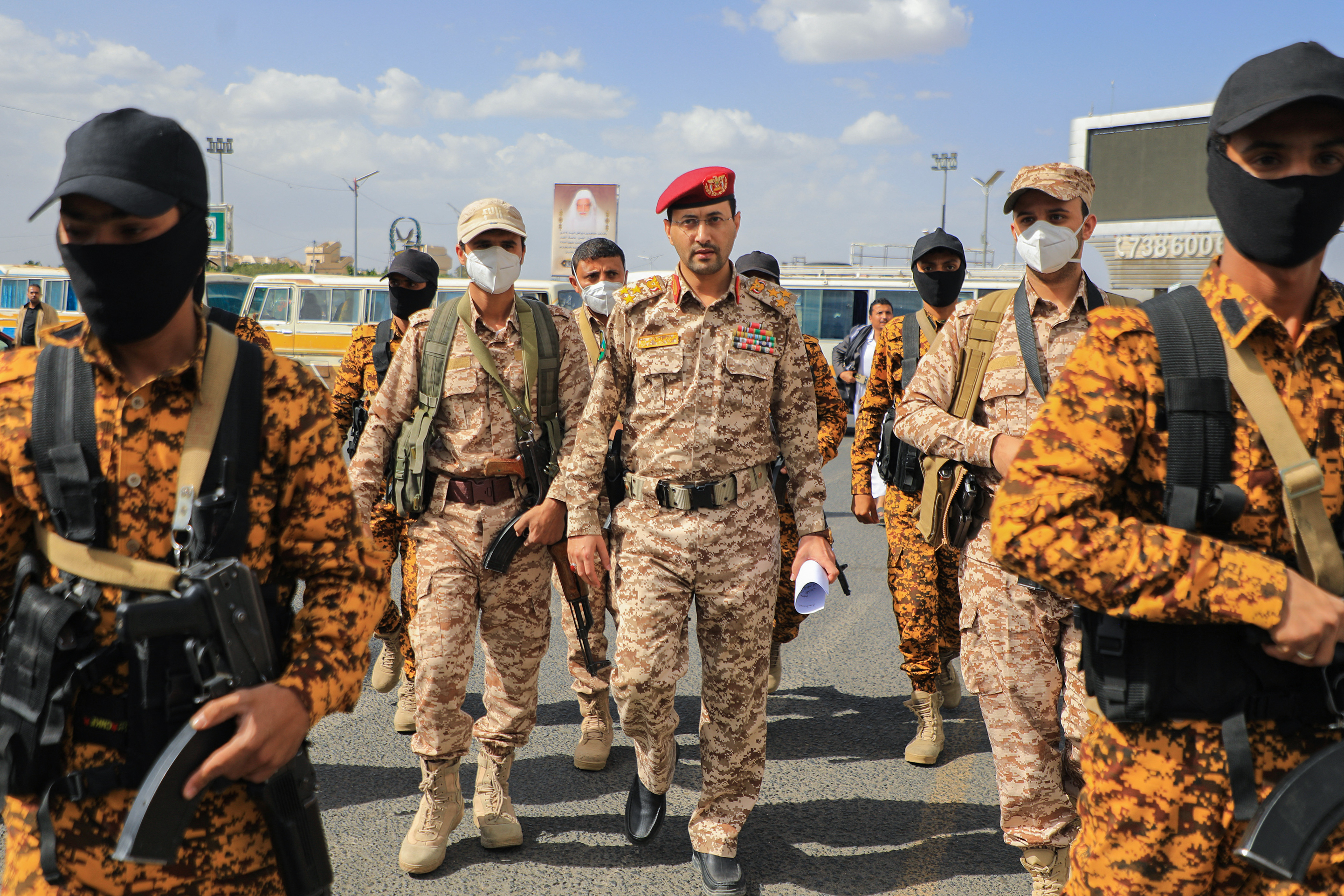 Houthi terrorist group spokesman Brig. Yahya Saree during a rally in Sanaa, Yemen, on March 15, 2024. (Mohammed Huwais/AFP via Getty Images)
Saudi coalition spokesperson Turki Al-Malki said Saudi air defenses intercepted multiple Houthi projectiles on Nov. 8.
According to Al-Malki, coalition forces destroyed a ballistic missile launch platform in Sanaa that he said had been used in an attempted attack on Saudi Arabia’s Eastern Province.
He also said on Nov. 8 coalition forces intercepted and destroyed a drone heading toward the kingdom’s southern region, two cruise missiles launched toward Riyadh and the southern region, and a ballistic missile targeting the Eastern Province.
The coalition statements did not provide further details about damage or casualties resulting from the attempted attacks.
Energy Infrastructure Under Pressure
The latest incident brings renewed focus on security risks facing Saudi energy infrastructure.
Saudi Arabia shut down Aramco’s East–West Crude Oil Pipeline following a drone attack on Sept. 11. Both Baghdad and Riyadh said the drone had originated in Iraq.
The pipeline has since resumed operations. When announcing its third-quarter financial results on Nov. 3, Aramco said the pipeline continued to provide export flexibility and that the company was exploring additional overseas storage capacity and alternative export routes to strengthen its supply network.
Aramco reported adjusted net income of $31.2 billion for the third quarter of 2026, compared with $28.6 billion a year earlier.
Aramco President Amin H. Nasser said geopolitical uncertainty and attacks on critical energy infrastructure had intensified the global energy supply crisis during the quarter.
He added that the company was continuing to explore additional overseas storage capacity and alternative export routes to strengthen its global supply network.
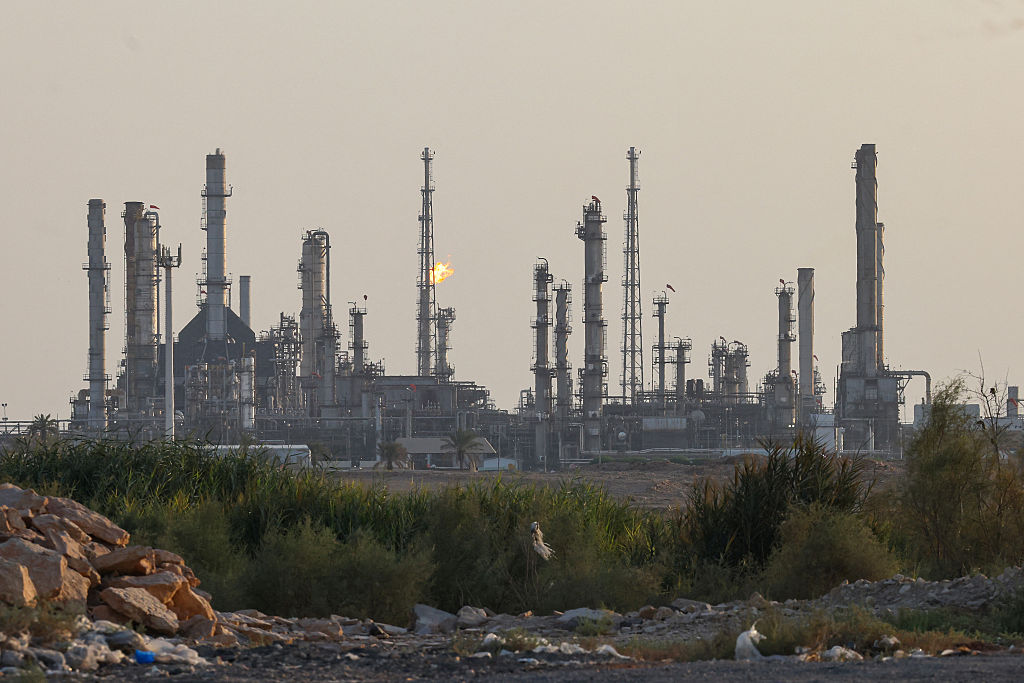 Saudi oil giant Aramco’s Riyadh refinery, south of Riyadh, Saudi Arabia, on Oct. 3, 2026. (AFP via Getty Images)
Regional Support
Saudi Arabia has strengthened regional defense cooperation as the conflict intensifies.
Turkey’s parliament last week ratified the Mecca joint defense agreement among Turkey, Pakistan, and Saudi Arabia, adding to a series of regional initiatives supporting the kingdom.
Egypt’s Parliament authorized President Abdel Fattah el-Sisi on Oct. 26 to take measures to assist Saudi Arabia’s defense, although lawmakers did not specify what form that support would take.
Riyadh also signed a defense cooperation agreement with Syria, without disclosing details.