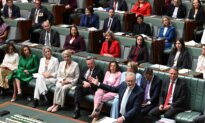
Prime Minister Anthony Albanese has announced the commissioning of a statue of former Prime Minister Gough Whitlam to mark 50 years since the dismissal of his government.
The statue will stand at Old Parliament House, now home to the Museum of Australian Democracy, joining the existing figures of Sir Robert Menzies, John Curtin, and other leaders.
“This new statue will stand not just for the immortal words Gough uttered on that day. More importantly, it will honour all that he achieved in this place,” Albanese said.
He noted that it would sit alongside the statues of Barton, Menzies, Curtin, Chifley, Lyons, Tangney, McEwen, Gorton, and Bonner.
Citing Whitlam’s biographer, Albanese recalled the power of his parliamentary presence.
“In Graham Freudenberg’s words: ‘His great stage was the House of Representatives—stage, pulpit, arena.’ John Howard, among many others, rated Whitlam the greatest parliamentary performer this building ever knew.”
Reason For Dismissal
On November 11, 1975, in an unprecedented act—governor-general removed an elected prime minister.
Whitlam’s government was dismissed after the Opposition used its Senate numbers to block supply—the budget bills needed to keep the government running—to force Whitlam to call an early election.
They did this because the Whitlam government had rapidly expanded public programs (government spending), which further exacerbated already rising inflation from the 1973 OPEC oil crisis and strained the budget.
While inflation was rapidly rising, Australia saw its unemployment numbers rise as well, creating a difficult economic period for the average Australian.
As a result, Governor-General Sir John Kerr intervened, claiming the deadlock created a constitutional crisis.
Kerr dismissed Whitlam and appointed Opposition Leader Malcolm Fraser as caretaker prime minister.
A Record of Reforms
Albanese said that Whitlam’s dismissal should not overshadow the reforms he delivered.
“This building was where the first iteration of universal health care—Medibank—became law,” Albanese said.
Other policies include the expansion of university access, the end of the White Australia policy, early steps towards land rights, diplomatic recognition of China, the Racial Discrimination Act, family law reforms, and social supports such as the Single Mother’s Payment.
Albanese added that the statue will overlook institutions Whitlam helped build and strengthen, including the National Gallery, made internationally famous by his acquisition of Blue Poles, and the revitalised public service he championed.
“And it will look out upon the nation Gough Whitlam changed. The modern, confident and more equal Australia he helped bring into being,” Albanese said.
Governor-General Sam Mostyn also reflected on the political shockwaves caused by Whitlam’s dismissal.
Mostyn released a documentary-style interview, “The Dismissal: 50 Years On,” in which she and a constitutional expert revisited and unpacked the events.