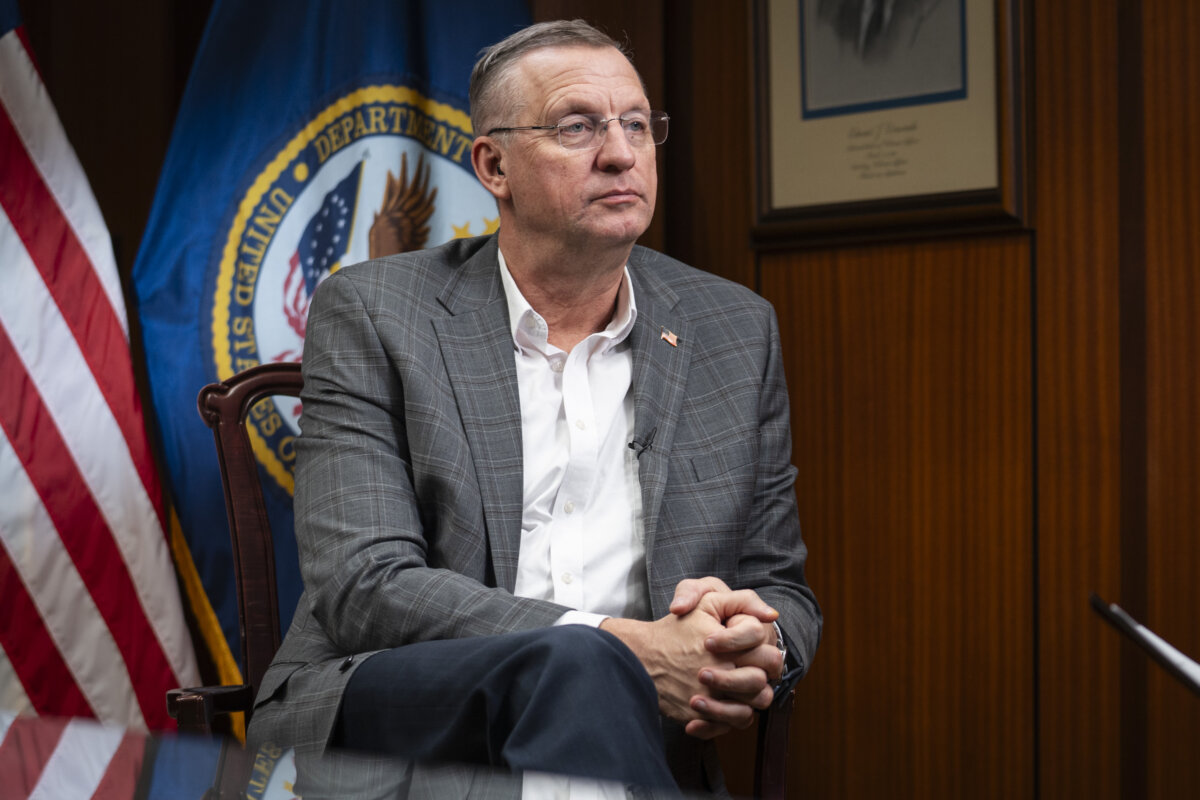

Secretary of Veterans Affairs Doug Collins said the U.S. Department of Veterans Affairs (VA) has made changes under the Trump administration to improve the care of American veterans.
In an interview with NTD, The Epoch Times’s sister media outlet, that aired on Nov. 11, Collins said he wants the department’s employees to not view veteran claims as merely a piece of paper but to “view it as a veteran” and put a face to the claims.
Asked about his experience working for the Trump administration, Collins said President Donald Trump “made it very simple” by telling him to do what was needed to care for American veterans.
“The VA of ‘no’ is no longer here,” Collins said. “The VA of ‘let’s try to get to yes’ is here.”
He told NTD that the VA has streamlined its processes, making the department’s hospitals more efficient through “better standardization across the board.”
The department says the backlog of veterans waiting for VA benefits has dropped by more than 70 percent since the start of the Trump administration.
In addition, Collins said the VA is reducing wait times and expanding community care for veterans, leading to more than a 26 percent increase in community care appointments under the Trump administration. He said the VA has spent over $50 billion on the community care effort.
The VA secretary also said the department has made progress on veteran homelessness, including through work with nonprofit partners. The department permanently housed 51,936 veterans in fiscal year 2025 and 48,968 veterans in fiscal year 2026.
During a Nov. 11 speech at the annual Veterans Day ceremony at Arlington National Cemetery in Virginia, Collins announced that the Veterans Affairs Department has opened 47 new facilities since 2025 and made it easier for veterans to go to the hospital and receive compensation.
In May 2025, Collins and Secretary of War Pete Hegseth signed a new agreement to increase collaboration and improve the transition process for service members leaving the military.
“We’ve moved mountains really in the last little bit to align our missions,” Collins told NTD. However, the two departments still have work to do to improve the transition process, he said.
In September, Trump signed an executive order to accelerate veteran access to benefits and employment opportunities by improving data sharing between the two departments. Collins described the investment as “invaluable” and said it has led to increased standardization and modernization at VA medical facilities.
While Collins noted many improvements at the VA, he told NTD that the department’s Veterans Health Administration has been dealing with the same shortage of doctors, nurses, and clinicians facing the healthcare industry. He called for pay cap increases for VA doctors so the department can compete with the healthcare market.
Moving forward, Collins said he wants young service members to have a “seamless” experience with the VA when they transition out of the military.
“What I want them to know is there’s a place at the VA that will be there for them when they need it,” he said.
The U.S. House of Representatives passed the Take Care of America’s Veterans Act on Nov. 11. The bill would implement changes to VA personnel, hiring, and infrastructure; modify some veteran compensation programs; and revise certain VA disability ratings.
House Veterans’ Affairs Committee Chair Mike Bost (R-Ill.) said the legislation “delivers long overdue reforms to strengthen veterans’ healthcare, expand benefits, and cut through VA bureaucracy.”
Meanwhile, Democratic lawmakers have criticized the bill. In a statement, Sen. Tammy Duckworth (D-Ill.) suggested that the changes in the bill represent “the largest cut to VA benefits in history” and accused the Trump administration of putting “many VA hospitals in crisis mode.”